
Stuck on Sticky Sand? Concrete Mixing Plant Discharge Solved with Dual-Pivot Vibration
When a stationary concrete mixing plant loses its rhythm, the mixer is usually not the culprit — the material sitting above the discharge gate is. Manufactured sand, fine sand and mineral powder flow differently from coarse natural aggregate: they bridge, cling and stall in bins and weighing hoppers, turning a steady batching cycle into a stop-start operation that needs manual attention. The dual-pivot internal vibration structure addresses that specific failure point, and it raises vibration efficiency by 20% while resolving discharge problems with manufactured sand, fine sand and mineral powder.
This article explains why those materials stall, how the vibration structure and the intelligent options around it work together, and how a buyer evaluating a commercial concrete batching plant should specify and verify the discharge side before signing off on capacity figures alone.
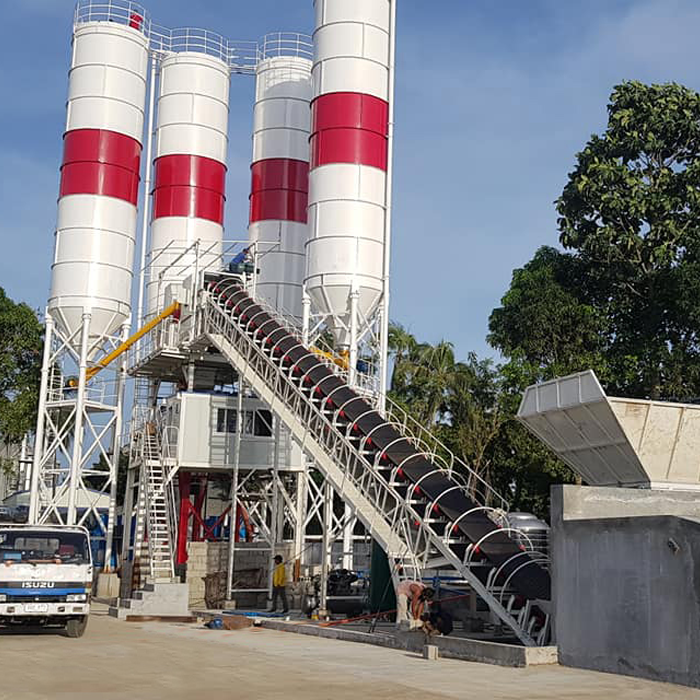
Problem Definition: The Discharge Bottleneck Starts in the Aggregate Bin
In a continuous ready-mix operation, the discharge stage is where every upstream decision gets tested. If the aggregate weighing hopper cannot release its charge cleanly, the mixer waits, the truck waits, and the operator intervenes. Two failure modes dominate when fine materials enter the mix design:
- Arching or bridging. Fine particles pack into a stable dome above the bin outlet. Material flow stops even though the bin is not empty, and the batch waits until the arch is broken mechanically or by vibration.
- Adhesion and build-up. Damp or cohesive fines stick to bin walls and hopper bodies, narrowing the effective opening and making the released weight inconsistent with the setpoint.
Both look the same on the production floor: extended discharge time, repeated manual intervention, and slump drift. The last point matters more than it first appears. Aggregate, cement and mixing powder are weighed to ±2% and ±1% respectively on DKTEC's HZS-series plants; when fines fail to leave the hopper cleanly, the material that actually reaches the mixer no longer matches the recipe, and the concrete that leaves the plant is harder to keep inside its slump window.
Capacity amplifies the problem rather than hiding it. A plant rated at 240 m³/h or 300 m³/h has less slack per cycle than a smaller unit, so every stalled discharge consumes a truck-loading window that cannot be recovered later in the shift.
Industry Background: Why Fine Materials Became a Discharge Problem
The material mix has changed faster than most plant layouts. Manufactured sand, blended fine aggregates and mineral powder are now routine inputs in commercial ready-mix production, and each behaves differently from washed natural sand in a bin. Equipment design has had to follow.
The scale of the installed base explains why this is a production issue rather than a niche complaint. The global concrete batch plants market was valued at USD 3.8 billion in 2024, with Asia-Pacific accounting for a 38% revenue share in the same year. Chinese exports of concrete or mortar mixers under HS 847431 reached USD 276.9 million in 2023, reflecting how much equipment capacity is concentrated in and shipped from the region.
Terminology and commercial specifications for this equipment class are covered by ISO 19720-1:2017, which establishes terminology and commercial specifications for concrete mixing and batching plants. That standard is a useful reference point when a buyer needs to compare specification sheets from different suppliers on a like-for-like basis.
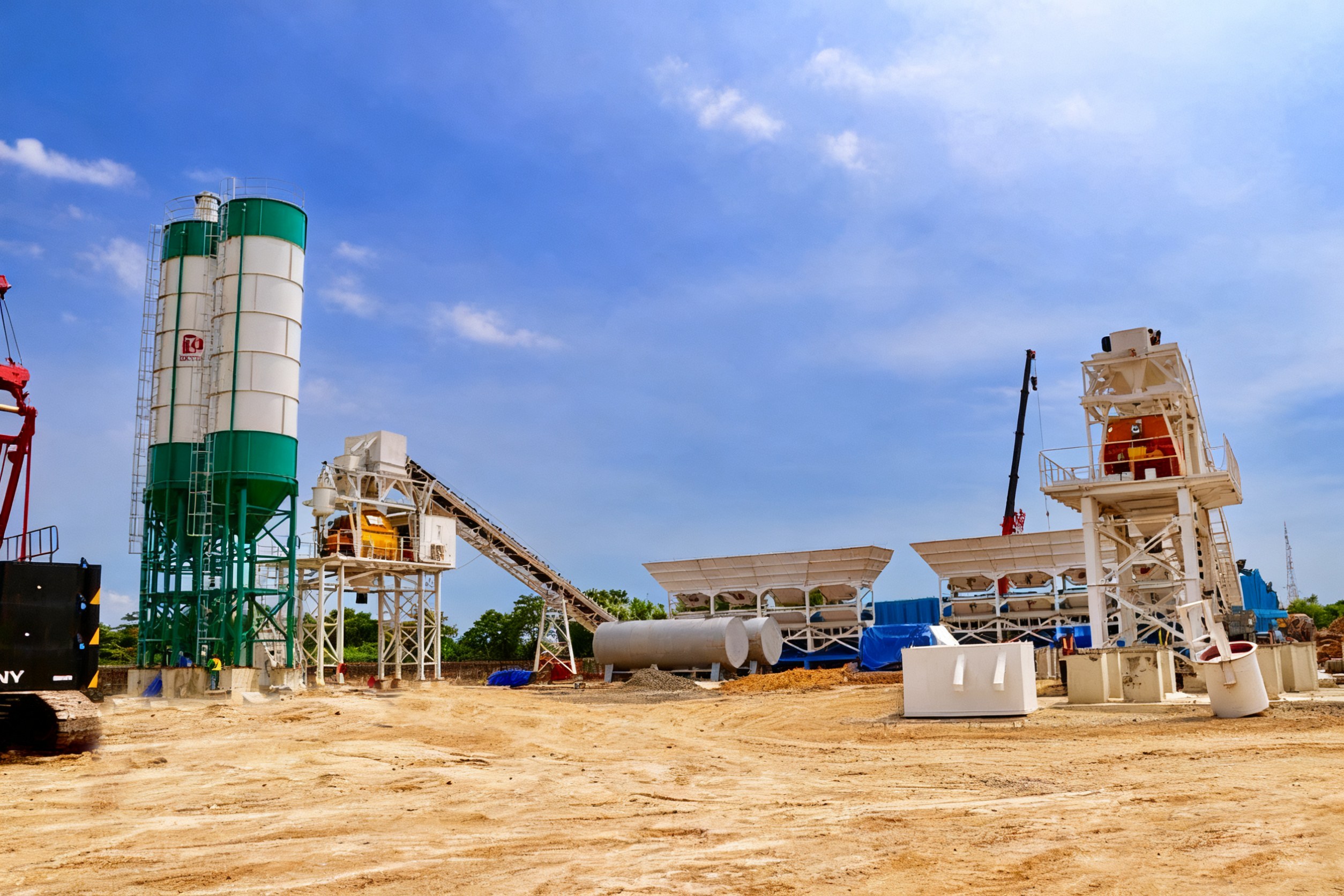
Detailed Solution: Dual-Pivot Internal Vibration and Adaptive Control
Hangzhou Jusheng Machinery & Equipment Co., Ltd. (DKTEC) is a Chinese manufacturer of concrete mixing plants and mining equipment, founded in 2015 and operating a 120,000 m² facility with 430 employees, 80 engineers and an annual output of 2,000 units. The company moved from trading to robot-assisted production of mixing stations in 2017, and its HZS-series commercial plants carry the discharge and control features described below.
1. The dual-pivot internal vibration structure
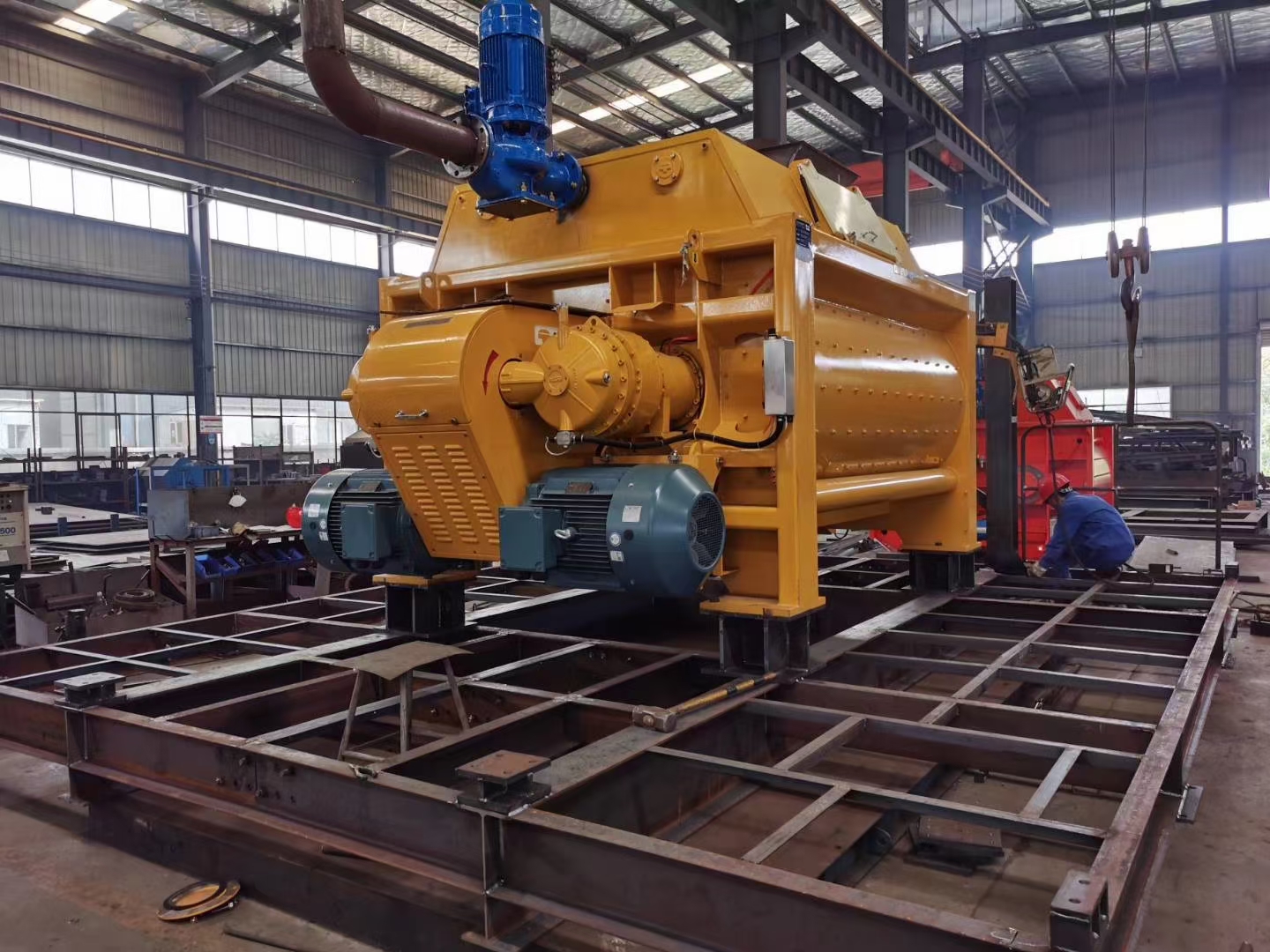
The core fix is mechanical rather than procedural. A dual-pivot internal vibration structure is fitted to the aggregate hopper body, where it applies vibration directly inside the material rather than shaking the structure from outside. According to DKTEC's published product information, this arrangement improves vibration efficiency by 20% and effectively resolves discharge issues with manufactured sand, fine sand and mineral powder.
Two design details support the same outcome. The internal vibration runs with a smooth cutting action against a durable hopper body, so the vibration energy reaches the material instead of being absorbed by the structure. Sand bins on models such as the HZS120 are fitted with anti-clogging devices, and the discharge hopper is built with wear-resistant material to hold its profile under abrasive fines.
2. Online slump monitoring from mixer motor current
Discharge stability and slump stability are connected, and DKTEC's commercial concrete batching plant projects include online slump monitoring that gives a real-time slump indication derived from the mixer motor current curve. Because the reading comes from the mixer's own load signature rather than a separate probe in the drum, it reflects what the batch is actually doing during mixing.
For an operator, this converts a manual judgement into a displayed value: if a batch is trending stiff or wet, the deviation is visible while the batch is still in the mixer rather than after it has been loaded out.
3. Optional intelligent configurations
DKTEC's commercial concrete batching plants can be specified with intelligent configurations that reduce the operator's workload at the discharge and material-supply stages:
- Dual-plant control. One operator controls two mixing plants, which DKTEC documents as reducing labour cost by 50%.
- Smart silo level monitoring. Real-time level checks through ERP, PLC or a mobile app, with inventory accuracy of ±2% on the commercial plant configuration.
- Low-pressure powder conveying. An optional system that lowers cement temperature and supports continuous material feeding.
- Screw-type air compressor. Custom-developed for mixing plant conditions, with dust protection and 20 dB noise reduction.
- Enclosed standby hopper and forced-cleaning membrane bag filter. On the large commercial configuration, the fully enclosed standby hopper reduces open surface area by 75% and is combined with a forced-cleaning membrane bag filter to strengthen dust removal.
Across the commercial plant platform, DKTEC cites more than 10 intelligent technologies that support fully adaptive processes and reduce manual intervention. The four-level modular design used on its large plants allows integrated hoisting and rapid installation, and modular design reduces on-site installation workload by 20%. Seamless material flow technology prevents aggregate spillage, keeps the supply continuous and improves conveying efficiency by 20%.
4. Where the solution stops
It is worth being precise about what vibration does and does not do. Internal vibration improves release of cohesive fines; it does not replace weighing accuracy, which remains ±2% for aggregates and ±1% for cement, mixing powder, water and additives on the HZS-series models listed in this article. Nor does it substitute for correct bin geometry and anti-clogging devices. Buyers should treat vibration, hopper design and weighing accuracy as one system rather than three separate upgrades.
Step-by-Step Breakdown: Specifying the Discharge Side
- Characterise the material list first. Record the share of manufactured sand, fine sand and mineral powder in each mix design. Discharge behaviour is a material property before it is an equipment property, and DKTEC customises plants according to production capacity, concrete type and site conditions.
- Match rated capacity to the real duty cycle. The HZS series spans 60 m³/h to 300 m³/h across engineering and commercial configurations. A plant sized for peak demand that cannot discharge reliably is worth less than a smaller plant that runs continuously.
- Specify the hopper and vibration arrangement. Confirm the dual-pivot internal vibration structure on the aggregate hopper, the anti-clogging devices on sand bins, and the wear-resistant discharge hopper. These are the components that determine whether fines leave the bin cleanly.
- Select the intelligent options against the labour model. Dual-plant control, smart silo level monitoring and low-pressure powder conveying each change the operator workload. Decide which ones the site can actually support before adding them to the specification.
- Plan the installation route. Modular design, factory pre-assembly and four-level modular hoisting shorten commissioning. On the mobile side, integrated chassis designs allow 3-day installation and startup after relocation and need only a level concrete surface.
- Agree the acceptance criteria. Verify discharge height (≥3.8 m on the HZS-series models reviewed here), weighing accuracy per material, and the slump indication method. DKTEC applies 100% testing before shipment.
Use Cases: Where Discharge Reliability Decides Output
The configurations below come from DKTEC project records and illustrate how the same discharge principle scales across plant sizes.
Large-scale infrastructure — Indonesia, HZS300
A large construction contractor in Indonesia operates one HZS300 commercial concrete batching plant for large-scale infrastructure concrete production. The unit is rated at 300 m³/h with a 5000 L nominal mixer capacity and 350 kW installed capacity, with sandstone weighing at 900–5000 kg ±2% and cement, mixing powder, water and additive accuracy of ±1%. Reported results are high-volume production, stable operation and consistent quality.
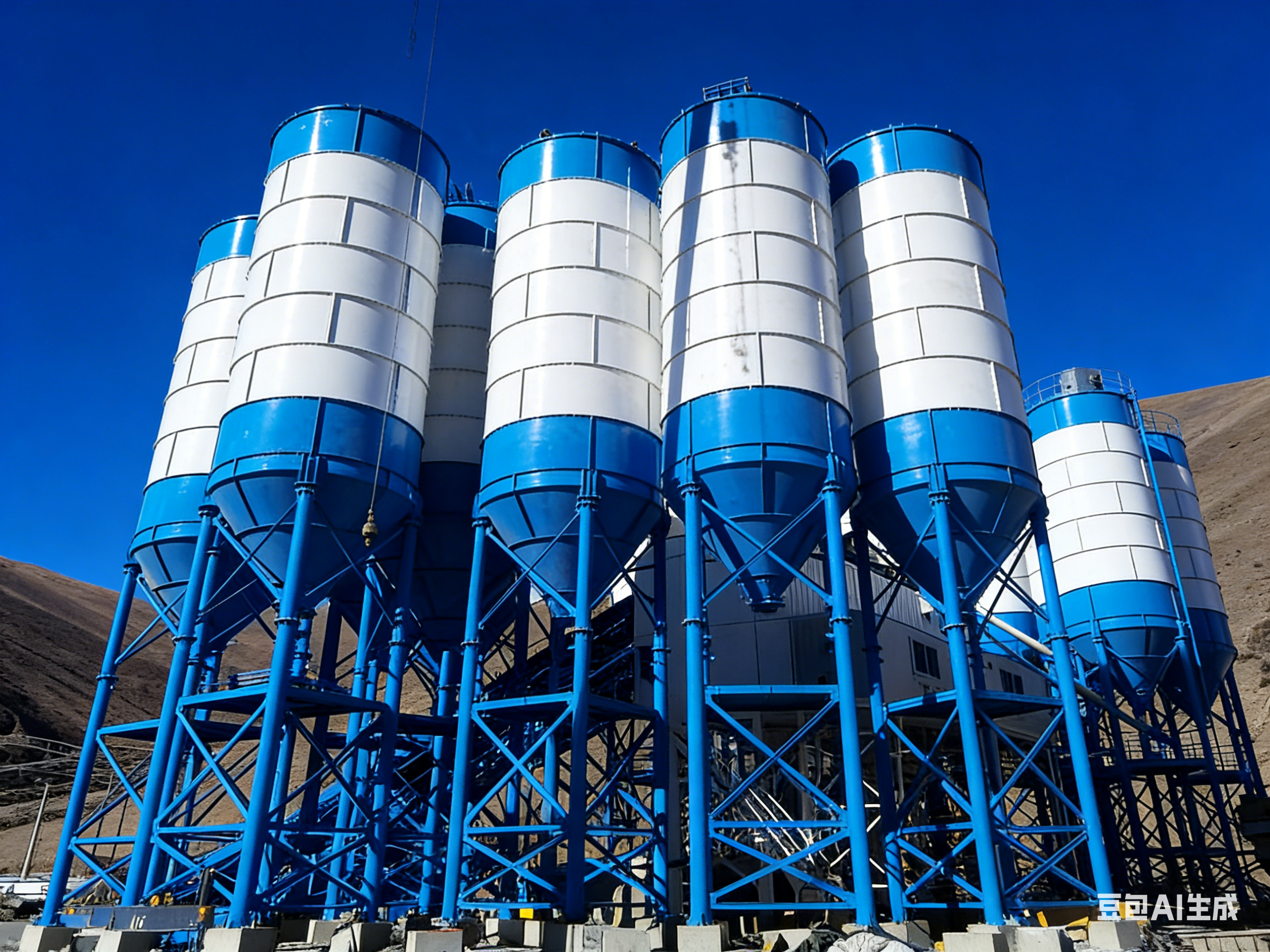
Long-life continuous operation — Oman, HZS240
A large construction contractor in Oman uses one HZS240 commercial concrete batching plant for large-scale infrastructure concrete production. The plant delivers 240 m³/h, with 280 kW installed capacity and a 4000 L nominal capacity. Documented accuracy is ±2% for sandstone and ±1% for cement, mixing powder, water and additive, with a cement range of 400–2500 kg and an additive range of 15–80 kg. The unit has provided continuous service for 10–15 years with stable operation and consistent quality.
Bridge concrete — Philippines, HZS180
A concrete supplier in the Philippines runs one HZS180 commercial concrete batching plant, rated at 180 m³/h with a 3000 L nominal capacity, for bridge engineering concrete covering pile foundations, pile caps, piers, abutments and girder bodies. The project has been in operation for 5 years, with reported high efficiency, stable operation and reliable concrete quality.
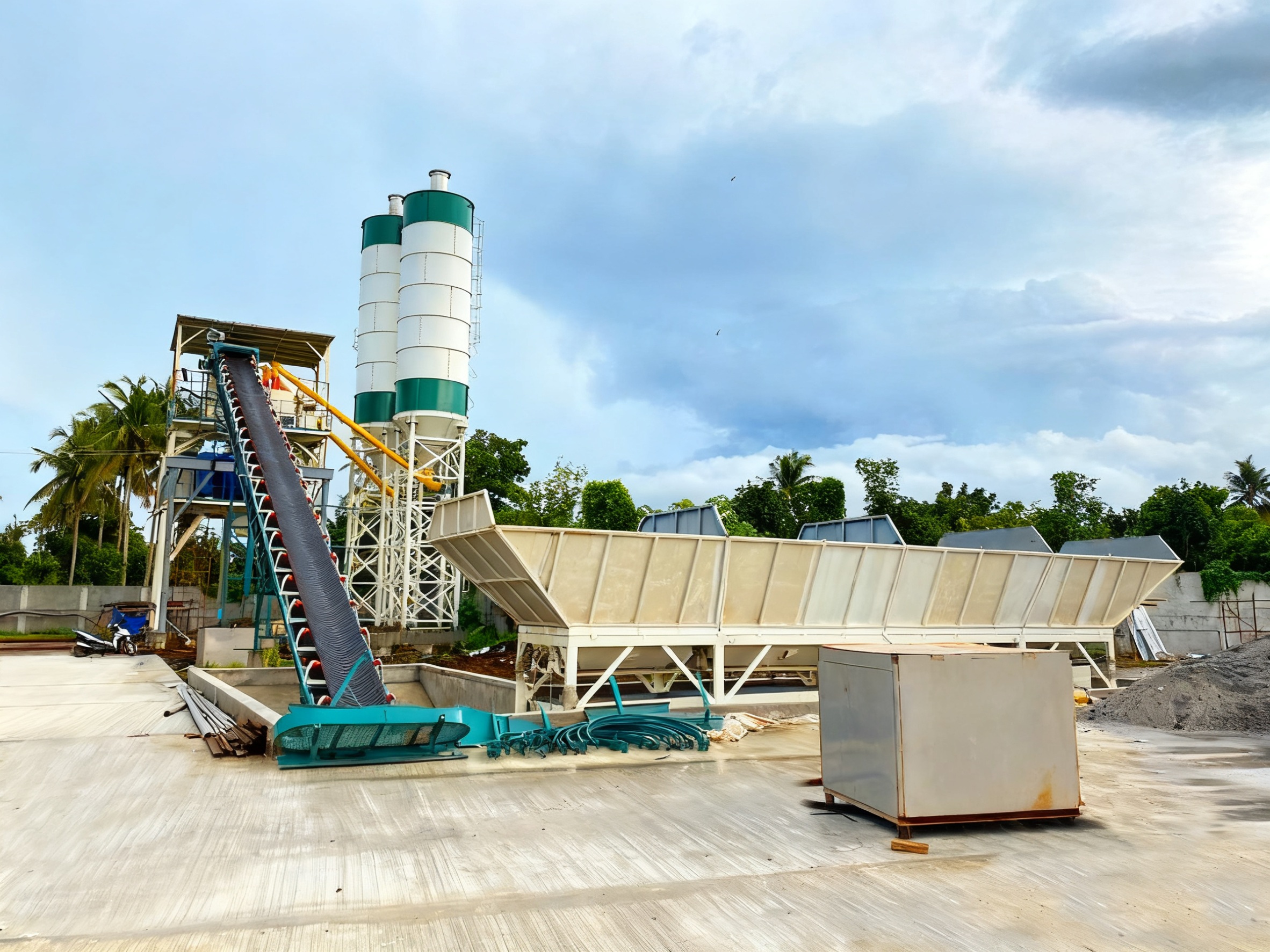
Ready-mix supply — Indonesia and the Philippines
A ready-mixed concrete company in Indonesia operates 3 units of DKTEC concrete batching plant for ready-mix production and site supply, and a ready-mix concrete supplier in the Philippines operates 2 units of HZS90G engineering plants. In both cases the reported outcome is stable operation and consistent concrete quality, which is the practical definition of success for a commercial plant feeding a truck fleet.
Comparison Table: HZS-Series Discharge-Relevant Specifications
The table below uses published DKTEC specifications for models discussed in this article. Configurations are customised to production capacity, concrete type and site conditions, so final specifications should be confirmed per project.
| Model | Theoretical productivity | Nominal mixer capacity | Installed capacity | Sandstone weighing | Cement / powder / water / additive accuracy | Unloading height |
|---|---|---|---|---|---|---|
| HZS120 (commercial) | 120 m³/h | 2000 L | 210 kW | (600–2000) kg ±2% | ±1% | ≥3.8 m |
| HZS180G (engineering) | 180 m³/h | 3000 L | 250 kW | (900–3000) kg ±2% | ±1% | ≥3.8 m |
| HZS240 (commercial) | 240 m³/h | 4000 L | 280 kW | (900–4500) kg ±2% | ±1% | ≥3.8 m |
| HZS270 (commercial) | 270 m³/h | 4500 L | 350 kW | (900–5000) kg ±2% | ±1% | ≥3.8 m |
| HZS300 (commercial) | 300 m³/h | 5000 L | 350 kW | (900–5000) kg ±2% | ±1% | Not stated in source data |
Reading the table for discharge purposes: the sandstone weighing range widens with plant size, and the ±2% / ±1% accuracy figures apply to the material that actually leaves the hopper. On plants where manufactured sand makes up a large share of the fine fraction, the dual-pivot internal vibration structure and the anti-clogging devices on the sand bins matter more to day-to-day output than the headline m³/h number.
FAQ
Does the dual-pivot internal vibration structure comply with recognised concrete plant standards?
ISO 19720-1:2017 establishes terminology and commercial specifications for concrete mixing and batching plants, and it is the reference buyers typically use to align specification sheets across suppliers. DKTEC applies 100% testing to its plants before shipment, and published accuracy figures for the HZS series are ±2% for aggregates and ±1% for cement, mixing powder, water and additives. Buyers should confirm the applicable standard and any project-specific documentation requirements for their market at the specification stage, because compliance scope depends on the destination and the project specification rather than on the vibration structure alone.
Which materials actually cause discharge problems, and how far does the vibration structure solve them?
Manufactured sand, fine sand and mineral powder are the materials DKTEC identifies as the cause of discharge problems on stationary plants. The dual-pivot internal vibration structure improves vibration efficiency by 20% and effectively resolves discharge issues with these three material types. The effect is supported by anti-clogging devices on sand bins and a wear-resistant discharge hopper, and it is separate from weighing accuracy, which remains ±2% for aggregates and ±1% for cement, mixing powder, water and additives on the HZS-series models.
What drives the budget when intelligent options are added to a commercial plant?
Budget on a commercial concrete batching plant is driven by four variables: rated capacity, mixer specification, the discharge and bin configuration, and the intelligent options selected. Dual-plant control, smart silo level monitoring and low-pressure powder conveying each add scope, while configurations such as the fully enclosed standby hopper with forced-cleaning membrane bag filter are tied to the larger commercial models. DKTEC quotes per project rather than from a fixed list, with a minimum order quantity of 1 unit, so the practical route to a budget figure is a configuration-specific quotation rather than a catalogue price.
Can a buyer validate material behaviour and build quality before committing?
Yes, within the scope DKTEC publishes. Plants are customised according to production capacity, concrete type and site conditions, so the material list and mix design should be supplied at the enquiry stage. DKTEC applies 100% testing and provides remote support and on-site installation as part of its service scope. Reference installations are also available for review, including an HZS240 running 10–15 years in Oman and an HZS180 in bridge service in the Philippines for 5 years. Buyers can start by submitting their material data through the enquiry channel linked at the end of this article.
What is the lead time for a configured HZS plant with the vibration and intelligent options?
DKTEC states a lead time of 25–60 days against a monthly capacity of 50 units, with a minimum order quantity of 1 unit. The lower end of that range generally applies to standard configurations, while additional intelligent options and non-standard layouts sit toward the upper end. Because installation scope varies by project, commissioning time should be agreed separately from delivery time. To confirm a schedule against a specific project date, request a quotation with the target capacity, material list and site conditions included.
Conclusion: Solve the Discharge Stage Before Scaling Capacity
Sticky sand is not a mixer problem, and it is not solved by buying more tonnes per hour. It is a material-release problem that shows up in the aggregate bin and the weighing hopper, and it is solved there — with an internal vibration structure that lifts vibration efficiency by 20%, anti-clogging sand bins, and a wear-resistant discharge hopper, supported by online slump monitoring from the mixer motor current curve and intelligent options that let one operator run two plants.
For buyers in the research and evaluation stage, the practical sequence is straightforward: define the material list, size the plant to the real duty cycle, specify the discharge hardware explicitly, then verify accuracy and reference installations before committing. Capacity figures are easy to compare across suppliers; discharge reliability is what determines whether those figures are reached on a normal shift.
Next Step
Hangzhou Jusheng Machinery & Equipment Co., Ltd. (DKTEC) publishes its full concrete batching plant range, including HZS-series commercial and engineering configurations, in the downloadable catalogue: DKTEC Concrete Batching Plant Catalogue (PDF).
To discuss a configuration for manufactured sand, fine sand or mineral powder, send your material list, target capacity and site conditions to linder@dongkunchina.com or WhatsApp +86 18888972181. Product information is also available at www.dongkunchina.com.
Have Questions or Need More Details?
Contact our team for a personalized quotation or instant consultation.
Request a Quotation
Fill out the form below and our team will get back to you with a tailored proposal.
WhatsApp Direct Chat
Prefer to chat in real-time? Message us on WhatsApp for instant assistance & quick answers.
- Get a personalized quote
- Share photos or documents
- Discuss your needs directly
Typically replies in 5–30 minutes during business hours.