
5 Concrete Mixing Plant Smart-Manufacturing Upgrades, Ranked
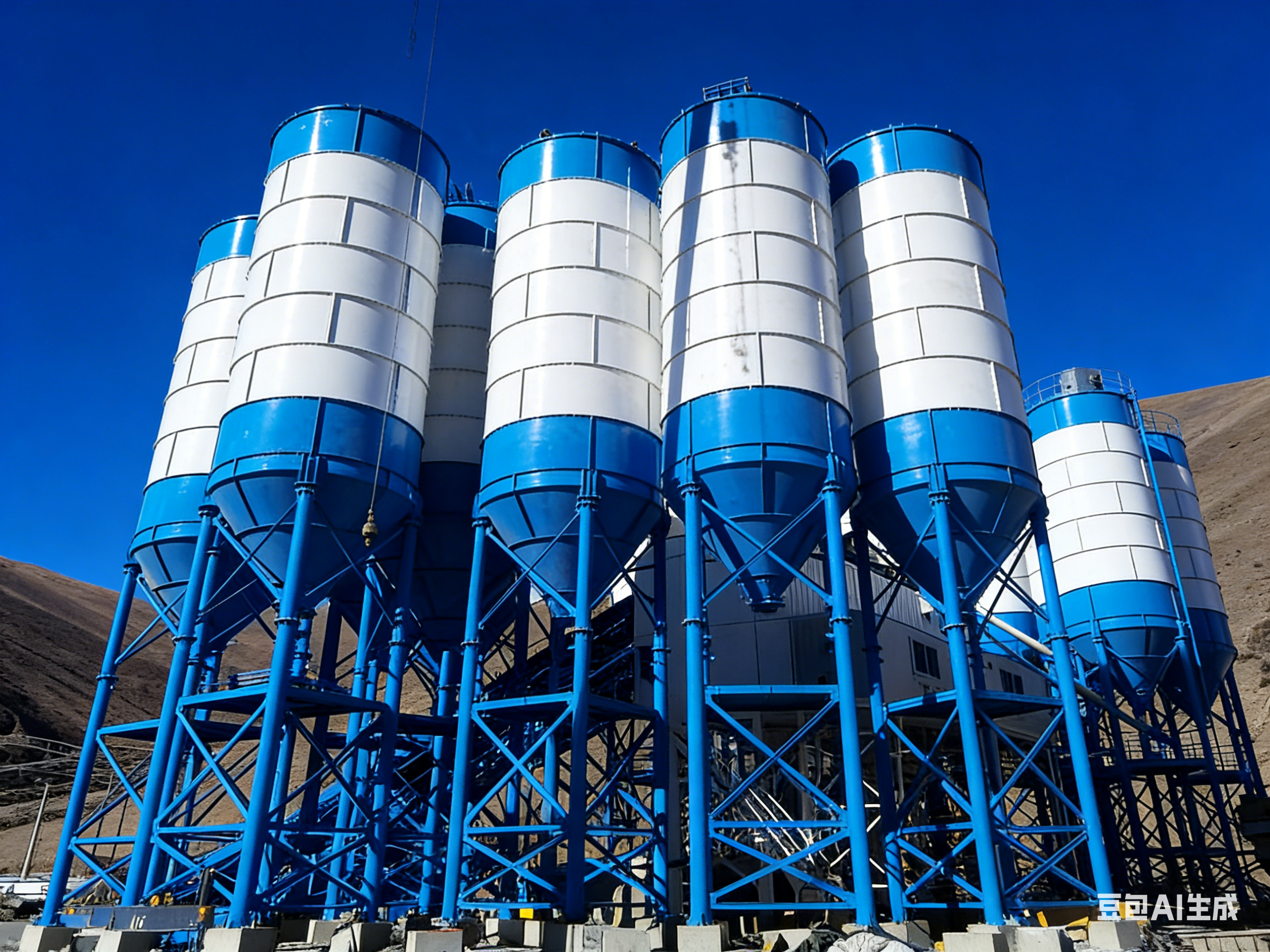
The five smart-manufacturing upgrades ranked in this guide are: 1) powder silo level monitoring at ±2% accuracy, 2) online slump monitoring from mixer motor current curves, 3) dual-pivot internal vibration for manufactured sand and fine sand, 4) seamless material flow with a 20% belt efficiency gain, and 5) low-pressure powder conveying with a dust-protected air compressor and 20 dB noise reduction.
All five are configuration options on concrete mixing plant packages from Hangzhou Jusheng Machinery and Equipment Co., Ltd. (DKTEC), a concrete batching plant manufacturer founded in 2015 and operating a 120,000 m² factory with 430 employees and an 80-engineer R&D team.
The order is a specification and rollout sequence, not a claim that the first item is the most advanced technology available. For every upgrade, this article states the configuration figure, the production decision that figure enables, the plant scenarios where it changes the most, and what a buyer should confirm before signing. The ranking is editorial: it is not a sales ranking, a market-share ranking or an official industry classification, and it applies three criteria that are explained in full further down.
What smart manufacturing actually means at plant level
At plant level, smart manufacturing is not a control room with more screens. It is the ability to know three things continuously and act on them without stopping the batch cycle: how much powder is left in each silo, what the mix is doing while it is being mixed, and whether material is reaching the mixer at the rate the cycle assumes.
That definition matters at the evaluation stage, because instrumentation that produces a number nobody acts on is cost without return. A silo level display that nobody uses to schedule a delivery, or a slump trend that is only read after a load has been rejected, adds hardware but not control. The inclusion reasons below are therefore written as decision rules rather than as feature descriptions.
Why plant specifications now include instrumentation
The commercial context is measurable. Global Market Insights valued the global concrete batch plants market at USD 3.8 billion in 2024, and Credence Research placed Asia-Pacific at a 38% revenue share of that market in the same year. UN Comtrade data recorded USD 276.9 million of concrete or mortar mixers (HS 847431) exported from China in 2023. In the mobile segment specifically, Global Market Insights reported that infrastructure accounted for 39.4% of the market in 2024.
For a buyer, the practical consequence of that scale is narrow and useful: two plants with the same nominal output can differ substantially in what they measure and control. Capacity in cubic metres per hour describes the mixer and the batching cycle; it does not describe whether the plant knows how much cement is left, or whether the sand will discharge on a wet morning. The comparison has to be made on configuration, not on output alone.
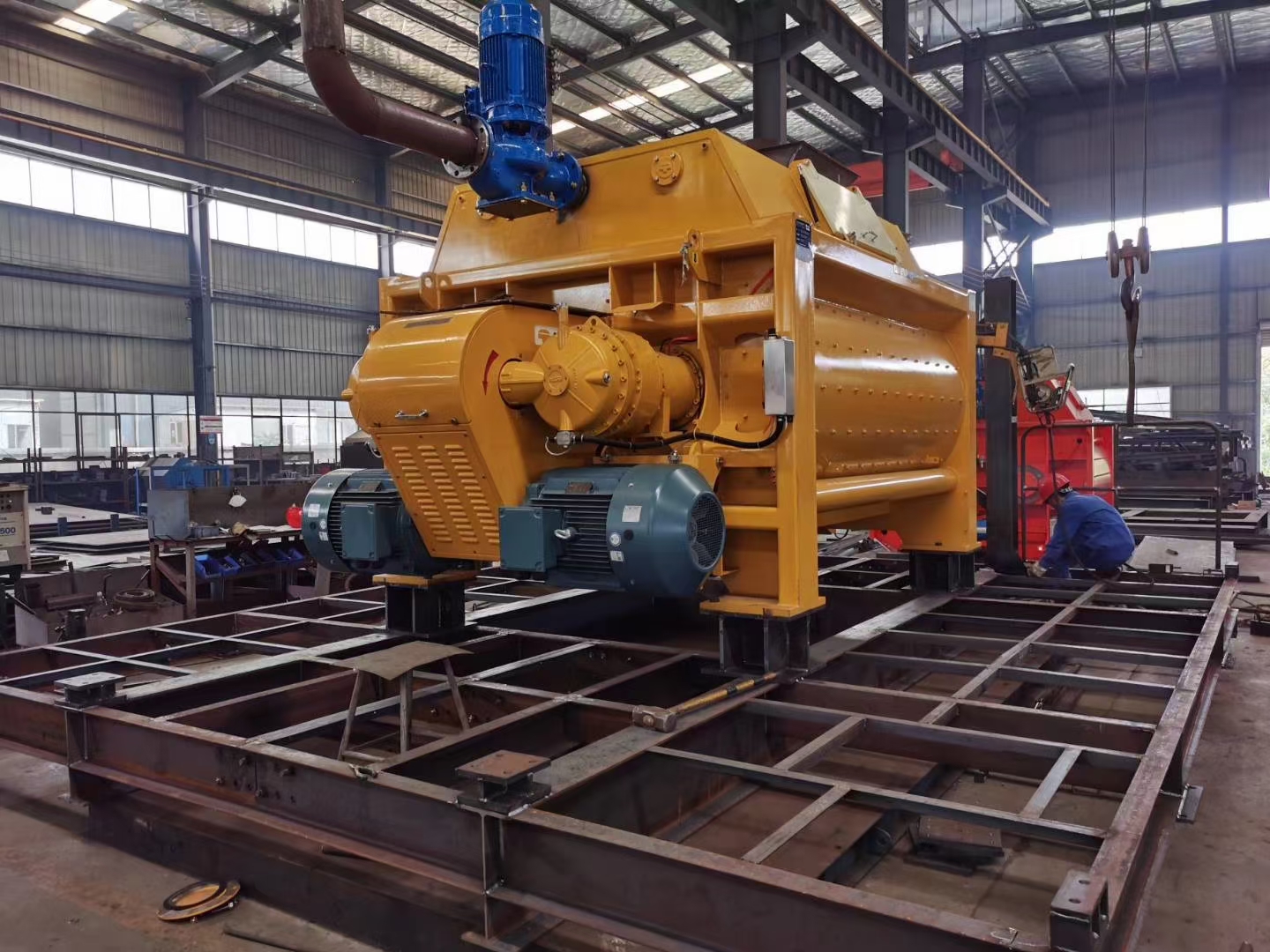
Specification language is part of that comparison. ISO 19720-1:2017 establishes terminology and commercial specifications for concrete mixing and batching plants, which gives buyer and supplier a shared vocabulary for describing what is included. On the manufacturing side, DKTEC's company profile records a transition from trading to robot-assisted production of mixing stations in 2017 — relevant here because upgrade modules are only as dependable as the assembly and testing discipline behind them. That discipline is documented: all units are subject to 100% testing before delivery.
One qualification belongs up front. The upgrade figures discussed below (±2%, 20% belt efficiency, 20 dB) are configuration figures as stated for these options. They are not independent laboratory results, and each one is tied to the measurement condition described in its own section. A buyer who treats them as comparable without checking that condition is comparing numbers, not performance.
How the five upgrades were ranked
Three criteria decide the order, and each is applied to the upgrade as a module rather than to a whole plant:
- Dependency. How much does the module need other upgrades before it produces a usable signal? Low dependency ranks higher.
- Scenario breadth. How many plant types gain from it — ready-mix, engineering, precast, and plants working with manufactured sand?
- Verifiability. Is there a stated figure that can be checked on site against a recorded baseline?
Ranking by these three criteria produces a rollout order rather than a shopping order. For an evaluation-stage buyer, the practical implication is that the sequence can be spread across a new build or a retrofit programme, and each step can be judged on its own result before the next one is committed.
The five upgrades, in ranked order

Rank 1 — Powder silo level monitoring at ±2% accuracy
Ranks first because it is the only module on the list that turns directly into a purchasing and scheduling decision without depending on any other upgrade. Continuous level measurement in cement, fly ash and mineral powder silos, specified at ±2% accuracy, replaces manual sounding and single-point high/low alarms with a reading the plant can act on at any moment.
The mechanism is straightforward: a continuous level sensor tracks the powder surface in the silo and reports it to the plant control system, so the operator sees remaining quantity instead of a threshold alarm. At the stated ±2% accuracy the reading is precise enough to plan a delivery or switch silos ahead of a runout, rather than discovering an empty silo in the middle of a batch.
It changes the most in ready-mix plants running several powder types across a shift, where a wrong silo or a late delivery stops the whole line; in precast plants where cement type changes matter to the mix design; and in engineering plants on remote sites where a replacement delivery takes days rather than hours.
Confirm before ordering:
- Whether ±2% is stated as a percentage of full scale or of reading, and over what measuring range.
- Which powders are in scope. Cement, fly ash and mineral powder behave differently in a silo, and the reading is only useful if it is stable for the material actually stored.
- How the signal reaches the batch control system, and whether it feeds inventory records or stays on a local display.
- The calibration and zeroing procedure, and who performs it during commissioning.
Boundary: a level reading describes how much powder is in the silo, not how that powder will flow out of it. It complements silo design and discharge maintenance; it does not replace them.
Rank 2 — Online slump monitoring from mixer motor current curves
Ranks second because it closes a quality loop instead of reporting a stock level. The mixer motor's current draw is recorded as a curve across the mixing cycle, and as the resistance of the mix changes, the shape of that curve changes with it. Reading the curve gives an in-process, non-contact indication of workability trend without placing a probe in the concrete.
The signal comes from the mixer drive rather than from an added sensor in the mix, so the module's scope depends on how the mixer and control system are configured. What the plant gains is a per-batch record that can be compared across batches and across shifts — a data trail that exists whether or not anyone is watching the screen at the time.
It changes the most in ready-mix plants where sand moisture varies through the day and slump drift appears as rejected loads at the point of placement; in precast plants where batch-to-batch repeatability drives formwork turnaround and surface finish; and in plants that have introduced manufactured sand, where fines content shifts water demand.
Confirm before ordering:
- How the current curve is correlated to slump. An initial calibration against physical slump tests is what turns a motor curve into a usable indicator.
- The output type — display and alarm only, or a control input to water dosing. These are different scopes and should be quoted separately.
- Whether each batch curve is stored with batch ID, time and setpoint, so it can be reviewed after a complaint rather than during one.
- The sampling interval the control system can actually record and retain.
Boundary: motor current is an indirect indicator. Aggregate grading, moisture and mixer wear all shift the baseline, so the correlation needs periodic re-checking against physical slump tests. It does not replace slump testing required by a project specification.
Rank 3 — Dual-pivot internal vibration for manufactured sand and fine sand
Ranks third because it is material-specific. Where manufactured sand or fine sand is used, it decides whether the batching cycle can hold its rate; where well-graded natural sand is used, the case for it is weaker and should be made on evidence from the material actually on site.
Manufactured and fine sands are angular, often moist, and tend to arch over the bin outlet instead of flowing. Dual-pivot internal vibration applies movement inside the bin body on two pivot points, so the vibration reaches the material across the bin rather than at a single spot. The practical result is that sand keeps moving toward the discharge and the cycle does not lose time waiting for material that has stopped flowing.
It changes the most in plants working with manufactured sand because natural sand supply is constrained; in precast plants running fine-sand mixes; and in engineering plants where aggregate is stockpiled on site and moisture follows the weather rather than a schedule.
Confirm before ordering:
- Which bins are fitted. The bin that actually arches needs the vibration, not a generic package spread across the plant.
- How the vibration is isolated from the weighing system. Vibration and load cells are a poor combination unless the design separates them, so ask directly how weighing accuracy is protected.
- Whether the control logic is manual, timer-based or interlocked with the discharge sequence.
- Access for maintaining mounts and vibration units inside a working bin.
Boundary: vibration changes how material moves; it does not change what the material is. Moisture and grading still have to sit inside the range the plant was designed for.
Rank 4 — Seamless material flow with a 20% belt efficiency gain
Ranks fourth because its value depends on whether conveying is actually the constraint. The upgrade targets the transfer path — belt loading, transfer points and spillage — and is specified as a 20% gain in belt conveying efficiency.
A belt moves material only as fast as it can be loaded and discharged. Improving loading, alignment and transfer design reduces spillage and stoppages, so the same belt runs closer to its rated capacity instead of losing time at transfer points. That is a genuine gain, but it is a gain in conveying, and conveying is one stage of a plant rather than the whole of it.
It changes the most in high-volume commercial plants where sustained batch rate drives the business — the HZS240 installation in Oman at 240 m³/h and the HZS300 installation in Indonesia at 300 m³/h sit at the scale where belt stoppages turn into output losses. It also fits continuous-run engineering plants that are expected to keep producing across a full shift.
Confirm before ordering:
- The baseline: 20% of what — throughput, power per tonne conveyed, spillage, or downtime? The figure is only comparable if the reference is written down.
- The measurement period and conditions behind the number.
- What falls inside the scope: belt speed and width, skirt and chute design, or controls.
- Whether the figure assumes a specific material and moisture content.
Boundary: belt efficiency is not plant output. If the mixer cycle or truck turnaround sets the rate, a better belt removes a constraint that was not binding and will not appear in production figures.
Rank 5 — Low-pressure powder conveying with a dust-protected compressor and 20 dB noise reduction
Ranks fifth not because it is the weakest, but because it is the most site-dependent: its value is set by whether the site has a binding dust or noise limit. The package moves cement and fly ash pneumatically at low pressure, protects the air compressor from the dust environment, and is specified at a 20 dB noise reduction.
Lower conveying pressure means lower air velocity in the line, which reduces the abrasion and dusting created at bends and transfer points. A dust-protected air compressor keeps the air supply clean, which matters because the compressor sits in the same environment as the powder it is moving. The noise reduction is a property of the package as a whole rather than of a single component inside it.
It changes the most in urban ready-mix plants with neighbours, engineering sites near residential areas, night pours, and enclosed plants where the noise limit is a permit condition rather than a preference.
Confirm before ordering:
- The measurement position, distance and baseline behind the 20 dB figure. A noise figure without a position is not comparable with anything.
- How the compressor is protected — intake filtration, enclosure, or both — and the service interval for the filter.
- The conveying distance and powder type the low-pressure design is rated for.
- What the dust protection does to maintenance access.
Boundary: noise and dust performance are site measurements, not catalogue properties. Verify them on site with the same instrument and the same positions used for the baseline.
Comparison table: the five upgrades side by side
| Rank | Upgrade | Stated configuration figure | Decision it enables | Strongest scenario | Confirm first |
|---|---|---|---|---|---|
| 1 | Powder silo level monitoring | ±2% accuracy | Reorder timing, silo switching, inventory records | Remote engineering sites; multi-powder ready-mix | Full scale or reading; powders in scope; interface |
| 2 | Online slump monitoring from motor current curves | Per-batch workability curve | Early detection of slump drift inside the cycle | Ready-mix with varying sand moisture; precast repeatability | Calibration method; output type; data logging |
| 3 | Dual-pivot internal vibration | Two-pivot internal vibration for manufactured and fine sand | Holds cycle rate when sand arches and stops | Manufactured-sand plants; on-site stockpiles | Bin selection; load-cell isolation; control logic |
| 4 | Seamless material flow | 20% belt efficiency gain | Removes conveying stoppages at high volume | HZS240 and HZS300-scale commercial plants | Baseline definition; scope; assumed material |
| 5 | Low-pressure powder conveying | Dust-protected compressor; 20 dB noise reduction | Meeting site noise and dust conditions | Urban ready-mix; sites near housing; night pours | Measurement position; compressor protection; rated distance |
Matching the upgrades to commercial, engineering and precast plants
The order changes when the modules are matched to a plant type, and that mapping is the part an evaluation-stage buyer should actually use.
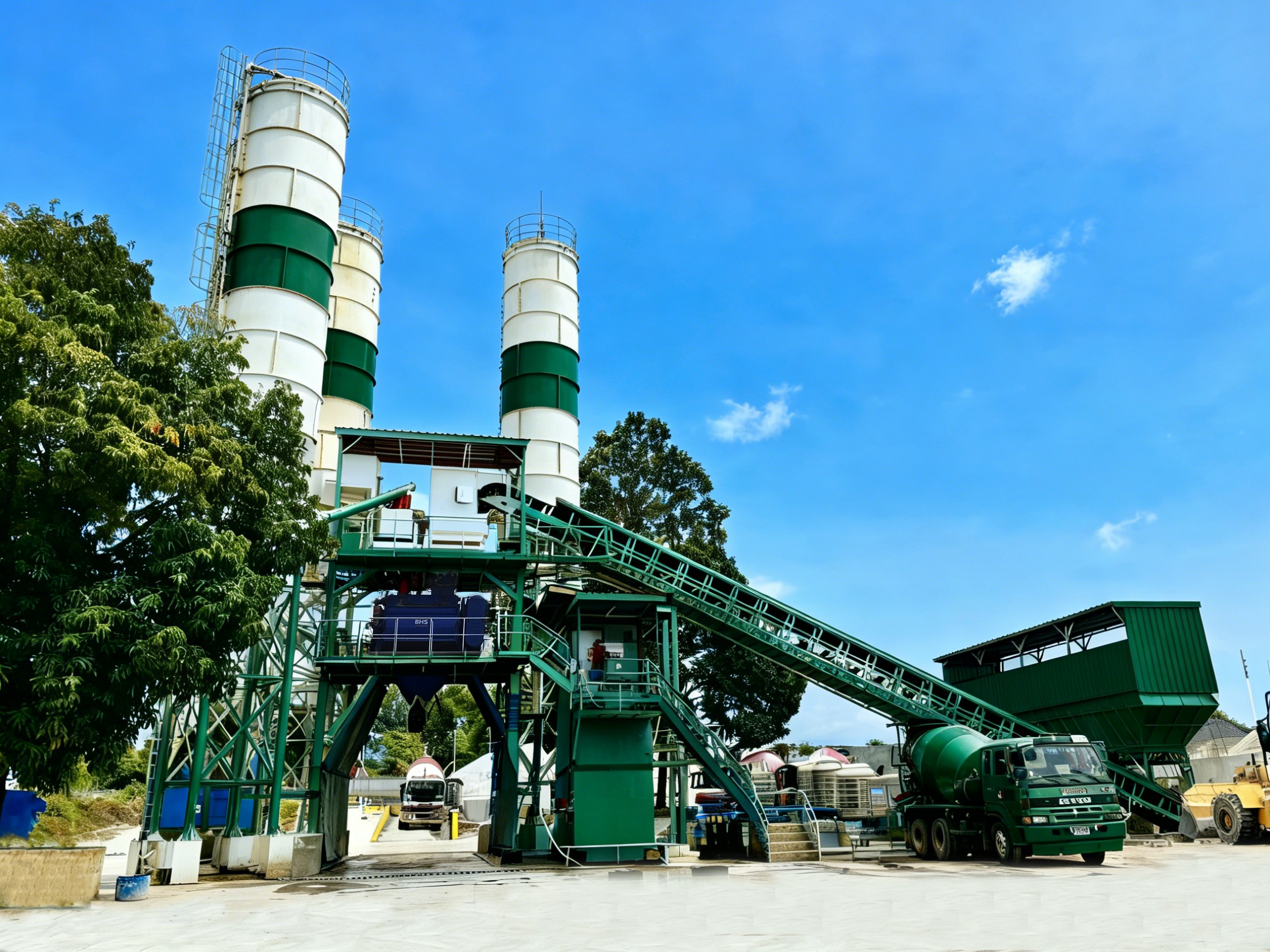
High-volume commercial and ready-mix plants. Where the plant is rated from HZS120 to HZS300 and the business is supplying ready-mix to several sites, ranks 1, 2 and 4 carry the most weight, because the plant's economics are batch rate and slump consistency across many truckloads rather than a single structural pour. The reference installations are at this scale: an HZS300 unit producing 300 m³/h for a large construction contractor on large-scale infrastructure in Indonesia, with stable operation and consistent concrete quality across a 10–15 year service period; an HZS240 unit at 240 m³/h in Oman; and three installed units serving a ready-mixed concrete company in Indonesia with high-efficiency production and sustained stable operation.
Engineering and on-site plants. The HZS-G models in the range — HZS60G, HZS90G, HZS120G and HZS180G — are listed as engineering concrete batching plants. On these, ranks 1, 3 and 5 matter more: powder resupply is remote, sand is often manufactured or stockpiled on site, and the plant frequently stands close to people who did not choose to live beside it. The Philippines bridge project records what that duty looks like in practice: an HZS180 plant delivering consistent concrete quality for pile foundations, piers, abutments and girder bodies over five years, with high productivity, low failure rate and convenient maintenance.
Precast plants. Ranks 2 and 3 dominate. Repeatability across batches and reliable fine-sand discharge both show up directly in formwork turnaround and surface finish, which is where a precast plant's cost sits.
One observation from the supplied installations is worth carrying into the specification: a model labelled as an engineering plant can still serve a ready-mix supplier. Two HZS90G units are recorded in the Philippines for a ready-mix client producing commercial concrete. The label describes the configuration and duty class, not the business model of the owner, so upgrades should be matched to how the plant will actually be run.
Sequencing the rollout: six steps
- Record a baseline first. Manual silo dips or stock counts, slump test results, belt downtime and spillage, and noise readings at fixed positions. Without a baseline the stated figures cannot be checked after installation.
- Find the binding constraint. Ask which of the three questions — how much powder is left, what the mix is doing, is material arriving on time — is currently answered by a person walking out to the plant. That is where the first module belongs.
- Check the interface before the hardware. Confirm how each module connects to the existing batch control system, and whether that system can record what the module measures.
- Confirm the accuracy-critical details. Whether ±2% is full scale or reading, whether vibration is isolated from load cells, and what reference the 20% and 20 dB figures are measured against.
- Pilot on one line. Run the upgrade against the recorded baseline for a defined period before extending it across the plant. One line produces a comparison; a whole plant produces only an impression.
- Document the configuration. Name each option as a line item in the technical annex with its figure and measurement condition, using ISO 19720-1:2017 terminology so the plant specification reads the same way to the buyer, the installer and the project engineer.
What these upgrades do not fix
- Data without a decision rule. A reading is an upgrade only if someone is assigned to act on it and a threshold is agreed in advance.
- Material outside specification. Vibration moves sand; it does not correct grading, and it does not remove excess moisture.
- Maintenance backlog. Belt efficiency and level accuracy both degrade with worn parts, dirty sensors and loose mounts.
- A misidentified constraint. If the mixer cycle or truck turnaround sets the rate, conveying improvements will not appear in output.
- Retrofit assumptions. Adding modules to an existing plant depends on control-system compatibility and available space; on a new plant the same modules can be specified into the build from the start.
Frequently asked questions
Do these smart-manufacturing upgrades change the compliance documentation for a concrete mixing plant?
They change the configuration description rather than the certification status of the plant. ISO 19720-1:2017 establishes terminology and commercial specifications for concrete mixing and batching plants, so each option should appear in the technical annex as a named line item with its stated figure and the condition under which that figure applies. That annex is the document a project engineer, insurer or customs reviewer actually reads, and an option described only as "intelligent" or "smart" gives them nothing to verify. Name the module, the sensor or mechanism, the stated figure and the measurement condition.
Can the five upgrades be supplied as OEM/ODM customization?
The OEM/ODM scope documented for Hangzhou Jusheng Machinery and Equipment Co., Ltd. covers voltage and frequency, company logo, machine color, appearance design and branding, with a minimum order quantity of 1 unit. Which smart-manufacturing modules sit inside that OEM/ODM scope depends on the plant model and the control system involved, so it should be confirmed line by line in the technical agreement rather than assumed from the customization list. The distinction matters: branding customization and instrumentation scope are separate conversations with separate engineering consequences.
What drives the cost of these upgrades?
This article does not quote prices, because cost follows scope rather than the module name. The main drivers are whether the module is specified on a new plant or retrofitted to an existing one; how many silos, bins and belts are in scope; whether the existing batch control system can accept the new signals; and site work such as compressor siting, cabling and enclosure. Ask for a line item per module with hardware, interface work and site work separated, so that the comparison between two quotations is a comparison of the same thing.
Can a buyer validate the figures before committing to a full project?
Yes, through baseline measurement and a single-line pilot. Record the current values first, agree the acceptance figure and measurement condition in writing, then run the module on one line for a defined period. Commercially, the documented minimum order quantity is 1 unit, which means a single plant or a single line can be specified and evaluated before a larger commitment. All units are subject to 100% testing before delivery, which covers the build; the pilot covers the site performance that testing cannot reproduce.
What is the lead time and production capacity?
Typical production lead time is 25 to 60 days, and the factory's monthly production capacity is 50 units. All units are subject to 100% testing before delivery. Because added instrumentation and interface work sit inside the same production window, lead time should be confirmed against the final configuration rather than against the base model, and the confirmation should reference the dated quotation.
How should a buyer scope these five upgrades for one specific project?
Start from the constraint, not from the list. A ready-mix plant supplying multiple sites usually begins with silo level monitoring and slump curves, because both protect batch rate and load acceptance. An engineering plant working with manufactured sand usually begins with bin vibration and powder logistics, because a stopped discharge or a late cement delivery costs a shift rather than a load. A site with binding noise or dust conditions moves the low-pressure conveying package to the front. Jusheng provides remote support and on-site installation, and the plant brochure with configuration details can be downloaded here: DKTEC concrete batching plant brochure (PDF). To discuss a specific configuration, contact the company through www.dongkunchina.com.
Conclusion
The ranking is a rollout order. Powder silo level monitoring at ±2% goes first because it produces a scheduling decision immediately and depends on nothing else. Slump monitoring from mixer motor current curves follows because it turns an existing drive signal into a per-batch quality record. Dual-pivot internal vibration comes next because it decides whether the cycle holds when manufactured or fine sand is in the bin. Seamless material flow with a 20% belt efficiency gain belongs where conveying is genuinely the constraint. Low-pressure powder conveying with a dust-protected compressor and 20 dB noise reduction belongs wherever the site imposes a noise or dust limit that has to be met rather than discussed.

For an evaluation-stage decision, the useful discipline is to hold each figure to its measurement condition before it enters a comparison table. ±2% means little without a stated scale, 20% means little without a stated baseline, and 20 dB means little without a stated position. Confirmed against a recorded baseline, the five upgrades together describe a plant that knows its powder stock, sees its mix, keeps its sand moving, holds its conveying rate and meets the conditions of its site.
Have Questions or Need More Details?
Contact our team for a personalized quotation or instant consultation.
Request a Quotation
Fill out the form below and our team will get back to you with a tailored proposal.
WhatsApp Direct Chat
Prefer to chat in real-time? Message us on WhatsApp for instant assistance & quick answers.
- Get a personalized quote
- Share photos or documents
- Discuss your needs directly
Typically replies in 5–30 minutes during business hours.