
Solving Discharge Problems in Concrete Mixing Plants with Manufactured Sand
Discharge problems in concrete mixing plants using manufactured sand rarely come from one component. They usually appear as slow flow at the mixer gate, material bridging in the discharge zone, inconsistent slump between batches, or repeated manual intervention to keep the line moving. The practical answer is to treat discharge as a system: material behaviour, internal vibration, material flow, and slump control must work together. Hangzhou Jusheng Machinery & Equipment Co., Ltd., founded in 2015, addresses this combination with a dual-pivot internal vibration structure in the discharge zone, online slump monitoring based on the mixer motor current curve, and optional intelligent controls that reduce manual intervention.
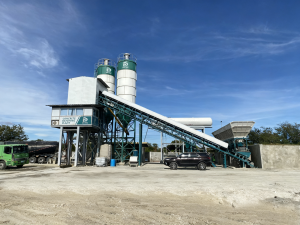
A concrete mixing plant must match discharge behaviour to the actual sand, fine sand and mineral powder mix, not only to nameplate capacity.
Problem Definition: Why Manufactured Sand Changes Discharge Behaviour
Manufactured sand is produced by crushing rock. Its particles are typically more angular and may carry a higher fines fraction than natural sand. Fine sand and mineral powder increase surface area and cohesion. In a concrete mixing plant, those characteristics change how material moves after mixing: it can hang in the discharge hopper, stick to the gate, or segregate as it falls into the truck. The result is not only slower discharge; it is a wider slump spread, more manual gate work, and a higher risk of sending a batch that does not match the mix design.
Manufactured sand does not automatically cause discharge failure. The failure point is the mismatch between the material and the discharge system. A plant designed only for free-flowing natural sand may need vibration, gate geometry, and slump feedback that match the actual mix. Common symptoms include a slower first batch, material clinging to the discharge chute, repeated opening and closing of the gate, slump tests that vary after discharge, and powder silo shortages or overfills because inventory is checked manually.
Industry Background: More Material Sensitivity, More Need for Verified Configuration
Concrete batch plants are a global equipment category. Global Market Insights valued the global concrete batch plants market at USD 3.8 billion in 2024. Credence Research reported that Asia-Pacific accounted for 38% of revenue in 2024. UN Comtrade and WITS data show China exported USD 276.9 million of concrete or mortar mixers under HS 847431 in 2023. These figures describe a large, traded equipment category, not a niche issue. As manufactured sand and mineral powder become more common in mix design, discharge and slump consistency become more sensitive to plant configuration.
Terminology matters when comparing suppliers. ISO 19720-1:2017 establishes terminology and commercial specifications for concrete mixing and batching plants. A buyer should use that common language to ask specific questions about discharge, vibration, and slump control rather than accept a generic capacity figure. Standard plants often rely on manual slump testing after the concrete leaves the plant and manual material-level checks; those practices add delay and make it harder to correct a batch before discharge.
Detailed Solution: Vibration, Material Flow and Online Slump Control
Jusheng's discharge solution combines three functions: internal vibration at the discharge zone, seamless material flow, and real-time slump monitoring, supported by optional intelligent control for multi-plant operations. The aim is to keep manufactured sand moving, reduce clogging losses, and give the operator an early signal of slump change before the batch is released.
1. Dual-pivot internal vibration structure
In the Jusheng configuration, the internal vibration technology is arranged as a dual-pivot structure in the discharge zone. In principle, two pivot points distribute vibration across the discharge area instead of concentrating energy at a single point. That matters with manufactured sand and mineral powder because the risk is often local compaction and bridging where fine particles pack against a gate or hopper wall. Distributing vibration helps keep material in motion across the discharge path rather than only at one point.
The verified performance statement for Jusheng's internal vibration technology is a 20% improvement in vibration effectiveness and reduced losses due to material clogging while maintaining the same production capacity. The structure should be evaluated with the actual mix, because vibration that is too localised can leave dead zones, while vibration that is poorly controlled can compact material further. This is why the discharge zone should be reviewed together with material flow and slump control, not as an isolated option.
2. Seamless material flow reduces first-load delay
Jusheng's seamless material flow technology is stated to increase belt conveying efficiency by 20% and reduce the time to discharge the first load by 10%. For discharge problems, the second figure matters: a shorter first-load time indicates that material reaches the gate and starts flowing with less hesitation. This is not a substitute for vibration, but it reduces the queuing effect that makes a small blockage look like a plant-wide delay. The same technology is linked to reduced specific power consumption and lower losses from material clogging at the same production capacity.
3. Online slump monitoring from the mixer motor current curve
Jusheng provides real-time, online slump monitoring based on the mixer's motor current curve. Standard plants rely on manual testing after the concrete leaves the plant. The current curve gives a continuous signal of mixer load during mixing; a change in the curve can indicate a slump trend before the batch is discharged. The operator can then decide whether to adjust the batch or hold it, rather than discovering the problem in the truck.
Online monitoring supports consistent output because it turns slump from a post-discharge check into an in-process signal. It does not replace laboratory testing or project acceptance tests; it reduces the delay between a change in the mixer and the decision about that batch. For manufactured sand mixes, that delay is where slump variation often becomes a rejected load.
4. Optional intelligent configurations that reduce manual intervention
Jusheng's intelligent control package includes over a dozen intelligent technologies. Relevant to discharge and material flow are dual-control for a single unit, intelligent powder silo level monitoring with ±2% accuracy relative to maximum capacity, and ERP, PLC and mobile app integration. The one operator, two plants control system is stated to reduce labor costs by 50% compared to standard control, based on internal data.
These options reduce manual intervention in three places: material level checks, slump checks, and coordination between two plants. Intelligent level monitoring replaces manual tank tapping or plumb-bob gauges, which can carry significant errors. Intelligent material ordering reduces bin overflow and material shortage losses and minimises air compressor idling and emergency pneumatic conveying.
Jusheng's intelligent package requires a higher initial investment than standard control. The trade-off is faster recovery through labor consolidation and fewer losses from bin overflow or material shortage. For a single small plant without strict automation requirements, standard control may be sufficient; for multi-plant group operations and commercial concrete producers, the intelligent configuration is the relevant comparison.
5. Weighing and plant parameters that support discharge consistency
The HZS120 provides a theoretical capacity of 120 m³/h, a 2000 L mixer with SICOMA MAO3.0 and 37 kW × 2 motors, discharge height ≥3.8 m, installed power 210 kW, and weighing accuracy of ±2% for aggregates and ±1% for cement. Weighing accuracy does not fix a blocked gate, but it prevents batch-to-batch variation from being confused with a discharge problem. When aggregate and cement weights are stable, a slump change is more likely to be a real material or moisture signal.
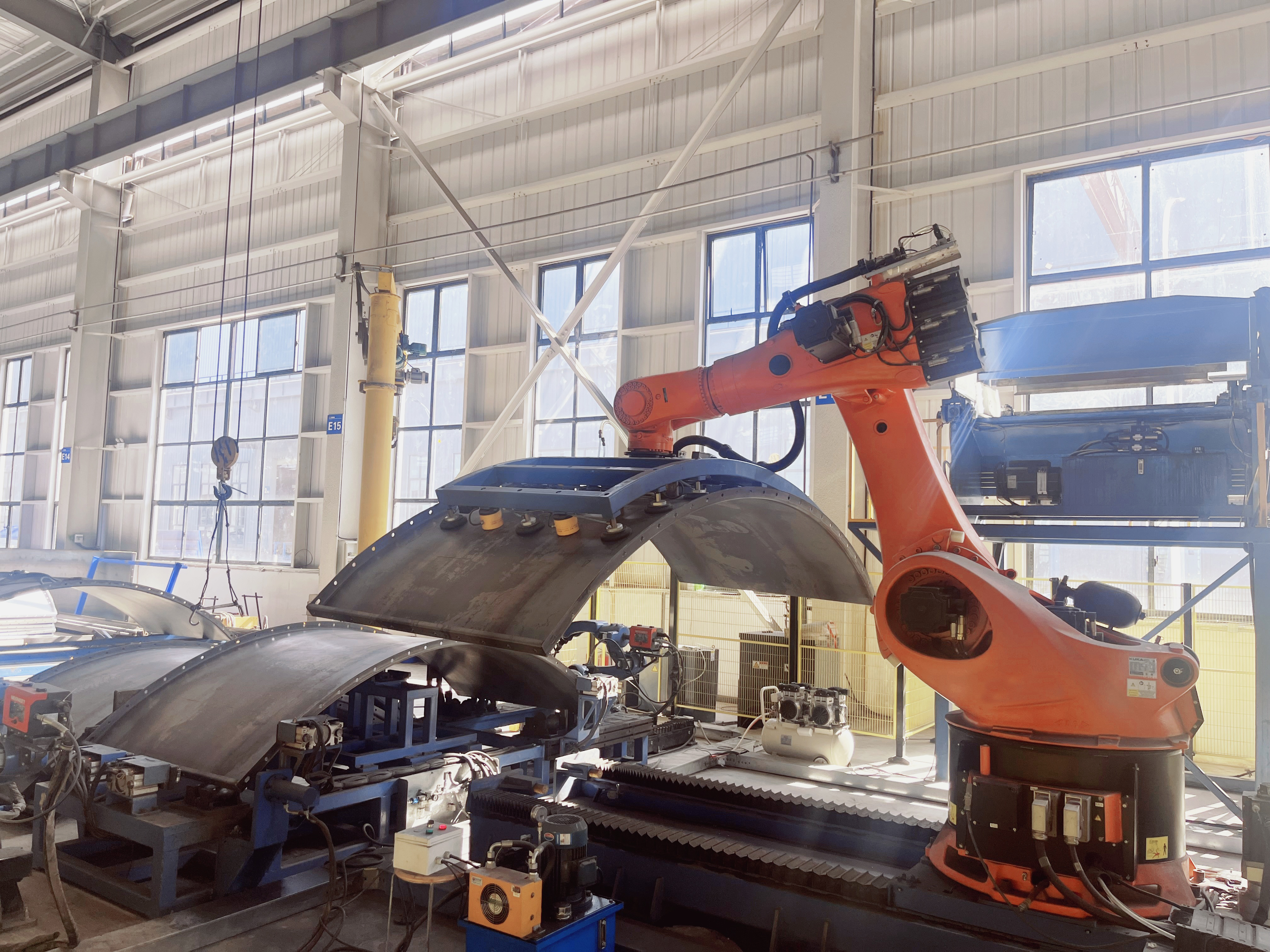
Factory pre-assembly and debugging reduce on-site variables that can affect discharge performance after commissioning.
Step-by-Step Breakdown: Evaluating a Discharge Configuration
Use the following sequence to evaluate or troubleshoot discharge with manufactured sand. Each step maps to a verifiable plant feature rather than a general claim.
- Define the mix and the discharge target. Record the manufactured sand source, fines content, mineral powder ratio, and target slump range. This is the baseline for any discharge discussion.
- Inspect the discharge zone for internal vibration. Ask whether vibration is distributed across the discharge area and how it is controlled. In Jusheng's configuration, the dual-pivot internal vibration structure is the relevant feature; the verified outcome is 20% higher vibration effectiveness and reduced clogging losses.
- Check how slump is measured. If the plant relies only on manual testing after discharge, ask whether online slump monitoring from the mixer motor current curve is available. Confirm that the signal is used during mixing, not only logged after the fact.
- Verify material-level control. Manual tank tapping and plumb-bob gauges can have significant errors. Jusheng's intelligent powder silo level monitoring is stated at ±2% relative to maximum capacity. This reduces the chance that a shortage triggers emergency conveying during a discharge sequence.
- Decide the operating model. For two plants under one operator, the optional dual-control system is the relevant configuration; labor cost reduction is stated at 50% based on internal data. For a single small plant, standard control may be enough.
- Confirm first-load and conveying performance. Jusheng's seamless material flow technology is stated to increase conveying efficiency by 20% and reduce first-load discharge time by 10%. Use these as questions in factory acceptance and commissioning.
- Commission with the actual material. Jusheng's modular design reduces on-site installation workload by 20% compared with traditional site-welded plants; mobile stations can be operational within approximately 3 days of arrival. Commissioning should include a run with the project's manufactured sand and mineral powder, not a substitute material.
Use Cases: Where the Configuration Fits
Ready-mix concrete plants using manufactured sand and mineral powder: the combination of online slump monitoring and intelligent level monitoring targets the two most common manual interventions, namely slump checks and material-level checks. This is the core fit for a plant that must maintain consistent output across varied sand deliveries.
Commercial concrete producers with multiple plants: the optional one operator, two plants control system is designed for multi-plant group operations. It allows load sharing between stations during peak and off-peak periods and reduces labor cost by 50% based on internal data. For a group running two plants on one site, this changes the labor model as well as the data model.
Highway and railway projects with phased or relocating production: the HZS120Y mobile plant integrates components on a single-piece chassis with axles and tires and can be towed. It has a theoretical capacity of 120 m³/h and 160 kW installed power, 24% lower than the stationary HZS120 in the same class. For discharge, the value is that the plant can be positioned close to the pour, reducing truck transport time and the window in which slump can change.
Precast and commercial operations sensitive to batch uniformity: the HZS120 uses SICOMA or BHS mixers, Meidia or Keli load cells, and Erip or Airtac cylinders as standard; weighing accuracy is ±2% for aggregates and ±1% for cement. These are configuration choices that support repeatable discharge behaviour rather than a single fix for every material.
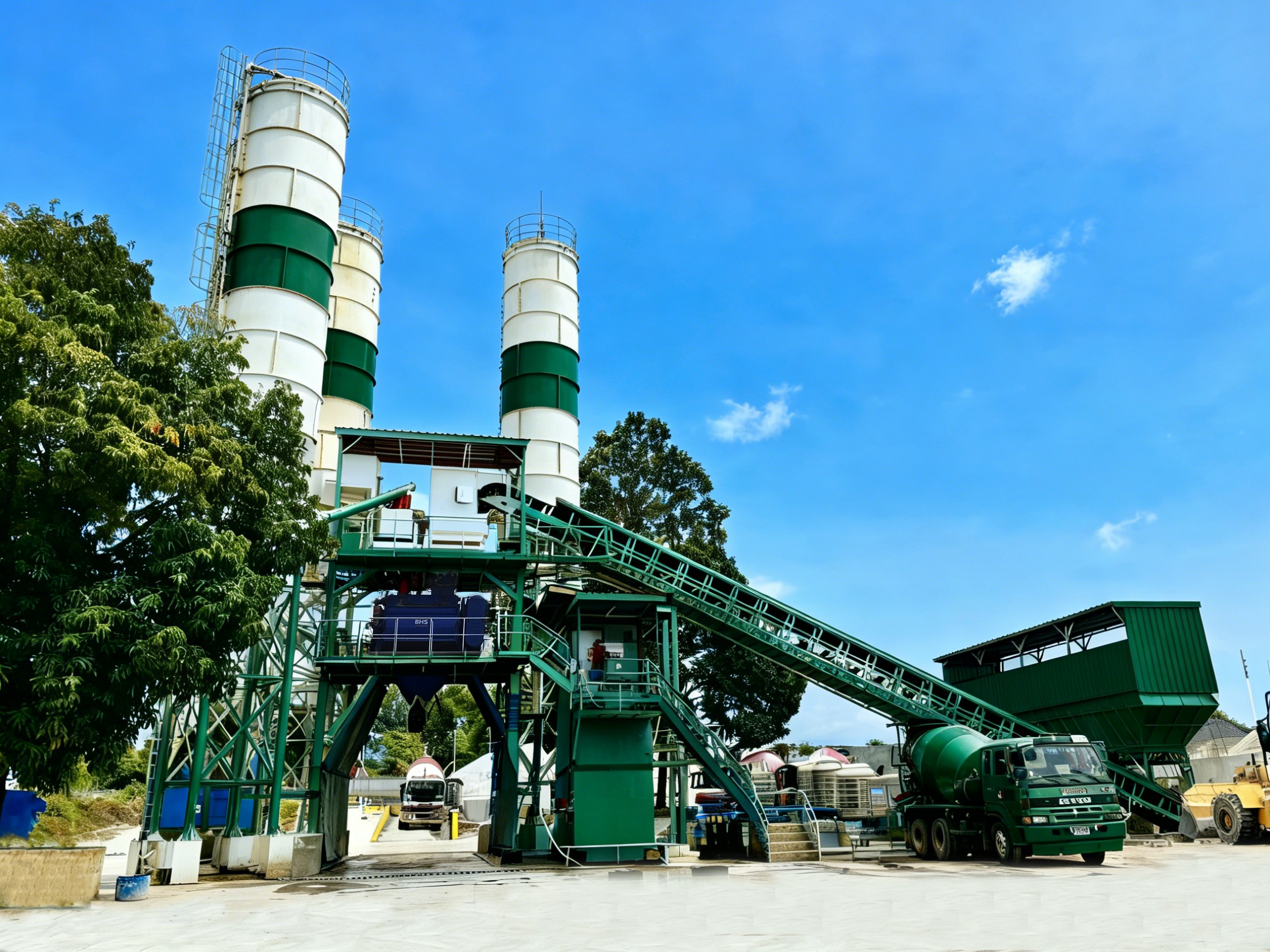
A modular concrete mixing plant can be configured with different mixer brands and discharge controls to match the mix design.
Comparison Table: Standard Control vs Jusheng Intelligent Configuration
The table below uses verified comparison facts for discharge-related decisions. It does not assume that every project needs the intelligent package; it shows where the differences appear.
| Decision factor | Standard industry control | Jusheng intelligent configuration | Why it matters for discharge |
|---|---|---|---|
| Slump monitoring | Manual testing after the concrete leaves the plant | Real-time online monitoring based on the mixer motor current curve | Gives an in-process signal before the batch is released |
| Powder silo level | Manual tank tapping or plumb-bob gauge, with significant errors | Intelligent monitoring at ±2% relative to maximum capacity | Reduces shortage or overflow events that interrupt discharge |
| Labor model | Single-station, single-control operation | Optional one operator, two plants; labor cost reduction of 50% based on internal data | Reduces manual coordination during peak discharge periods |
| Material ordering | Manual inventory checks; risk of overflow or shortage; emergency pneumatic conveying | Intelligent material ordering; reduces overflow and shortage losses; minimises air compressor idling | Keeps material supply stable through the discharge sequence |
| Data integration | Data silos; manual checks; on-site fault diagnosis | ERP, PLC and mobile app for real-time material level monitoring | Makes discharge and material status visible without walking the plant |
| Initial cost | Lower initial investment | Higher initial investment; recovered through labor consolidation and material-loss reduction | Requires a total-cost view, not only a purchase-price view |
FAQ: Discharge Problems with Manufactured Sand
What standard should buyers use when comparing concrete mixing and batching plant specifications?
ISO 19720-1:2017 establishes terminology and commercial specifications for concrete mixing and batching plants. Project compliance still depends on local rules and project specifications. For configuration checks, the Jusheng HZS120 provides weighing accuracy of ±2% for aggregates and ±1% for cement, which supports repeatable batch composition before discharge.
How does Jusheng's plant reduce discharge blockages with manufactured sand?
The plant combines a dual-pivot internal vibration structure in the discharge zone with seamless material flow and online slump monitoring. Jusheng's internal vibration technology is stated to improve vibration effectiveness by 20% and reduce losses due to material clogging at the same production capacity. Seamless material flow is stated to increase conveying efficiency by 20% and reduce first-load discharge time by 10%.
Is the intelligent discharge configuration more expensive than standard control?
Yes, the intelligent package requires a higher initial investment than standard control. Jusheng states that the package recovers labor costs by consolidating two stations under one operator and reduces losses from bin overflows or material shortages. The one operator, two plants control system is stated to reduce labor costs by 50% compared to standard control, based on internal data.
Can the plant be configured and validated for a specific manufactured sand and mineral powder mix?
Jusheng offers flexible configuration of main units and components across SICOMA, BHS, SDMIX and DK mixers, as well as SICOMA or WAM screw conveyors and butterfly valves. The company provides customized solutions, equipment delivery, installation and commissioning, and lifelong maintenance. A material-specific review should use the project's actual manufactured sand, fine sand and mineral powder rather than a generic reference mix.
How long does installation take after delivery?
Jusheng's modular design reduces on-site installation workload by 20% compared with traditional site-welded plants. Mobile stations can be operational within approximately 3 days of arrival, while a stationary plant in the same class requires a significantly longer installation period. To review installation scope for a specific project, contact Jusheng through www.dongkunchina.com or download the concrete batching plant brochure.
Conclusion: Solve Discharge as a System, Not a Single Component
Discharge problems with manufactured sand are best solved as a system problem. The plant must match the material: distributed internal vibration at the discharge zone, seamless material flow that reduces first-load delay, and online slump monitoring that gives an in-process signal. Jusheng's configuration adds optional intelligent controls for material level, dual-plant operation, and ERP, PLC and mobile app integration. The result is less manual intervention and more consistent output, provided the buyer validates the configuration against the actual mix.
Hangzhou Jusheng Machinery & Equipment Co., Ltd. provides customized solutions, equipment delivery, installation and commissioning, and lifelong maintenance for concrete mixing plants. For a discharge configuration review, contact linder@dongkunchina.com or +86 18888972181, or visit www.dongkunchina.com.
Next Step: Review the Plant Configuration Against Your Mix
Download the concrete batching plant brochure for configuration reference, then request a material-specific discharge review for your manufactured sand, fine sand and mineral powder mix.
Download the DKTEC concrete batching plant brochure | Visit Jusheng
Have Questions or Need More Details?
Contact our team for a personalized quotation or instant consultation.
Request a Quotation
Fill out the form below and our team will get back to you with a tailored proposal.
WhatsApp Direct Chat
Prefer to chat in real-time? Message us on WhatsApp for instant assistance & quick answers.
- Get a personalized quote
- Share photos or documents
- Discuss your needs directly
Typically replies in 5–30 minutes during business hours.