
Concrete Mixing Plant Compliance Guide: Global Market, Dust, Noise and Controls
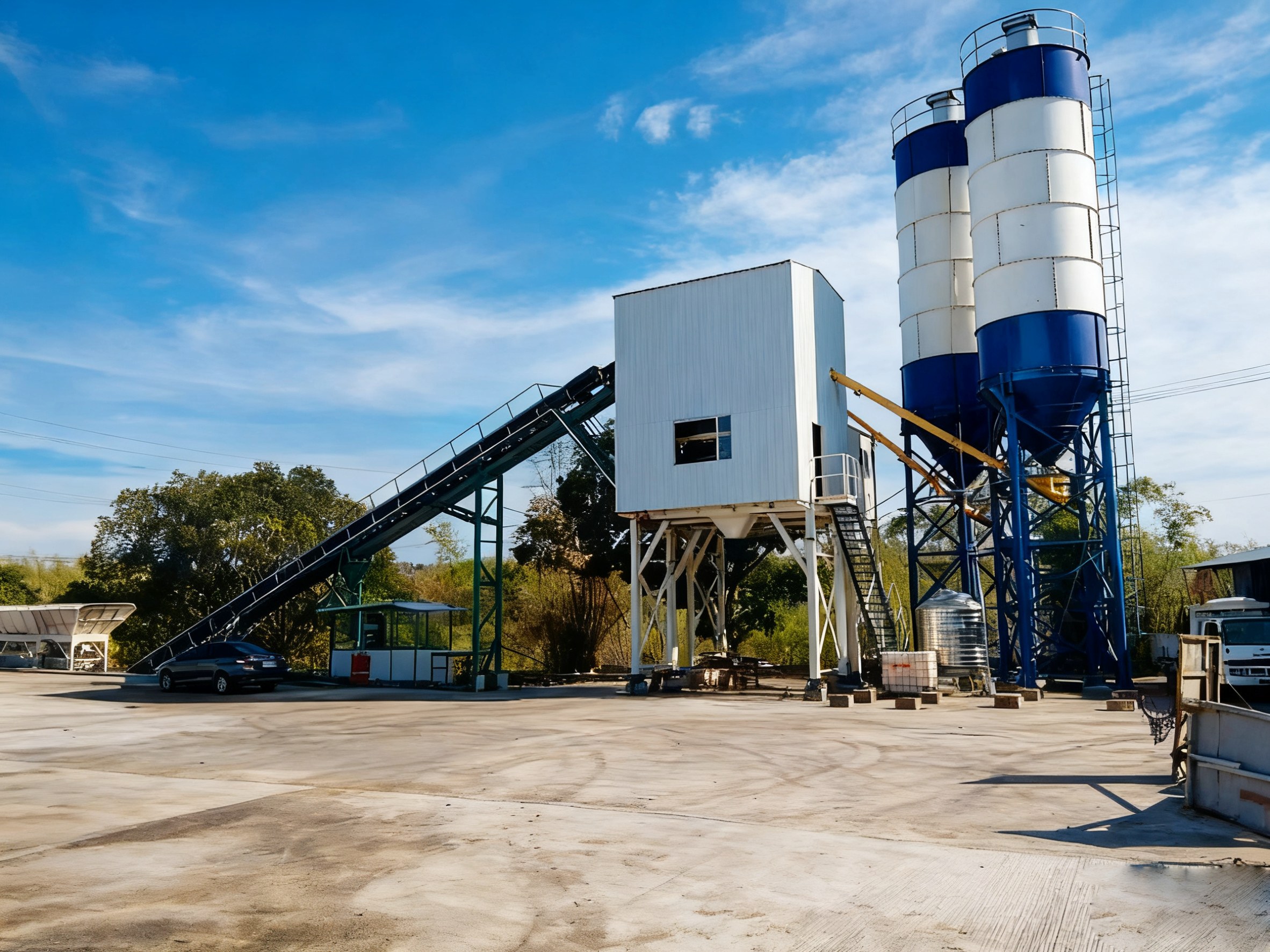
A concrete mixing plant with dust containment, acoustic treatment and monitoring instrumentation installed as an integrated configuration rather than as site retrofits.
A concrete mixing plant is approved or rejected on the details that never appear in a capacity table. The deciding factors are the control room, the electrical configuration, the monitoring instrumentation, the dust containment around pneumatic powder handling, and the noise treatment applied to compressors and mixers. Buyers evaluating a concrete mixing plant for an overseas project should therefore treat compliance as a configuration decision made before the purchase order, not as a local fix attempted after the equipment arrives on site.
This guide is written for importers, ready-mix producers, EPC contractors, precast manufacturers and channel partners who are at the evaluation stage. It explains what compliance actually covers for batching equipment, how the global market is structured, which support systems carry the highest deployment risk, and which parameters can be verified with a supplier before shipment. It also shows how Hangzhou Jusheng Machinery & Equipment Co., Ltd. (DKTEC) configures those systems, including an optional screw-type air compressor with dust protection, a noise-reduction configuration specified at 20 dB, and intelligent powder silo level monitoring specified at ±2% inventory accuracy.
One clarification stated at the outset: this guide does not assert any certification that has not been verified. Where a standard is cited, it is identified by its published number and publisher. Where a parameter is quoted, it comes from the manufacturer's own specification sheets.
Problem Definition: Compliance Is a Plant-Level Engineering Problem
The word “compliance” is used loosely in equipment procurement. For a batching plant it resolves into four measurable questions that a buyer can put to any supplier:
- Emissions: does the plant contain cement and aggregate dust at transfer points, silo pressure relief vents and pneumatic conveying lines?
- Noise: does the plant stay within the limits imposed by the site permit, the surrounding land use, or the project owner's specification?
- Electrical and control integrity: does the plant operate on the target market's voltage and frequency, and is the control system documented well enough to be maintained and audited locally?
- Measurement accuracy: are weighing and monitoring accuracies stated, repeatable, and verifiable at pre-delivery testing?
ISO 19720-1:2017, published by the International Organization for Standardization, establishes terminology and commercial specifications for concrete mixing and batching plants. It is a useful reference for what a specification sheet ought to contain, but it does not replace site-level permits, which vary by country, region and even municipality.
Industry Background: A USD 3.8 Billion Market With Diverging Local Rules
Global sizing places the concrete batch plants market at USD 3.8 billion in 2024, according to Global Market Insights. Regional concentration is significant: Asia-Pacific accounted for a 38% revenue share of that market in 2024, based on Credence Research's market report. On the mobility side, the infrastructure segment represented 39.4% of the mobile concrete batch plant market in 2024, again reported by Global Market Insights.
Trade data confirms that China remains a major supply origin for mixing equipment. Exports of concrete or mortar mixers under HS code 847431 from China reached USD 276.9 million in 2023, according to UN Comtrade data published through the World Bank's WITS platform.
Growth forecasts should be read with more caution than market size. Published estimates diverge widely — one commercial research house projects a compound annual growth rate of roughly 3.5% for 2025–2034, while another reports 18.4% to 2030. The difference is largely methodological: the higher figure tends to bundle smart automation and software services into nominal equipment value. For a buyer, this means the forecast number matters far less than the configuration list, because it is the configuration that determines whether a specific plant can operate legally at a specific site.
Hangzhou Jusheng Machinery & Equipment Co., Ltd. is a China-based manufacturer of concrete mixing plants and mining machinery. The company was founded in 2015 and transitioned from trading to robot-assisted production of mixing stations in 2017. It operates a 120,000 m² facility with 430 employees, an annual output of 2,000 units and an R&D team of 80 engineers, exporting approximately 80% of production to markets including the Middle East, Southeast Asia, Africa, Europe, Central Asia, West Asia, Australia and South America.
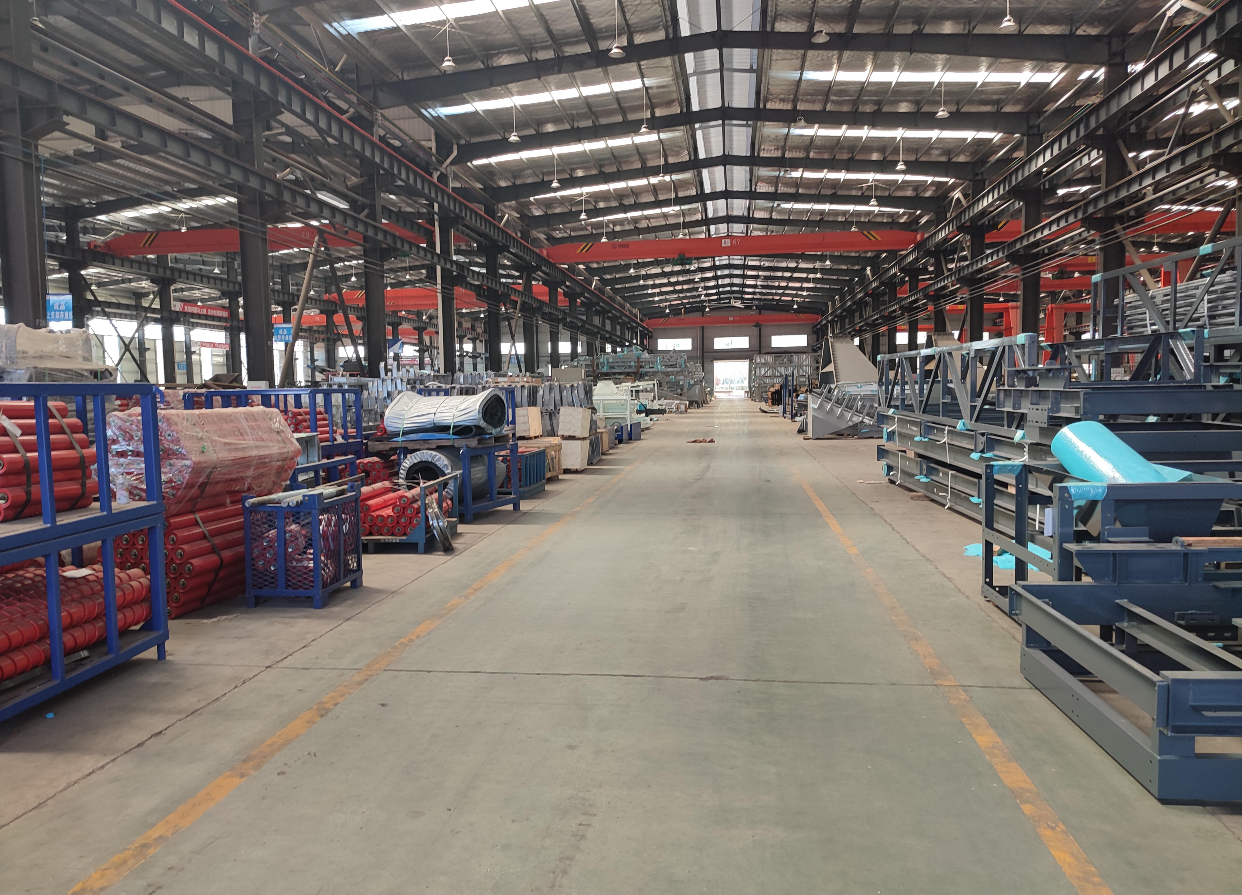
Production workshop: since 2017, mixing stations have been built on robot-assisted production lines at the 120,000 m² Hangzhou facility.
Detailed Solution: The Compliance-Critical Support Systems
Compliance is delivered by a set of supporting systems that sit around the mixer rather than inside it. Each one can be specified, inspected and documented separately, which is what makes an itemized configuration sheet so valuable during evaluation.
1. Control Room and Operator Enclosure
The control room is where compliance becomes operational rather than theoretical. It houses the weighing controller, the batching recipe system and the operator interface, and it should keep those electronics in a stable environment — protected from dust ingress, temperature swings and vibration transmitted from the mixer platform. In procurement terms, the control room is also a documentation hub: batch records, calibration logs and operating procedures are generated and stored there.
For overseas deployment, the control room specification should match the operator's environment rather than the factory's. That typically means attention to panel protection where dust is heavy, and to enclosure thermal design in high-ambient markets across the Middle East and Africa. Jusheng configures control and electrical enclosures within its OEM/ODM customization scope.
2. Electrical System: Voltage and Frequency Matching
Voltage and frequency mismatch is one of the most avoidable causes of commissioning delay. Motors, contactors, sensors and control transformers are frequency-dependent, and a plant built for one grid rarely performs correctly on another without modification. Voltage and frequency customization is offered as a standard OEM/ODM option, alongside company logo, machine color, appearance design and branding customization.
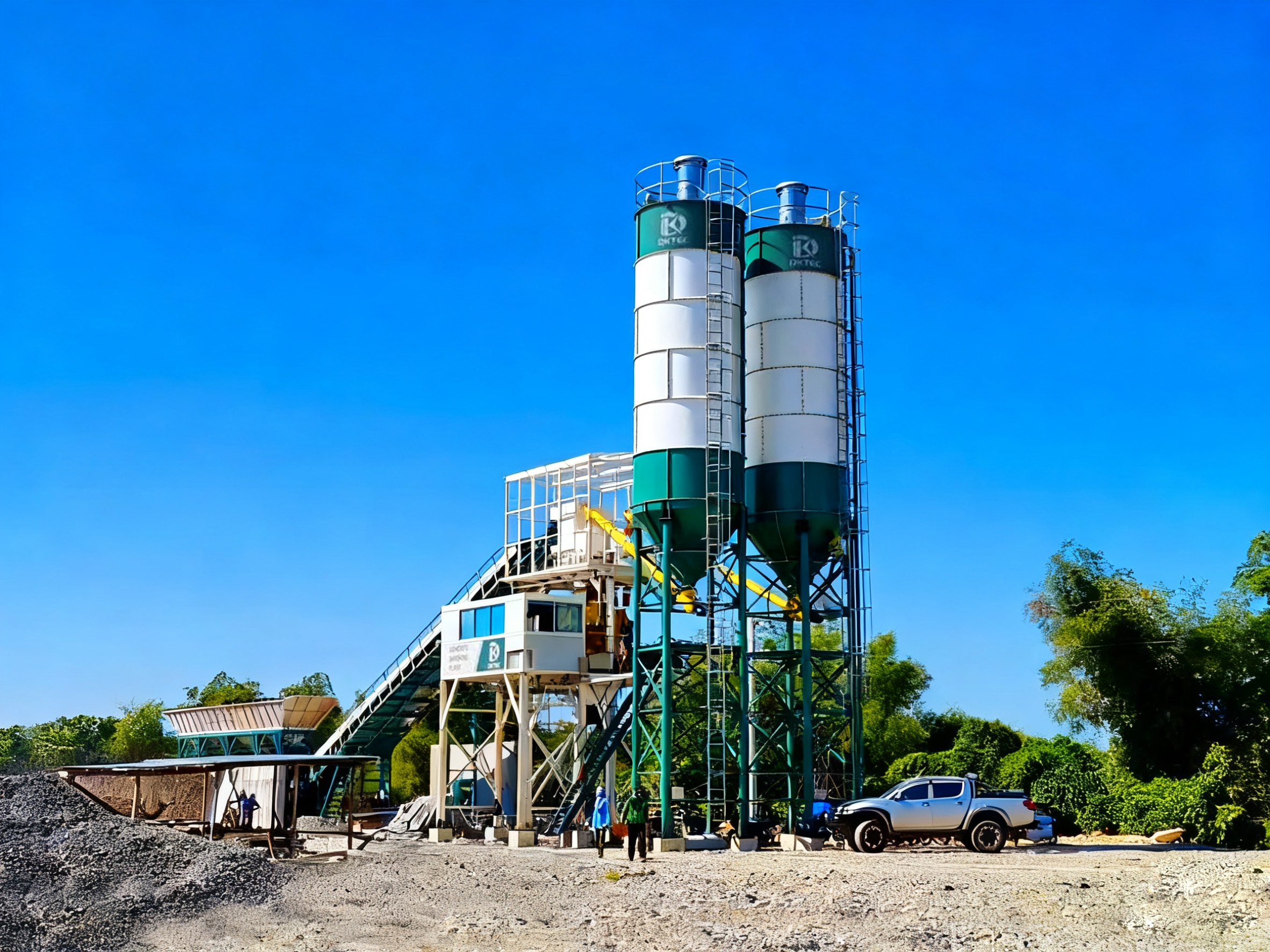
Support systems are quoted as separate line items: control enclosure, electrical configuration, instrumentation and optional dust or noise packages.
3. Monitoring and Intelligent Powder Silo Level Measurement
Powder inventory is simultaneously a cost issue and a compliance issue. Overfilling a cement silo causes vent discharge and dust release; underfilling interrupts production and forces rushed deliveries. Intelligent powder silo level monitoring is specified at ±2% inventory accuracy, which gives operators a usable signal for reorder planning and for preventing overfill events instead of relying on manual dip checks. That accuracy figure is the natural verification point a buyer should ask to see demonstrated.
The same instrumentation logic extends to weighing. Across the HZS series, aggregate weighing accuracy is specified at ±2%, while cement, mixing powder, water and additive weighing are each specified at ±1%. Those are the numbers that determine mix conformity and material waste, and they should be confirmed at pre-delivery testing rather than assumed from a brochure.
4. Dust Control: Screw-Type Air Compressor With Dust Protection
Dust in a batching plant concentrates at a few predictable points: aggregate charging into the skip or belt, cement transfer into the mixer, silo pressure relief, and the pneumatic conveying system that moves powder between silos and the weigh hopper. The screw-type air compressor with dust protection is an optional configuration that keeps the pneumatic supply protected while supporting cement and powder conveying and silo aeration — the part of the plant most continuously exposed to fine cement dust.
Dust control performs best as a package rather than as isolated add-ons: sealed transfer points, correctly sized silo vent filtration, enclosed conveying runs, and a dust-protected air supply. Partial treatment usually shifts the problem to another point in the circuit instead of solving it.
5. Noise Reduction: A 20 dB Optional Package
Noise from a concrete mixing plant originates mainly from the air compressor, the mixer under load, aggregate handling and the pneumatic system. Where a site sits close to residential land use, or where the project owner sets an internal noise ceiling, an optional noise-reduction configuration specified at 20 dB reduction is available. Noise treatment is a design decision, so it belongs in the quotation stage: retrofitting acoustic treatment around a working plant is far more disruptive and more expensive than specifying it before production.
Ranked Priority: Six Compliance-Critical Systems by Deployment Risk
Not every compliance feature carries the same risk if it is omitted from the specification. Ranked below by the practical consequence of leaving each one out, from highest deployment risk to lowest, this is the order in which an evaluation team should verify them.
- Weighing and batching accuracy (aggregate ±2%; cement, mixing powder, water and additive ±1%). This affects every cubic meter produced. Without stated and tested weighing accuracies, mix conformity cannot be demonstrated to an owner or a regulator.
- Dust containment and dust-protected air supply. The most common source of permit complaints and the hardest item to retrofit after installation. Includes silo venting, sealed transfer points and the screw-type air compressor with dust protection.
- Electrical configuration for the target grid. A voltage or frequency mismatch can halt commissioning entirely. Low cost when specified early, high cost when discovered on site.
- Noise attenuation (20 dB optional package). Site-dependent, but where limits apply, non-compliance can restrict permitted operating hours rather than merely attracting complaints.
- Intelligent powder silo level monitoring (±2% inventory accuracy). Prevents overfill discharge and material planning errors, supporting both compliance and cost control.
- Control room specification and documentation. Lower direct risk, but it determines whether a local team can operate, calibrate and audit the plant consistently over its service life.
Step-by-Step: Deploying a Compliant Concrete Mixing Plant
The sequence below is ordered to prevent retrofits. Moving configuration decisions earlier in the process is the single most effective way to reduce compliance cost.
- Define the local rule set before selecting a model. Identify the permitting authority, the applicable noise limits, the dust emission or nuisance requirements, and the site's voltage and frequency.
- Translate those rules into a configuration list. Convert each requirement into a purchasable line item: silo vent filter sizing, compressor type, acoustic treatment, enclosure protection, control voltage.
- Select the plant class and mobility. Stationary concrete batching plants suit fixed ready-mix or precast yards; mobile and portable units suit distributed infrastructure work where the plant relocates between sites.
- Fix the accuracy requirement. Confirm aggregate weighing at ±2% and cement, water, mixing powder and additive weighing at ±1%, and agree in advance how these will be tested and recorded.
- Specify optional dust and noise features at quotation stage. Dust-protected screw-type air compressor, sealed transfer points, and the 20 dB noise-reduction package wherever local limits apply.
- Verify before shipment. Quality control follows 100% test procedures — all units are subject to 100% testing before delivery. Request the test record against the specified parameters rather than a general statement of conformity.
- Plan installation, commissioning and support. Installation support is available remotely or on site, which matters when the buyer's local team has not commissioned this plant class before.
Use Cases: Matching Compliance Configuration to Project Type
Large-Scale Commercial and Infrastructure Supply
A large construction contractor in Indonesia operates one HZS300 commercial concrete batching plant at 300 m³/h for large-scale infrastructure projects. The plant has provided continuous service for 10–15 years, with high-volume production, stable operation and consistent concrete quality. A comparable deployment in Oman uses an HZS240 commercial plant at 240 m³/h on a large-scale infrastructure project, again with a 10–15 year service period and stable, consistent output.
Ready-Mix Concrete Production
Ready-mix concrete suppliers in the Philippines installed two HZS90G engineering batching plants for commercial concrete production, reporting stable operation and consistent concrete quality with high-efficiency production, precise weighing and reliable performance. Where compliance configuration matters most for ready-mix operators is the weighing system and the silo instrumentation, because both feed directly into mix conformity and material cost per cubic meter.
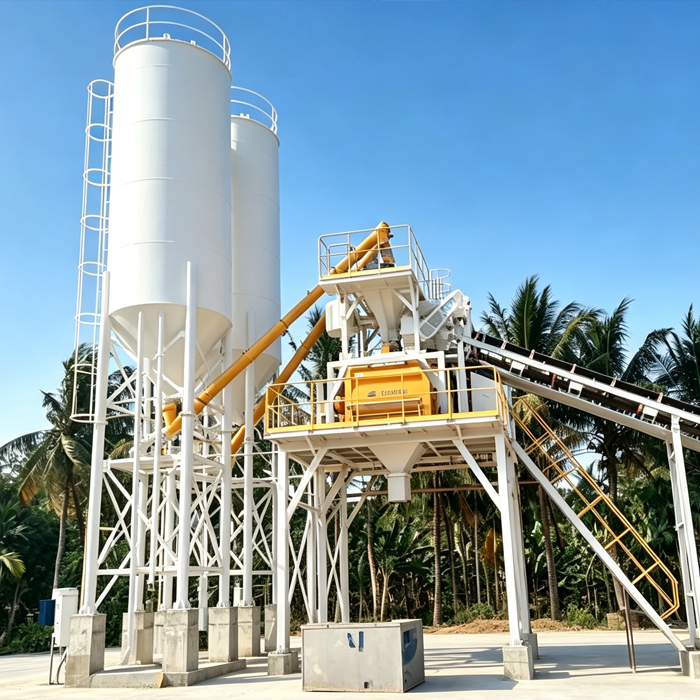
HZS90G engineering batching plant: 90 m³/h output, 1,500 L nominal capacity, aggregate weighing at ±2% and cement, water and additive weighing at ±1%.
Bridge and Structural Engineering
A concrete supplier in the Philippines deployed an HZS180 plant for bridge engineering, supplying concrete for pile foundations, pile caps, piers, abutments and girder bodies. The unit has operated for five years with high productivity, a low failure rate and convenient maintenance. Long-duration structural projects place a premium on weighing stability, because drift in aggregate or cement measurement shows up directly in structural quality records.
Mobile and Remote Sites
Mobile concrete batching plants, from HZS25Y at 25 m³/h through HZS120Y at 120 m³/h, are widely used in construction, road and bridge projects, water conservancy, mining, railway, infrastructure, precast concrete production and remote construction projects. For relocatable plants, compliance risk shifts to the acoustic package and dust sealing, because the plant may move from a low-sensitivity site to a residential-adjacent one within the same contract.
Procurement Vocabulary: Mapping Labels to Parameters
Buyers frequently search for plants using charging or mixing labels — skip-hoist concrete mixing plant, twin-mixer or twin-shaft designs, automatic versus manual operation. These labels describe the same plant class from different angles. During evaluation they should be mapped to a specific model and a specific parameter set, including output, installed capacity, nominal capacity and weighing accuracy, rather than treated as a substitute for those numbers.
Comparison Table: HZS Series Configurations and Compliance-Relevant Parameters
The table below lists representative HZS series models across mobile, engineering and commercial classes. Weighing accuracy is the parameter that most directly connects a plant to compliance documentation, so it is shown for every model. All listed models share an unloading height of ≥3.8 m.
| Model | Plant class | Theoretical productivity | Installed capacity | Nominal capacity | Aggregate weighing accuracy | Cement / water / additive accuracy |
|---|---|---|---|---|---|---|
| HZS25Y | Mobile | 25 m³/h | 60 kW | 500 L | ±2% | ±1% |
| HZS60Y | Mobile | 60 m³/h | 100 kW | 1,000 L | ±2% | ±1% |
| HZS120Y | Mobile | 120 m³/h | 160 kW | 2,000 L | ±2% | ±1% |
| HZS60G | Engineering | 60 m³/h | 100 kW | 1,000 L | ±2% | ±1% |
| HZS120G | Engineering | 120 m³/h | 210 kW | 2,000 L | ±2% | ±1% |
| HZS120 | Commercial | 120 m³/h | 210 kW | 2,000 L | ±2% | ±1% |
| HZS180 | Commercial | 180 m³/h | 250 kW | 3,000 L | ±2% | ±1% |
| HZS240 | Commercial | 240 m³/h | 280 kW | 4,000 L | ±2% | ±1% |
| HZS300 | Commercial | 300 m³/h | 350 kW | 5,000 L | ±2% | ±1% |
The weighing ranges scale with model class — for example, HZS300 covers 900–5,000 kg for aggregates and 400–2,600 kg for cement — so accuracy should always be read together with the range it applies to.
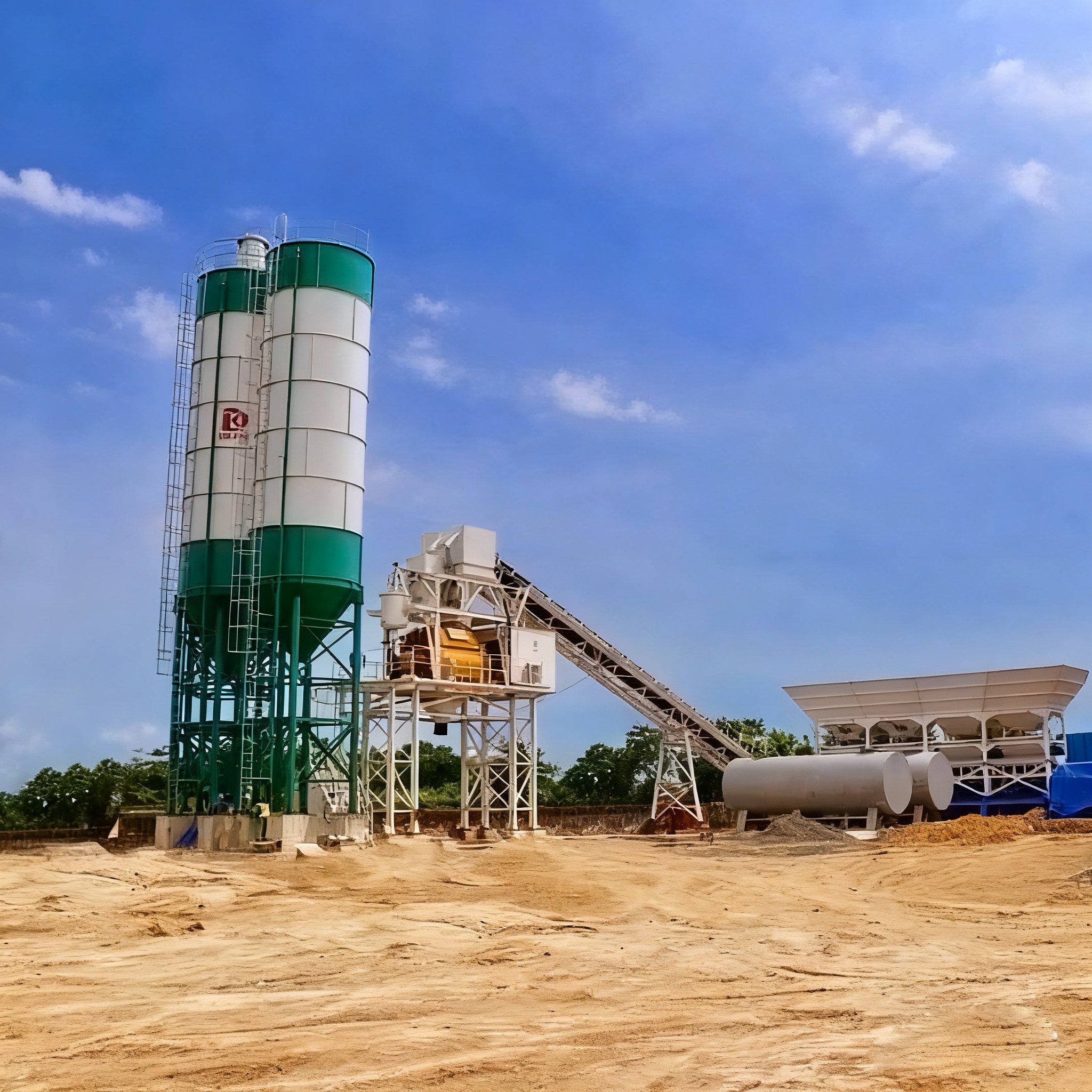
Weighing accuracy, dust sealing and acoustic treatment are specified together, because compliance is assessed on the plant as installed rather than on individual components.
Frequently Asked Questions
Which standards and permits apply to a concrete mixing plant in an export market?
Two layers apply, and they are not interchangeable. At the international reference level, ISO 19720-1:2017, published by the International Organization for Standardization, establishes terminology and commercial specifications for concrete mixing and batching plants — useful for aligning specification sheets across suppliers. At the site level, binding requirements are set by the local permitting authority and the project owner: dust emission or nuisance rules, noise limits, electrical installation practice, and any owner specification. No single international document replaces local permits, so the practical approach is to obtain the local rule set first and then translate it into a configuration list covering silo venting, dust-protected air supply, noise treatment, voltage and frequency, and enclosure selection.
Can control rooms, electrical systems, dust features and noise reduction be customized for a specific market?
Yes. OEM/ODM customization covers voltage and frequency, company logo, machine color, appearance design and branding. Optional compliance-related features include a screw-type air compressor with dust protection for pneumatic powder handling, a noise-reduction configuration specified at 20 dB, and intelligent powder silo level monitoring specified at ±2% inventory accuracy. Because customization is confirmed before production begins, the electrical, dust and noise requirements should be raised during quotation rather than after the order is placed.
What drives the cost of a compliant configuration, and what is the minimum order quantity?
Cost is driven by the capacity class selected, the level of automation and monitoring, the dust and noise optional packages, electrical customization for the target grid, control room specification, and whether installation support is delivered remotely or on site. The minimum order quantity is 1 unit, including for OEM/ODM orders, so a single plant can be configured as a market-specific compliance build without a volume commitment. Pricing is quoted per configuration, since two plants of the same rated output can differ significantly once optional compliance features are added.
How can a buyer verify a plant before it is shipped?
Quality control follows 100% test procedures, and all units are subject to 100% testing before delivery. Buyers should request the test record against the specified parameters rather than a general conformity statement: aggregate weighing at ±2%, cement, water, mixing powder and additive weighing at ±1%, and powder silo level monitoring at ±2% inventory accuracy. Reference operating history is also available — for example, plants running 10–15 years in Indonesia and Oman, or five years on a bridge project in the Philippines. Installation support is provided remotely or on site.
What is the typical lead time, and how does capacity affect scheduling?
The typical production lead time is 25–60 days, and the factory has a monthly production capacity of 50 units. Configurations requiring additional optional features or market-specific electrical work generally sit toward the longer end of that window, while standard builds sit toward the shorter end. To convert an evaluation into a firm timeline, request a quotation that states the target market's voltage, frequency, dust and noise requirements together with the selected model, so the configuration can be locked before production starts.
Conclusion: Compliance Is Bought Before Delivery, Not After
For a concrete mixing plant, compliance is decided in the quotation document. Output capacity, installed power and nominal capacity tell a buyer how much concrete a plant can produce; weighing accuracy, dust containment, noise treatment, electrical configuration and monitoring accuracy determine whether that production can continue uninterrupted at the intended site. Buyers who specify those items up front avoid the two most expensive outcomes in equipment procurement: retrofitting acoustic and dust treatment around a working plant, and discovering an electrical mismatch during commissioning.
Hangzhou Jusheng Machinery & Equipment Co., Ltd. builds HZS series batching plants across mobile, engineering and commercial classes, with 100% testing before delivery, a typical lead time of 25–60 days at 50 units monthly capacity, and compliance-related options including a dust-protected screw-type air compressor, a 20 dB noise-reduction package, and powder silo level monitoring at ±2% accuracy.
Next step for evaluation teams: send your target market, site voltage and frequency, required output, and any local dust or noise limits. You will receive a configuration sheet with the model recommendation, the compliance-related line items, and a quotation — plus the full product catalog for download.
Email: linder@dongkunchina.com | Tel / WhatsApp: +86 18888972181 | Website: www.dongkunchina.com
Download the brochure: DKTEC Concrete Batching Plant Catalog (PDF)
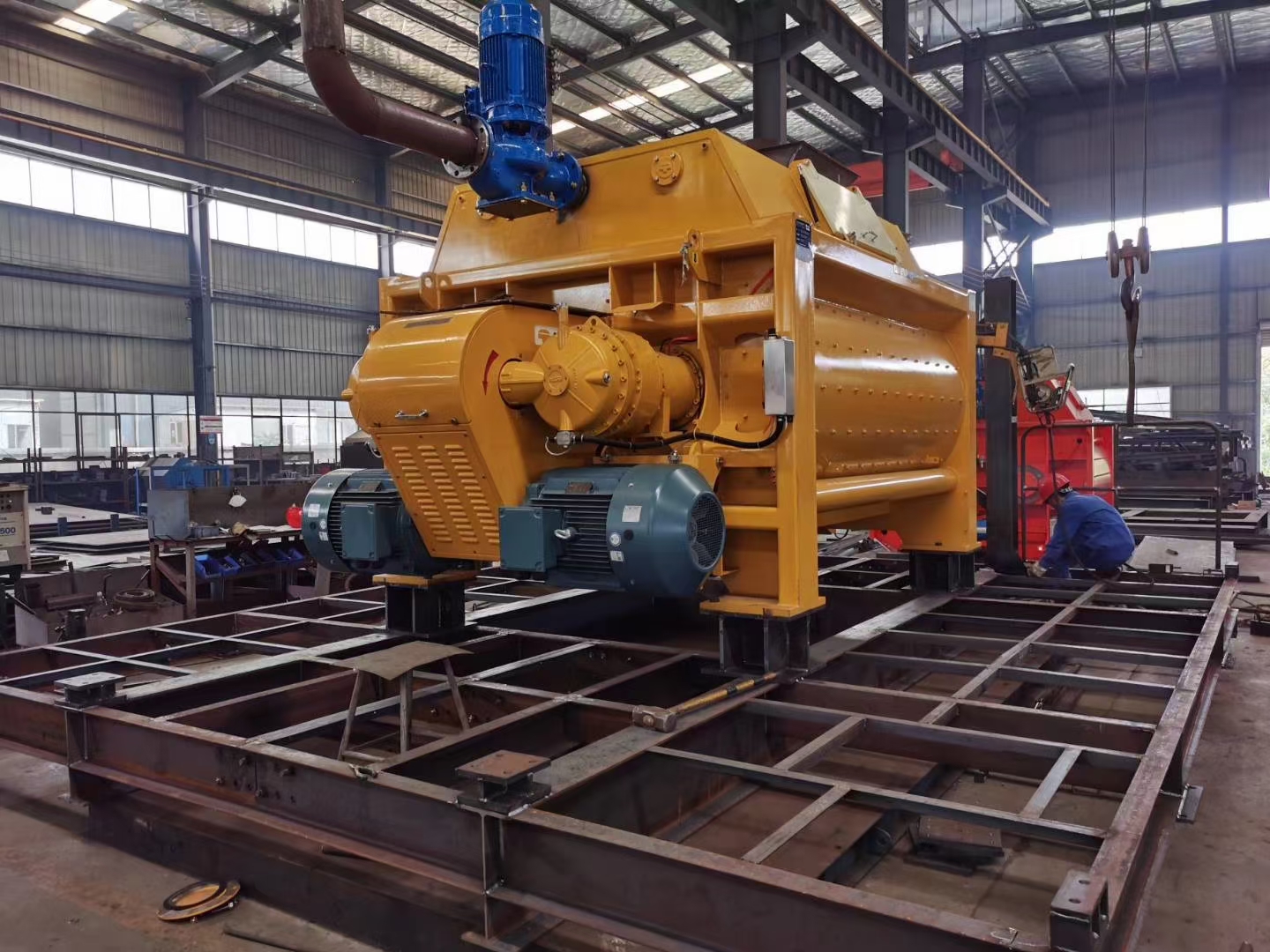
Configuration sheet and quotation are produced before production begins, so electrical, dust and noise requirements are built in from the start.
Hangzhou Jusheng Machinery & Equipment Co., Ltd. (DKTEC)
Address: Zhongjiao Fortune Mansion, Gongshu District, Hangzhou, Zhejiang, China
Email: linder@dongkunchina.com | Tel: +86 18888972181
Have Questions or Need More Details?
Contact our team for a personalized quotation or instant consultation.
Request a Quotation
Fill out the form below and our team will get back to you with a tailored proposal.
WhatsApp Direct Chat
Prefer to chat in real-time? Message us on WhatsApp for instant assistance & quick answers.
- Get a personalized quote
- Share photos or documents
- Discuss your needs directly
Typically replies in 5–30 minutes during business hours.