
Concrete Mixing Plant Intelligent Options: Technical Guide & Selection Parameters
Concrete Mixing Plant Intelligent Options: Technical Guide & Selection Parameters
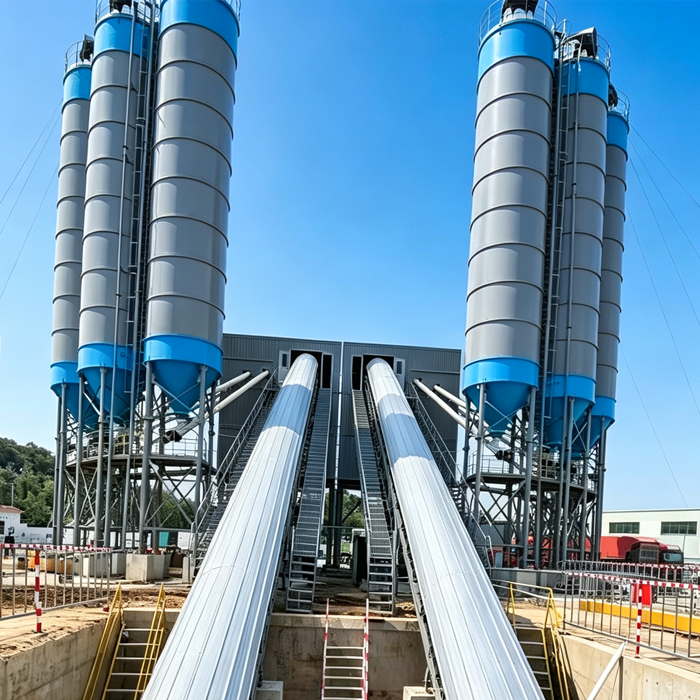
HZS270 commercial concrete batching plant — a 270 m3/h model that can be specified with the full intelligent option set.
Intelligent options on a concrete mixing plant are the sensing, control, and mechanical features that let the plant adjust its own process instead of waiting for an operator to notice a change and correct it. A plant fitted with these options still runs a stored batching recipe through its PLC, but it also reads live signals — mixer motor current, powder silo level, weighing pulses, hopper condition — and responds within the batch rather than after it.
On DKTEC concrete mixing plants built by Hangzhou Jusheng Machinery & Equipment Co., Ltd., a manufacturer established in 2015 in Hangzhou, Zhejiang, China, more than ten intelligent technologies can be specified. They include online slump monitoring based on mixer motor current curves, intelligent powder silo level monitoring with ±2% inventory accuracy, a dual-pivot internal vibration structure for manufactured sand discharge, seamless material flow that lifts belt conveying efficiency by 20%, and a screw-type air compressor with 20 dB noise reduction.
This guide is written for buyers who have moved past the question of what a batching plant is. It breaks the intelligent option set down item by item, then sets out the selection parameters that decide which options belong on a commercial ready-mix plant, an engineering plant, or a high-speed railway plant.
Problem Definition: Where a Standard Automatic Plant Stops Being Enough
A plant described as fully automatic normally means one thing: the PLC executes a stored recipe in sequence — aggregate gate opens, material is weighed, the mixer charges, discharge follows. What the plant does not do by itself is decide whether that recipe is still correct for the raw materials arriving on site today.
The gap shows up as a small set of recurring points where a human has to step in:
- Slump drift. Aggregate moisture varies between deliveries, so slump moves. Somebody has to catch it before the next truck is loaded.
- Inventory blindness. Powder remaining in a silo is often estimated rather than measured, and a run-out mid-pour stops the whole delivery chain.
- Discharge friction. Manufactured sand, fine sand, and mineral powder bridge inside hoppers, and operators assist the flow by hand.
- Conveying losses. Aggregate spills at transfer points, reducing belt output and adding housekeeping and dust.
- Noise and dust. Air compressors and open hoppers are the two environmental complaints that recur most often on plant sites.
- Control-room headcount. Each plant needs an operator, so two lines normally mean two people.
Every one of those points is a manual-intervention point. Each of them also corresponds to a specific intelligent option — which is the practical way to read the option list that follows.
Industry Background: Why Smart Manufacturing Is Now a Procurement Criterion
The market context supports the shift. Global Market Insights valued the global concrete batch plants market at USD 3.8 billion in 2024, and Credence Research put Asia-Pacific at 38% of that revenue in the same year. Trade data shows where a large share of the hardware is manufactured: China exported USD 276.9 million of concrete or mortar mixers under HS 847431 in 2023, according to UN Comtrade / WITS. Mobility is a measurable slice of demand as well — Global Market Insights reports that the infrastructure segment accounted for 39.4% of the mobile concrete batch plant market in 2024.
Two structural factors sit behind those numbers. The first is standardization: ISO 19720-1:2017 establishes the terminology and commercial specifications for concrete mixing and batching plants, which gives buyers a common vocabulary when comparing configurations from different suppliers. The second is the industrialization of the supply base itself — Hangzhou Jusheng Machinery & Equipment Co., Ltd. moved from trading to robot-assisted production of mixing stations in 2017, a shift that reflects automation being pushed into fabrication as well as into plant control.
For a buyer in the research stage, the consequence is straightforward. Fully automatic PLC control is now the baseline on every model in the HZS series. The differentiating questions have moved on to what the plant can sense, what it can correct on its own, and how much of the operator's judgement has been replaced by a measurement.
Detailed Solution: The Intelligent Option Set and What Each Technology Solves
The configurations below are drawn from the DKTEC engineering and commercial plant definitions. They are not equally relevant to every project, which is why the selection section that follows maps them to project types rather than treating them as a single package.
1. Online Slump Monitoring via Mixer Motor Current Curves
The mixer motor current curve is the primary slump signal in this configuration. As the mix stiffens, the load on the twin-shaft mixer rises. The control system reads that load continuously and indicates slump in real time during the batch, instead of waiting for a manual slump cone test at the end of the cycle. For a ready-mix producer, the value is that water and admixture additions can be judged against a trend, batch after batch, from the control room rather than at the mixer platform.
2. Intelligent Powder Silo Level Monitoring at ±2% Inventory Accuracy
This option replaces estimate-by-eye with a measurement: intelligent powder silo level monitoring reports inventory to within ±2%. The level data can be surfaced through the plant PLC, an ERP system, or a mobile app, so the same number reaches the operator, the dispatcher, and the purchasing desk. Real-time level checks mean fewer run-outs in the middle of a pour, and less safety stock carried in the silo yard as a buffer against uncertainty.
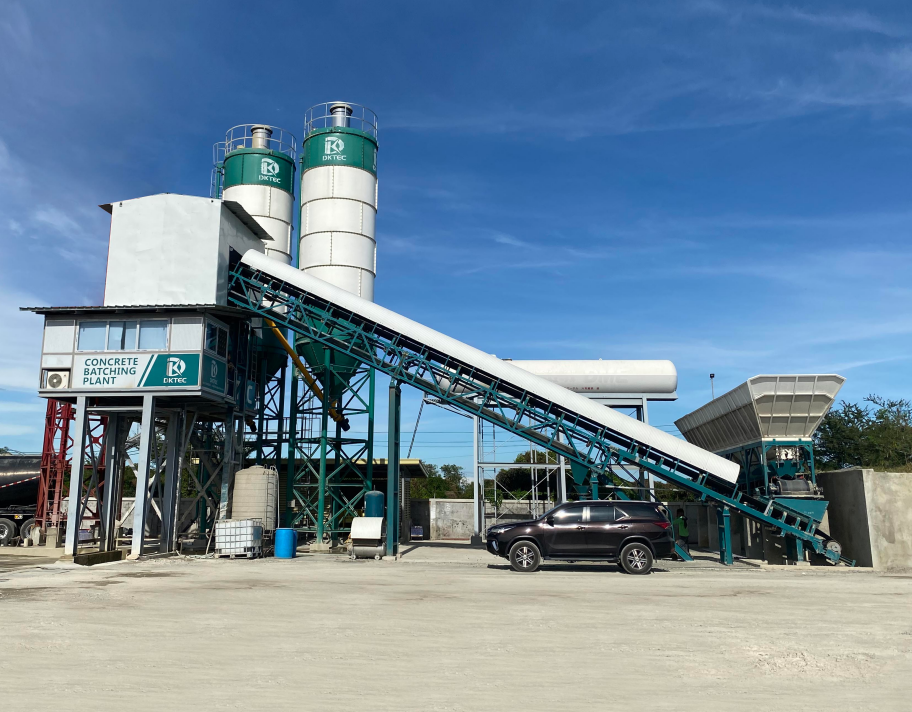
HZS180 automatic concrete batching plant — microcomputer intelligent control, dual unloading design, and a fully enclosed structure with pulse dust removal.
3. Dual-Pivot Internal Vibration Structure for Manufactured Sand Discharge
Manufactured sand, fine sand, and mineral powder bridge inside hoppers, which is why discharge is one of the most common bottlenecks on commercial plants. A dual-pivot internal vibration structure improves vibration efficiency by 20% and is engineered specifically to resolve discharge problems with these materials. It pairs with hopper-level measures such as the sand silo anti-clogging device and the wear-resistant discharge hopper used on the engineering plants.
4. Seamless Material Flow — 20% Conveying Efficiency Gain
Seamless material flow describes the design of the transfer points along the aggregate path so that material does not spill and feeding remains continuous. The stated result is a 20% increase in conveying efficiency. The environmental side effect matters as much as the throughput figure: fewer spill points mean less housekeeping and less dust escaping around the conveyor line.
5. Screw-Type Air Compressor with 20 dB Noise Reduction
Air compressors are a persistent noise source on a batching plant. The screw-type air compressor specified for these plants was developed for mixing-plant conditions and combines dust protection with 20 dB noise reduction, which changes the plant's noise profile at the boundary of the site rather than only inside the compressor house.
6. One-Operator, Dual-Plant Control — 50% Labor Cost Reduction
Where the site layout allows two mixing lines, an optional dual-plant control configuration lets one operator run both plants. The stated effect is a 50% reduction in labor cost for the control function. This is one of the few intelligent options whose return is measured in headcount rather than in material accuracy.
7. Modular Pre-Assembly — 20% Less On-Site Installation Work
Modular design with factory pre-assembly moves labor from the site into the works. The stated effect is a 20% reduction in on-site installation workload. On the HZS60G engineering plant, a four-layer module design with sub-module preassembly and overall lifting further reduces the number of components that have to be assembled on site.
8. Fully Enclosed Standby Hopper and Forced-Cleaning Membrane Bag Filter
On the largest commercial configurations, a fully enclosed standby hopper reduces the open surface area by 75%, and the forced-cleaning membrane bag filter is matched to it to strengthen dust removal. Together they target the dust that escapes at the point where material is held immediately before batching — usually the most visible emission point on a plant.
9. High-Speed Railway Control Logic — Drop Correction and Pulse Weighing Compensation
For high-speed railway work, the control system applies automatic drop correction and precise pulse-based weighing compensation. Drop correction compensates for the material already in flight when the gate closes; pulse compensation refines the final increment. Both are aimed at the repeatability that high-grade concrete specifications demand, rather than at raw throughput.
10. Dual-Stage Coarse/Fine Aggregate Metering and Precision Pulsating Metering
Coarse and fine weighing is split into two stages on the engineering plants, using an independent weighing hopper and a double-door coarse-and-fine weighing structure. Combined with precision pulsating metering, this supports production of the various grades of concrete a project typically requires without changing the physical plant.
11. Low-Pressure Powder Conveying
An optional low-pressure powder conveying system lowers cement temperature and maintains continuous material feed. For plants running long campaigns in hot climates, that is a process-stability option rather than a convenience feature.
12. The Instrumentation and Monitoring Layer
The options above sit on a standard instrumentation base. The engineering plants use Keli load cells, AirTAC cylinders, and SICOMA pneumatic butterfly valves, with fully automatic PLC control supporting recipe management, production reports, and UPS power backup. The HZS120 commercial plant uses a PLC-based system with industrial PC and 24-inch LCD monitoring, four 16 m3 aggregate silos with anti-blocking devices, and 800 mm belt conveyors. The HZS240 adds video surveillance at the belt tail and the discharge port. Across the range, emergency stop switches, anti-fall protection, and dust-proof control cabinets are part of the safety specification.
Step-by-Step Breakdown: Matching Intelligent Options to a Project
Step 1 — Fix the throughput requirement first
Capacity and mixer size decide which model family applies, and nothing downstream can be specified until this is settled. The commercial range runs from the HZS120 at 120 m3/h with a 2000 L mixer, through the HZS180 (180 m3/h, 3000 L), HZS240 (240 m3/h, 4000 L), and HZS270 (270 m3/h, 4500 L), up to the HZS300 at 300 m3/h with a 5000 L mixer. The engineering range is HZS60G at 60 m3/h with a 1000 L mixer, HZS90G (90 m3/h, 1500 L), HZS120G (120 m3/h, 2000 L), and HZS180G (180 m3/h, 3000 L). The mobile range covers HZS25Y, HZS35Y, HZS60Y, HZS90Y, and HZS120Y at 25, 35, 60, 90, and 120 m3/h respectively, with nominal mixer capacities of 500 L, 750 L, 1000 L, 1500 L, and 2000 L.
Step 2 — Set the metering accuracy envelope
Aggregate weighing across these models is specified at ±2%; cement, mixing powder, water, and additive at ±1%. The weighing ranges scale with the model: on the HZS300 the aggregate range is 900–5000 kg and cement 400–2600 kg, while on the HZS120 aggregate is 600–2000 kg and cement 200–1200 kg. If the mix design leaves little tolerance for cement variation, the ±1% powder figures are the ones to write into the specification.
Step 3 — Decide stationary or mobile
Mobile plants integrate the mixer, aggregate batching station, inclined belt conveyor, weighing systems for cement, admixture, water and additive, pneumatic system, main tower, control room, mobility system, and control system onto a towable chassis. They need only a level concrete surface rather than deep foundations, and installation and commissioning can be completed within three days of arrival. Stationary plants remain the correct choice when the site is fixed and the plant will operate for years.
Step 4 — Choose the intelligent layer against the recurring loss
- Slump variability → online slump monitoring from mixer motor current curves.
- Powder run-outs → intelligent silo level monitoring at ±2% accuracy.
- Hopper bridging with manufactured sand → dual-pivot internal vibration structure.
- Control-room labor → one-operator, dual-plant control.
- Dust at the batching point → fully enclosed standby hopper with forced-cleaning membrane bag filter.
- Schedule pressure → modular pre-assembly and four-layer module design with integrated hoisting.
Step 5 — Confirm the site and utility envelope
Check installed power, which runs from 60 kW on the HZS25Y to 350 kW on the HZS270 and HZS300. Confirm the unloading height of at least 3.8 m needed for direct loading into mixer trucks. Review aggregate storage — four 16 m3 bins on the HZS120 and HZS120G, or 30 m3 underground bunker silos on the HZS240 — and the optional powder silo strategy, which on the HZS120 and HZS300 families extends to 150 t silos with φ273 mm / φ219 mm screw conveyors. Where civil works are constrained, a steel structure foundation is available as an option.
Step 6 — Lock the documentation package
Confirm that the control system supports recipe management, production reports, and UPS power backup, and that the safety items — emergency stop switches, anti-fall protection, and dust-proof control cabinets — are included. These are the items that decide whether the intelligent layer is actually usable in daily operation, rather than a demonstration feature.
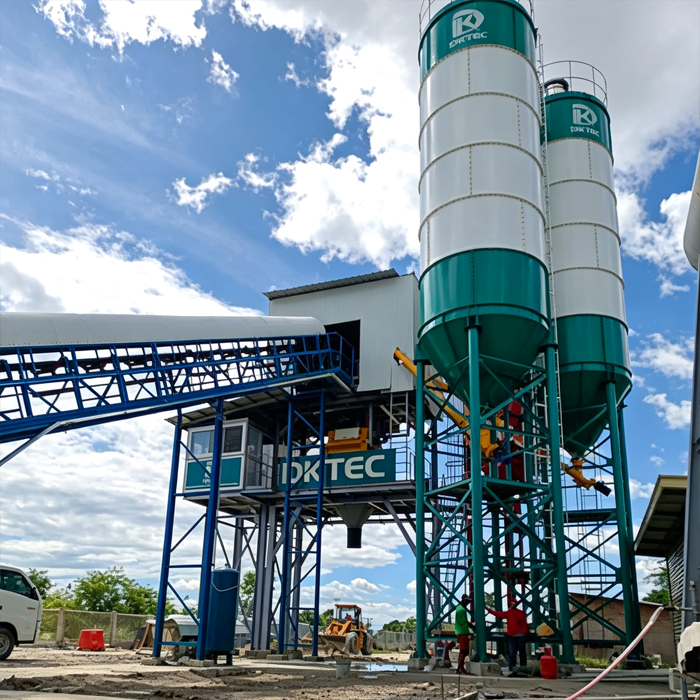
HZS180G engineering concrete batching plant — drop correction, pulse weighing compensation, and a four-level modular structure for integrated hoisting.
Use Cases: How the Options Map to Real Project Types
Commercial ready-mix production
Ready-mix producers run continuous campaigns and are judged on delivery reliability. The HZS120 through HZS300 commercial plants are configured for this scenario, with PLC control, real-time production monitoring, and centralized operation. The HZS180 adds a dual unloading design, pneumatic or electro-hydraulic, to prevent material jamming; the HZS240 and HZS300 include surveillance at the belt tail and the discharge port. On these plants, online slump monitoring and silo level monitoring remove the two most common causes of a rejected load and a stopped pour.
Engineering projects — highways, bridges, tunnels
Engineering plants are designed around high precision, high strength, and high adaptability. They use a coarse-and-fine weighing structure with anti-fall protection and a sand bin anti-blocking device. On bridge work specifically, smooth internal vibration-assisted discharge and a robust hopper matter most, and an optional dual-auger system is available for precise feeding.
High-speed railway
High-speed railway specifications leave little room for batch-to-batch drift, which is why the control logic here applies automatic drop correction and pulse weighing compensation together with dual-stage coarse and fine aggregate metering. The four-level modular design allows integrated hoisting, shortening the interval between site handover and first pour.
Mobile and remote construction
Where the plant must move with the work — highway segments, water conservancy, mining, temporary and multi-site projects — the HZS25Y to HZS120Y mobile range provides 25 to 120 m3/h on a towable chassis with the mixer, weighing systems, and control integrated into one unit. Positioning the plant close to the pour point reduces the concrete transport distance and the environmental impact that goes with it.
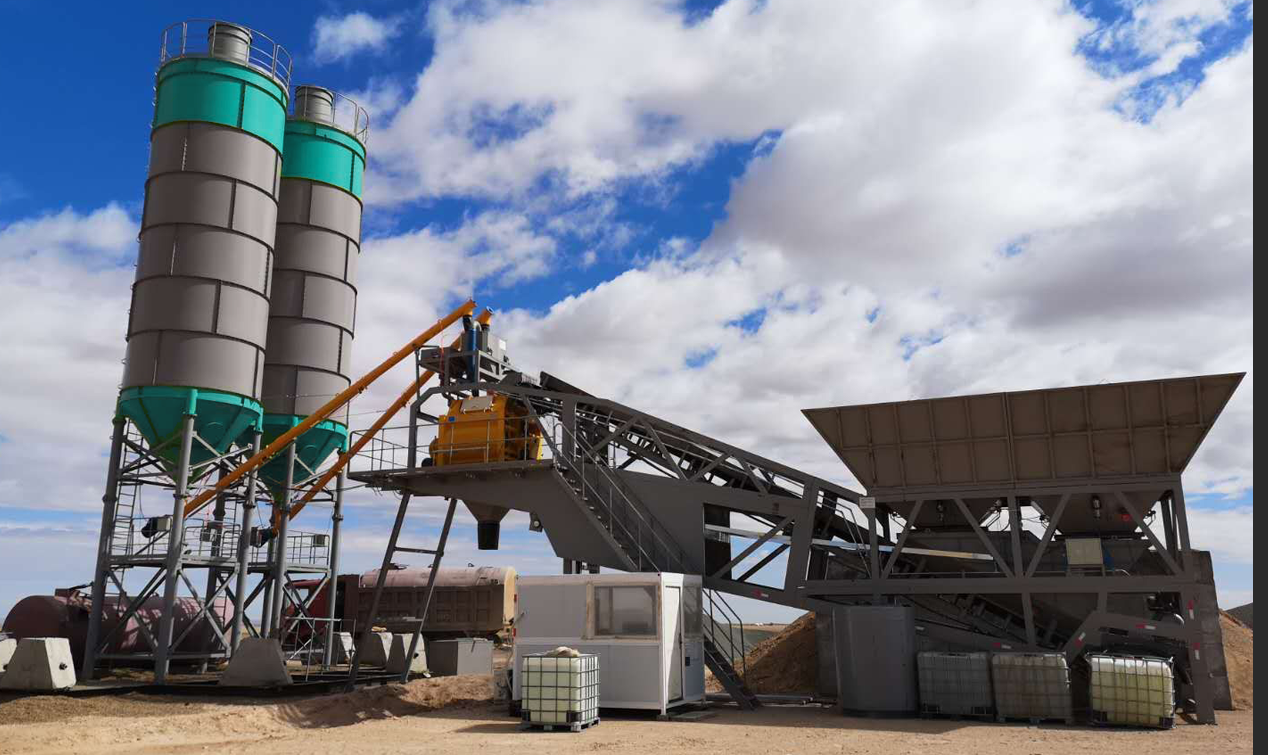
HZS90Y mobile concrete batching plant — integrated feeding, weighing, mixing, and control on a towable chassis.
Comparison Table: Intelligent Option Fit by Project Type
| Project type | Representative models | Output range | Most relevant intelligent options | Plant type |
|---|---|---|---|---|
| Commercial ready-mix | HZS120, HZS180, HZS240, HZS270, HZS300 | 120–300 m3/h | Online slump monitoring; intelligent silo level monitoring (±2%); one-operator dual-plant control; enclosed standby hopper with membrane bag filter | Stationary |
| Engineering (highways, bridges, tunnels) | HZS60G, HZS90G, HZS120G, HZS180G | 60–180 m3/h | Dual-stage coarse/fine metering; pulse weighing compensation; anti-blocking sand bin; internal vibration-assisted discharge | Stationary, modular |
| High-speed railway | HZS60G, HZS90G, HZS120G, HZS180G | 60–180 m3/h | Automatic drop correction; precision pulsating metering; four-level module design for integrated hoisting | Stationary, modular |
| Airport and bridge high-grade concrete | HZS120G, HZS180G and commercial range | 120–240 m3/h | High-precision metering for consistent grade quality; modular rapid assembly; optional steel structure foundation | Stationary, modular |
| Expressway | HZS60G–HZS180G, HZS120–HZS300 | 60–300 m3/h | Seamless material flow (+20% conveying efficiency); multi-silo configurations; site-adaptive layout and discharge direction | Stationary |
| Remote and multi-site | HZS25Y, HZS35Y, HZS60Y, HZS90Y, HZS120Y | 25–120 m3/h | Integrated chassis; installation and commissioning within three days; level concrete surface only, no deep foundations | Mobile |
A second table is useful at specification stage, because installed power and mixer size are the two numbers that constrain everything else.
| Model | Theoretical productivity | Installed capacity | Nominal mixer capacity | Aggregate accuracy | Powder / water / additive accuracy |
|---|---|---|---|---|---|
| HZS120 | 120 m3/h | 210 kW | 2000 L | ±2% | ±1% |
| HZS180 | 180 m3/h | 250 kW | 3000 L | ±2% | ±1% |
| HZS240 | 240 m3/h | 280 kW | 4000 L | ±2% | ±1% |
| HZS270 | 270 m3/h | 350 kW | 4500 L | ±2% | ±1% |
| HZS300 | 300 m3/h | 350 kW | 5000 L | ±2% | ±1% |
| HZS60G | 60 m3/h | 100 kW | 1000 L | ±2% | ±1% |
| HZS90G | 90 m3/h | 190 kW | 1500 L | ±2% | ±1% |
| HZS120G | 120 m3/h | 210 kW | 2000 L | ±2% | ±1% |
| HZS180G | 180 m3/h | 250 kW | 3000 L | ±2% | ±1% |
| HZS25Y | 25 m3/h | 60 kW | 500 L | ±2% | ±1% |
| HZS35Y | 35 m3/h | 65 kW | 750 L | ±2% | ±1% |
| HZS60Y | 60 m3/h | 100 kW | 1000 L | ±2% | ±1% |
| HZS90Y | 90 m3/h | 120 kW | 1500 L | ±2% | ±1% |
| HZS120Y | 120 m3/h | 160 kW | 2000 L | ±2% | ±1% |
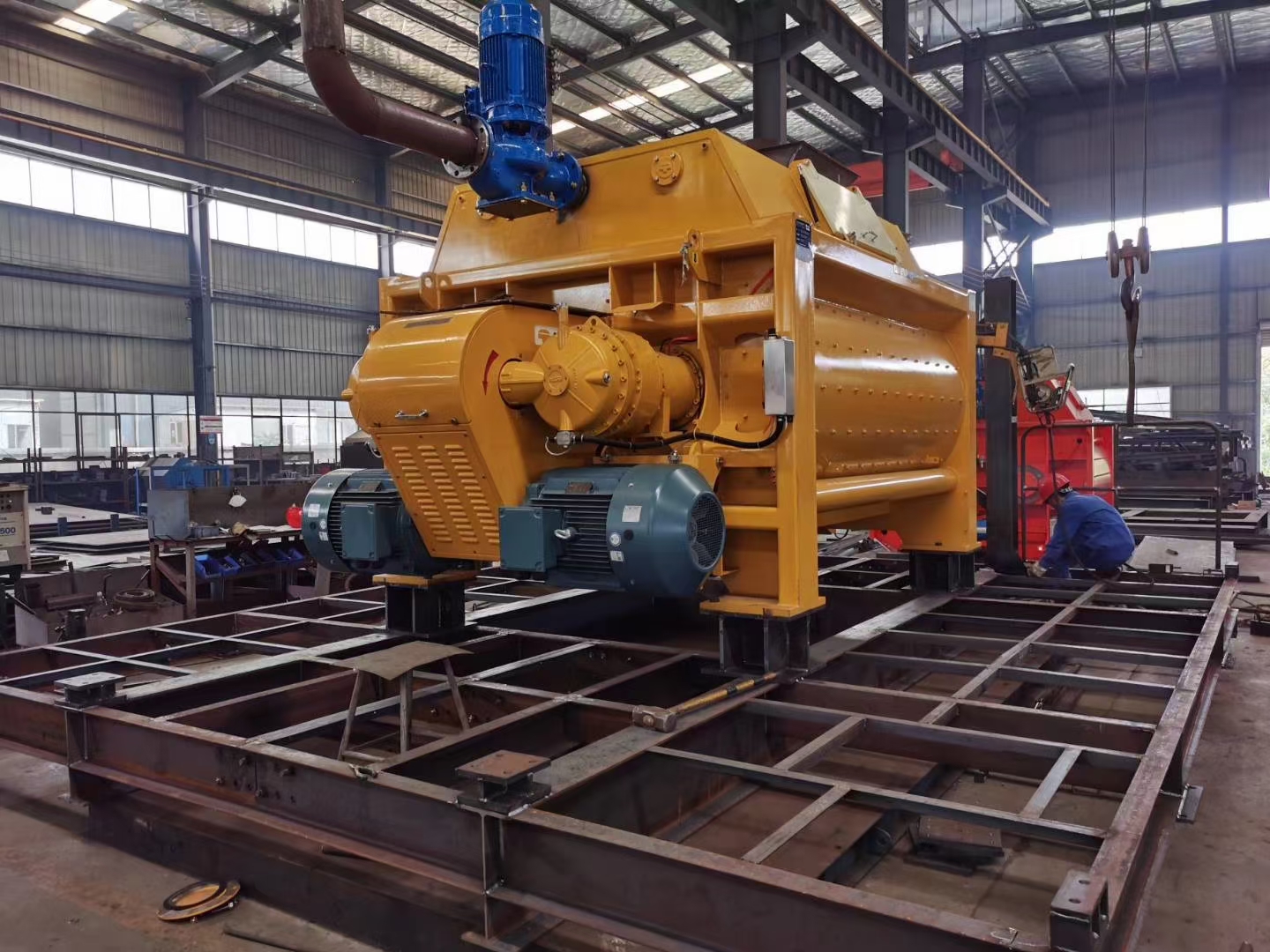
The DKTEC manufacturing facility, which covers 120,000 square metres and produces approximately 2,000 units per year.
FAQ
Does an intelligent concrete mixing plant have to meet an international standard?
ISO 19720-1:2017 establishes the terminology and commercial specifications for concrete mixing and batching plants, and it is the reference buyers can use when comparing configurations from different suppliers on the same basis. Beyond that standard, the project specification — for example the concrete grades required on a high-speed railway or airport package — normally sets the metering accuracy envelope the plant has to hold. On DKTEC plants, cement, mixing powder, water, and additive are weighed at ±1% and aggregates at ±2%, which is the accuracy class the plants are specified to hold.
How many intelligent functions can be configured, and which ones change daily operation most?
More than ten intelligent technologies can be specified on the commercial and engineering plants. The three that change day-to-day operation most are online slump monitoring from mixer motor current curves, intelligent powder silo level monitoring at ±2% inventory accuracy, and the dual-pivot internal vibration structure that resolves discharge problems with manufactured sand, fine sand, and mineral powder. Alongside these, seamless material flow raises conveying efficiency by 20%, and the screw-type air compressor combines dust protection with 20 dB noise reduction.
What drives the cost difference between a standard and an intelligent configuration?
The main variables are the automation layer, the sensing layer, and the degree of modular pre-assembly — not the steel structure, which is common across the range. Two options change operating economics rather than capital outlay: one-operator, dual-plant control reduces labor cost for the control function by 50% where two lines are installed, and modular design with factory pre-assembly reduces on-site installation workload by 20%. Because model capacity also scales installed power from 60 kW on the HZS25Y to 350 kW on the HZS270 and HZS300, the throughput requirement should be fixed before intelligent options are compared.
Can a configuration be validated before committing to a full plant?
Validation happens at two levels. On documentation, the manufacturer's brochure sets out the model range and the option set, and the engineering team can confirm which options apply to a given site, throughput, and concrete grade. In the works, plants are built with factory pre-assembly and, on the engineering models, with sub-module preassembly and overall lifting, so the modular assemblies are proven before shipment. Buyers who want to take that further can request a quotation and a configuration review covering their specific capacity, accuracy, and layout requirements.
How long does installation and commissioning take?
It depends on the plant type. Mobile units in the HZS25Y to HZS120Y range are integrated onto a towable chassis and can be installed and commissioned within three days of arrival, requiring only a level concrete surface instead of deep foundations. Stationary plants take longer, but modular design with factory pre-assembly reduces the on-site installation workload by 20%, and the four-layer module design with sub-module preassembly and overall lifting on the engineering plants further reduces the number of components installed on site. To plan a specific project timeline, contact the DKTEC team at linder@dongkunchina.com or +86 18888972181 with your throughput, concrete grades, and site conditions.
Conclusion
Intelligent options on a concrete mixing plant are best read as answers to specific manual-intervention points rather than as a single upgrade package. Online slump monitoring addresses raw-material variability; intelligent silo level monitoring at ±2% accuracy addresses inventory uncertainty; the dual-pivot internal vibration structure addresses manufactured sand discharge; seamless material flow and the screw-type air compressor address conveying losses and noise; and one-operator, dual-plant control addresses headcount. Each one is measurable in its own terms, which makes the selection conversation concrete.
Hangzhou Jusheng Machinery & Equipment Co., Ltd. builds the full HZS series — commercial plants from HZS120 to HZS300, engineering plants from HZS60G to HZS180G, and mobile plants from HZS25Y to HZS120Y — from a 120,000 square metre facility with approximately 430 employees, an R&D team of 80 engineers, and an annual output of around 2,000 units. For buyers, the practical next step is to fix the throughput and accuracy envelope first, then select only the intelligent options that answer a loss the project actually experiences.
Next Step
Download the DKTEC concrete batching plant brochure for the full model range and option list, or send your project parameters for a configuration review.
Download the DKTEC concrete batching plant brochure (PDF)
Website: www.dongkunchina.com | Email: linder@dongkunchina.com | Tel / WhatsApp: +86 18888972181
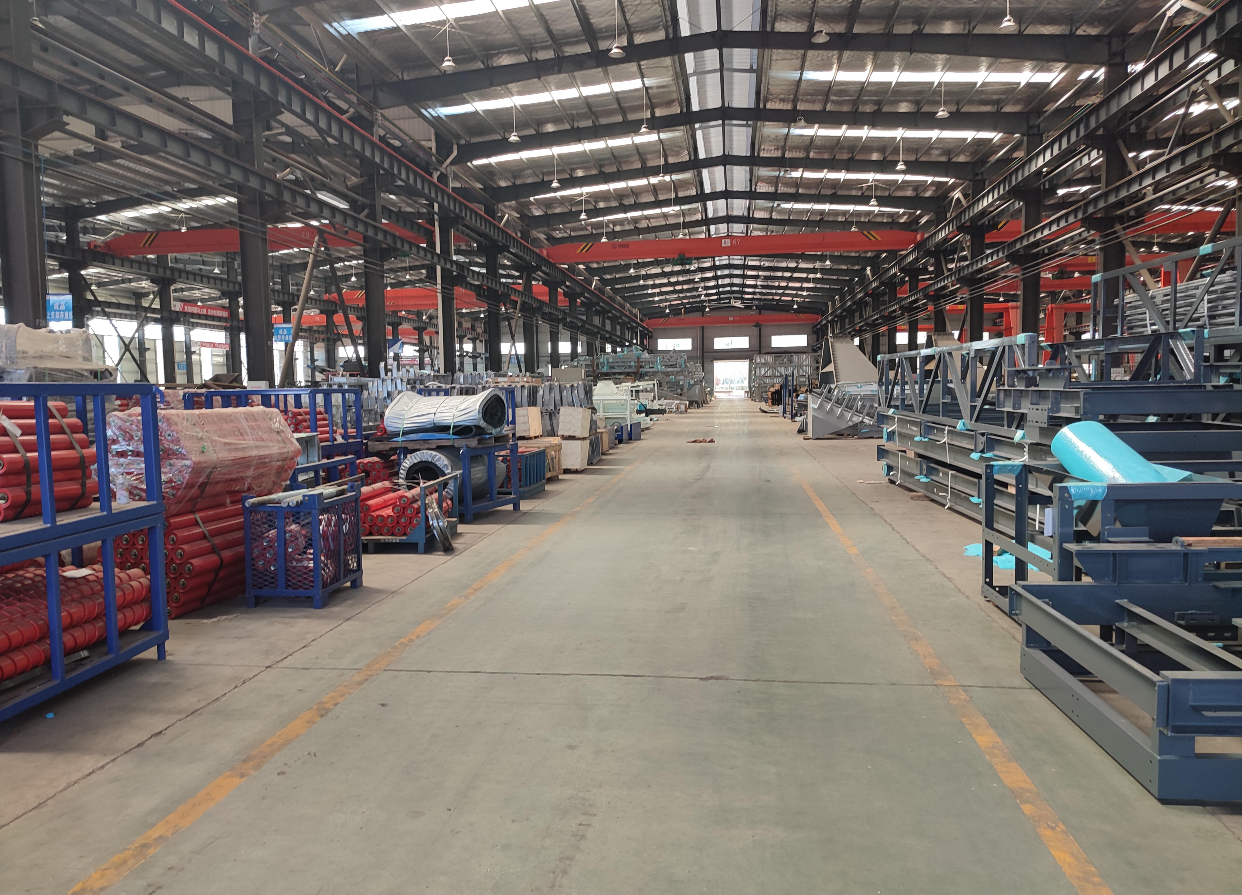
Workshop assembly at the DKTEC facility — request the brochure or a configuration review for your next project.
Have Questions or Need More Details?
Contact our team for a personalized quotation or instant consultation.
Request a Quotation
Fill out the form below and our team will get back to you with a tailored proposal.
WhatsApp Direct Chat
Prefer to chat in real-time? Message us on WhatsApp for instant assistance & quick answers.
- Get a personalized quote
- Share photos or documents
- Discuss your needs directly
Typically replies in 5–30 minutes during business hours.