
Evaluating Concrete Mixing Plant Suppliers: Modular Delivery and Support Scope
Supplier Evaluation Guide
A concrete mixing plant is purchased as a production line, but it is usually quoted as a single model code. That gap is where most procurement risk sits. Two suppliers can both quote “HZS120” and still deliver materially different scopes: one arrives as pre-assembled modules with a defined aggregate batching station, conveyor set, four metering systems and a control room; the other arrives as a main mixing unit with the remaining subsystems quoted separately, deferred, or left out of the agreement entirely.
This guide is written for buyers in the Research and Evaluation stages who need to compare concrete mixing plant suppliers on capability and delivery assurance rather than on brochure language. It defines what modular delivery and support scope should physically contain, how to verify each item against documented specification data, and which project conditions change the correct answer.
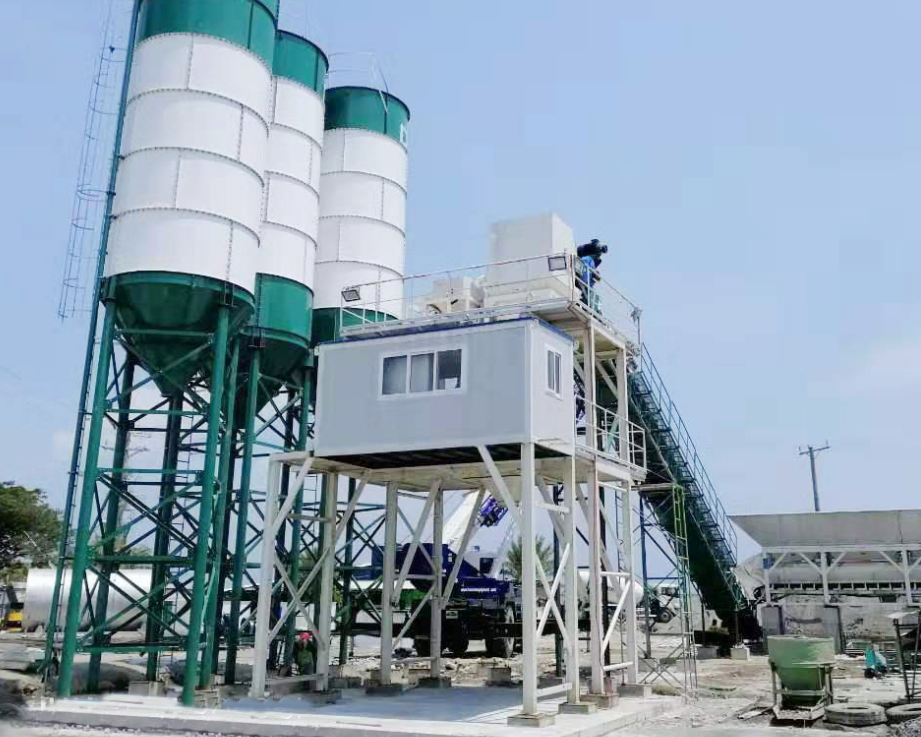
A modular concrete mixing plant is evaluated as a full production line: main mixing unit, aggregate batching station, belt conveyors, metering systems and control room.
The Problem: “Complete Plant” Means Different Things to Different Suppliers
A concrete batching plant accurately stores, weighs, batches and mixes raw materials to produce concrete efficiently and consistently. That function is delivered by a chain of subsystems, not by a single machine. When any link in the chain is out of scope, the plant does not fail immediately — it fails during commissioning, or in the third month of production.
The asymmetry is easy to understand. The main mixing unit is the most visible and the most quoted item. But the plant only produces repeatable concrete when an aggregate batching station, an inclined belt conveyor, metering systems for cement, mineral admixture, water and additive, a pneumatic system, a main tower dust removal system, a control room and an electrical system are all specified, delivered and commissioned as one unit.
In practice, buyers meet three common scope gaps:
- Subsystem omission. The quotation names a capacity and a mixer size but does not itemise the batching station, conveyor set, metering systems or control room.
- Boundary ambiguity. Civil works, foundations, silos, screw conveyors and dust removal sit on the edge of the contract, and each party assumes the other is supplying them.
- Assembly assumption. The buyer assumes factory pre-assembly and modular delivery; the supplier assumes a component shipment that must be assembled and aligned on site.
For a Research-stage buyer, the practical question is therefore not “which model is bigger” but “which supplier can prove, in writing, what will be delivered, in what state of assembly, and with what support.”
Industry Background: Why Modular Delivery Has Become a Buying Criterion
Concrete batching capacity is a globally traded industrial product, and the trade data reflects it. According to Global Market Insights, the global concrete batch plants market was valued at USD 3.8 billion in 2024. Credence Research places Asia-Pacific at a 38% revenue share of that market in the same year. UN Comtrade / WITS data records USD 276.9 million of concrete or mortar mixer exports (HS 847431) from China in 2023 alone.
Demand is also shifting toward mobility. Global Market Insights reports that the infrastructure segment accounted for 39.4% of the mobile concrete batch plant market in 2024 — a signal that a growing share of projects need concrete produced at, or very near, the work face rather than delivered from a distant yard.
Two consequences follow for supplier evaluation.
First, delivery performance is now as important as rated capacity. A 120 m³/h plant that is commissioned in days is worth more to a project than a 180 m³/h plant that sits half-assembled for a month. Second, buyers need a shared vocabulary to compare quotations. ISO 19720-1:2017, published by the International Organization for Standardization, establishes terminology and commercial specifications for concrete mixing and batching plants — a useful reference when aligning supplier documentation, even though it is a terminology and specification standard rather than a performance guarantee.
Evaluation principle: capacity is a number; scope is a list. Always ask for the list. A supplier that can only answer with a capacity figure is not yet answering the delivery question.
What “Modular Delivery and Support Scope” Actually Covers
The phrase is used loosely across the industry. Broken down into verifiable elements, it has five parts that can each be checked against documentation.
1. Modular Design and Factory Pre-Assembly
Modular delivery means the plant is engineered as transportable sections that are pre-assembled and tested before shipment, then assembled on site with a reduced number of field operations.
DKTEC — the brand of Hangzhou Jusheng Machinery & Equipment Co., Ltd., a concrete mixing and mining equipment manufacturer headquartered in Hangzhou, Zhejiang, China — documents this in several engineering configurations. The HZS60G engineering batching plant uses a four-layer module design with sub-module preassembly and overall lifting, explicitly to reduce the number of components that must be installed on site. High-speed railway configurations use a four-level modular design that allows integrated hoisting and rapid installation. Commercial plant documentation states that modular design with factory pre-assembly cuts on-site installation workload by a further 20%.
Stationary plants in this range operate in stationary mode with a modular design that allows quick assembly and disassembly for relocation — a detail that matters for engineering projects where the plant must follow the work front.
2. Main Mixing Unit Options
The main mixing unit is the twin-shaft forced mixer plus its supporting frame and discharge arrangement. Nominal capacity is the clearest cross-model indicator: the range runs from a 500 L mixer on the HZS25Y mobile plant up to a 5000 L mixer on the HZS300 commercial plant. Across the HZS range reviewed here, unloading height is specified as ≥ 3.8 m, which allows direct loading into mixer trucks.
Mixer sourcing is a legitimate evaluation point. Some configurations allow an optional SICOMA, BHS or SDMIX 2000 L twin-shaft forced mixer rated at 2 × 37 kW, while DKTEC also supplies its own DK mixer options. Documentation for the engineering plants lists Keli or Meidia load cells, AirTAC cylinders and SICOMA pneumatic butterfly valves among the core components specified for those configurations. Buyers should ask for the component list of the specific quoted configuration, because mixing-unit sourcing changes both price and spare-part logistics.
3. Supporting Scope: The Items That Decide Whether the Plant Runs
This is the part most often under-specified. A stationery or commercial batching plant requires supporting equipment including:
- A steel bin aggregate batching station (alternatively a ground-bunker arrangement for large commercial bases)
- Horizontal and inclined belt conveyors
- A mixer / main mixing unit
- Metering systems for cement, mineral admixture, water and admixture
- A pneumatic system
- A main tower dust removal system
- A control room
- An electrical system
Powder silos and screw conveyors are commonly listed as optional rather than standard, and split-type powder silos and screw conveyors are an alternative optional configuration. An optional steel structure foundation is also available on some engineering plants to reduce civil engineering cost. Each of these optional items is a real cost line, and the correct procurement action is to place them explicitly inside or outside the quotation rather than leave them undefined.
4. Metering Systems and Accuracy as a Scope Test
Metering is the fastest way to test whether a supplier is describing a real configuration. A genuine quotation states a measuring range and an accuracy figure per material. Generic wording such as “high-precision weighing” does not survive this test.
Across the reviewed HZS configurations, the documented accuracy pattern is consistent: aggregate (sandstone) at ±2%, and cement, mixing powder, water and additive each at ±1%. The ranges scale with plant size, which is exactly what a buyer should expect to see break down by model.
| Material | HZS120 (120 m³/h) | HZS240 (240 m³/h) | HZS300 (300 m³/h) |
|---|---|---|---|
| Sandstone (aggregate) | 600–2000 kg, ±2% | 900–4500 kg, ±2% | 900–5000 kg, ±2% |
| Cement | 200–1200 kg, ±1% | 400–2500 kg, ±1% | 400–2600 kg, ±1% |
| Mixing powder | 200–800 kg, ±1% | 200–1200 kg, ±1% | 300–1800 kg, ±1% |
| Water | 150–500 kg, ±1% | 200–1000 kg, ±1% | 200–1200 kg, ±1% |
| Additive | 15–50 kg, ±1% | 15–80 kg, ±1% | 20–100 kg, ±1% |
For high-grade applications such as airport runway and airfield pavement concrete, documentation for those project scenarios specifies the same accuracy envelope: cement ±1%, water ±1%, additive ±1% and sandstone ±2%. Expressway configurations are documented with the same split of cement/powder ±1% and sand/gravel ±2%.
5. Control Room, Automation and Monitoring Scope
The control room is a physical delivered item, and the control system is a functional one. Both should appear in the scope list. Plants in this range are equipped with control systems for automatic concrete batching operations and operate in automatic operation mode.
Documented levels of control detail differ by model. The HZS120 configuration is specified with a PLC-based control system with industrial PC and 24-inch LCD monitoring, plus emergency stop switches, anti-fall protection and dust-proof control cabinets. Higher-specification commercial configurations document optional supervision features such as online slump monitoring, which reads real-time slump indication from mixer motor current curves, and intelligent powder silo level monitoring with stated inventory accuracy of ±2%. An optional “one-operator, dual-plant” control scheme, where one operator controls two mixing plants, is documented as reducing labour cost by 50%.
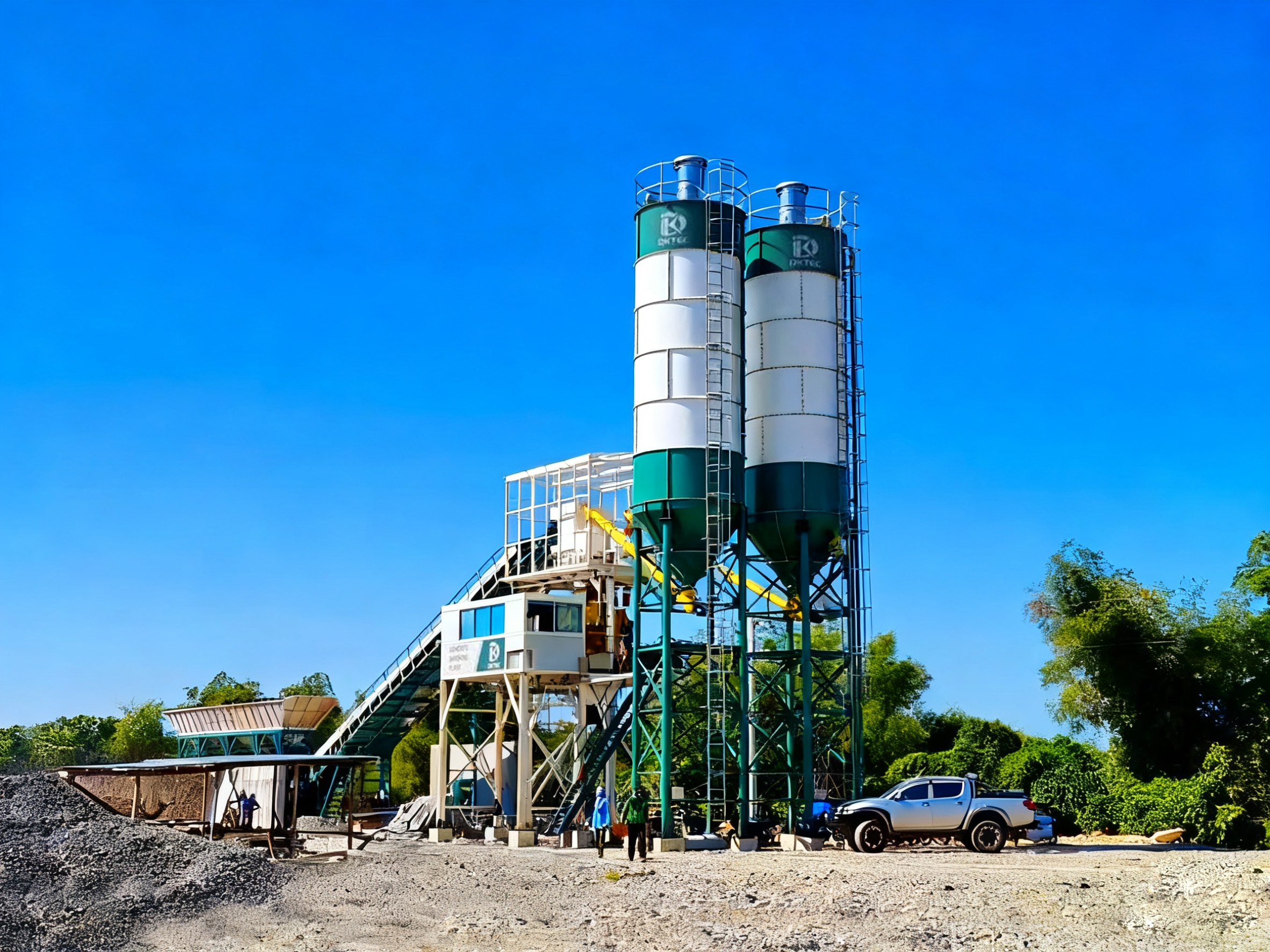
Support scope checklist: aggregate batching station, inclined belt conveyor, main mixing unit, four metering systems, pneumatic system, dust removal, control room and electrical system.
How to Verify Supplier Configuration Completeness: 7 Steps
The following sequence turns a supplier conversation into a comparable evaluation. It works with any supplier; the answers, not the questions, are what differentiate them.
- Request the full equipment list, not the model code. Ask for an itemised scope covering batching station, conveyors, main mixing unit, metering systems, pneumatic system, dust removal, control room and electrical system, with optional items marked as optional.
- Break down the aggregate batching station. Confirm bin count, bin volume and weighing hopper capacity as quoted numbers, not as a category.
- Break down the conveyor set. Confirm belt width, whether the belt is a chevron type, whether a rain cover is included for all-weather operation, and whether double-sided maintenance walkways are part of the delivery.
- Demand a metering table. One row per material, one measuring range and one accuracy figure per row. If the supplier cannot produce this table, the metering scope is not yet defined.
- Define the control scope. Confirm PLC type, operator interface, monitoring functions, UPS backup and whether intelligent options such as silo level monitoring or dual-plant control are in or out of the price.
- Establish the civil-works boundary. Ask directly whether the plant requires deep foundations or only a level concrete surface, and whether an optional steel structure foundation is offered. Mobile plants in this range require only a level concrete surface, which materially changes site preparation cost.
- Confirm delivery and support terms in writing. This covers production mode (OEM/ODM), lead time, quality control process and after-sales format.
Why step 6 matters commercially: foundation and civil works can sit outside the equipment budget yet inside the project budget. A supplier that documents modular delivery and pre-assembly is also documenting a smaller on-site works package — which is where the schedule saving actually appears.
Comparison Table: Modular Delivery and Support Scope at a Glance
The table below compares documented DKTEC configurations on the attributes buyers use first: plant type, rated output, installed capacity, mixer nominal capacity and discharge height. It is a configuration reference, not a ranking.
| Model | Plant type | Productivity | Installed capacity | Nominal capacity | Unloading height |
|---|---|---|---|---|---|
| HZS300 | Commercial | 300 m³/h | 350 kW | 5000 L | ≥ 3.8 m |
| HZS270 | Commercial | 270 m³/h | 350 kW | 4500 L | ≥ 3.8 m |
| HZS240 | Commercial | 240 m³/h | 280 kW | 4000 L | ≥ 3.8 m |
| HZS180 | Commercial | 180 m³/h | 250 kW | 3000 L | ≥ 3.8 m |
| HZS120 | Commercial | 120 m³/h | 210 kW | 2000 L | ≥ 3.8 m |
| HZS180G | Engineering | 180 m³/h | 250 kW | 3000 L | ≥ 3.8 m |
| HZS120G | Engineering | 120 m³/h | 210 kW | 2000 L | ≥ 3.8 m |
| HZS90G | Engineering | 90 m³/h | 190 kW | 1500 L | ≥ 3.8 m |
| HZS60G | Engineering | 60 m³/h | 100 kW | 1000 L | ≥ 3.8 m |
| HZS120Y | Mobile | 120 m³/h | 160 kW | 2000 L | ≥ 3.8 m |
| HZS90Y | Mobile | 90 m³/h | 120 kW | 1500 L | ≥ 3.8 m |
| HZS60Y | Mobile | 60 m³/h | 100 kW | 1000 L | ≥ 3.8 m |
| HZS35Y | Mobile | 35 m³/h | 65 kW | 750 L | ≥ 3.8 m |
| HZS25Y | Mobile | 25 m³/h | 60 kW | 500 L | ≥ 3.8 m |
Note how installed capacity does not scale linearly with output. The HZS120 commercial plant is specified at 210 kW, while the HZS120Y mobile plant of the same 120 m³/h nominal output is specified at 160 kW. Buyers comparing energy and site power provisioning should compare installed capacity, and not assume it follows the capacity headline.
How Support Scope Changes by Project Type
The correct scope is project-dependent. The same base plant can be configured for very different delivery obligations.
Bridge projects
Bridge batching plants operate on site where high-grade concrete is produced, supplying high-strength, high-grade concrete for bridge construction. Documented requirements include high precision, high durability and high adaptability, plus smooth internal vibration-assisted discharge and a robust hopper, with an optional dual-auger system for precise feeding. A project reference from the Philippines covers a concrete supplier using one HZS180 commercial batching plant with 180 m³/h theoretical productivity and 3000 L nominal capacity for bridge pile foundations, pile caps, piers, abutments and girder bodies.
Expressway projects
Expressway plants work along the route and supply various grades of concrete to the construction front. Seamless material flow technology — documented as preventing aggregate spillage, ensuring continuous supply and improving conveying efficiency by 20% — is a typical scope item here, alongside high-precision metering at cement/powder ±1% and sand/gravel ±2%.
High-speed railway projects
High-speed railway configurations are documented with a control system featuring automatic drop correction and precise pulse-based weighing compensation, plus dual-stage coarse and fine aggregate metering and precision pulsating metering to suit the production of various high-grade concrete types. The four-level modular design allowing integrated hoisting and rapid installation is part of the same delivery package.
Airport projects
Airport runway and airfield pavement work needs continuous, high-volume supply of high-grade concrete. Documented scope includes a high-precision metering system to maintain consistent quality, a modular design allowing rapid assembly and disassembly to suit tight schedules, and an optional steel structure foundation to reduce civil engineering costs.
Ready-mix and commercial bases
Large-scale commercial bases are designed for long-term, high-frequency concrete supply and continuous, high-volume ready-mixed concrete production. Documented scope features include a dual-pivot internal vibration structure that improves vibration efficiency by 20% and resolves discharge issues with manufactured sand, fine sand and mineral powder, and, for mega-scale bases, a fully enclosed standby hopper that reduces open surface area by 75% combined with a forced-cleaning membrane bag filter for dust removal.
Mobile and repeatedly relocated projects
Mobile plants are built on an integrated chassis towed via axles and tires, and can be transported and commissioned within three days. They require only a level concrete surface rather than deep foundations, and can be placed close to the job site to reduce concrete transport cost and environmental impact. Documented project scenarios include medium-to-large construction sites requiring frequent relocation, and multi-point rotating construction schedules.
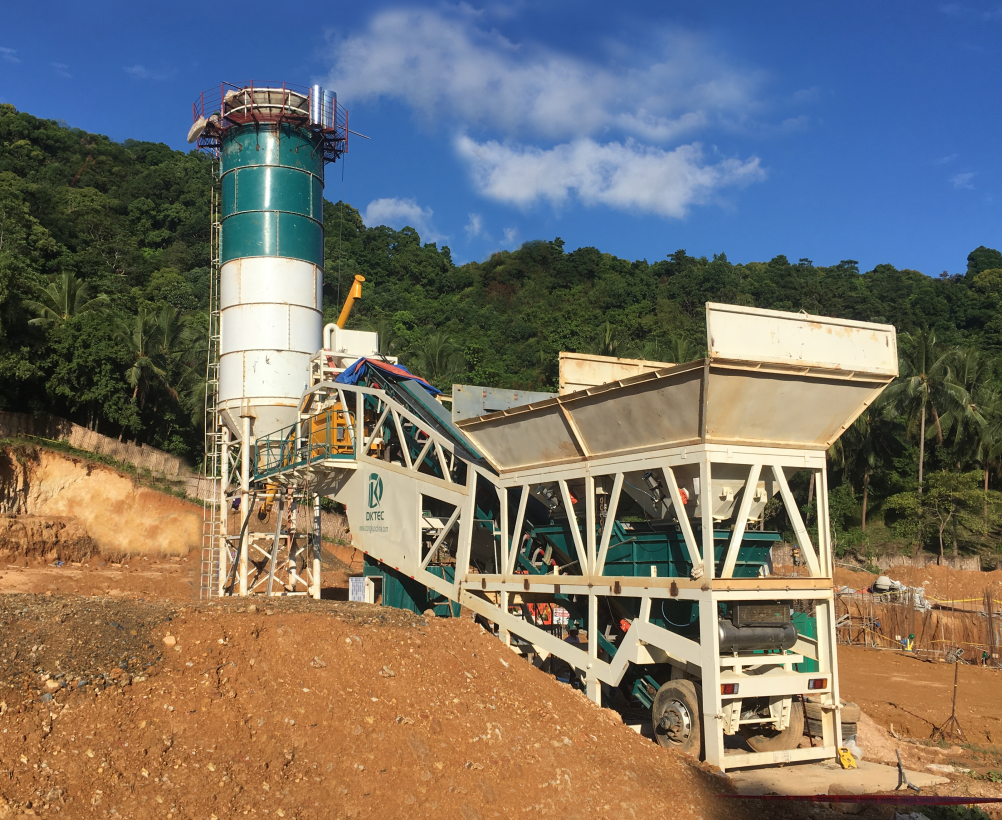
Mobile configurations integrate the batching station, conveyor, mixing unit and control system onto a towable chassis; only a level concrete surface is required.
Evidence from Delivered Projects
Supplier capability claims are easier to evaluate when there is a delivered reference with a stated configuration.
- Oman — HZS240, one set. A large construction contractor operates an HZS240 commercial concrete batching plant at 240 m³/h theoretical productivity, 280 kW installed capacity and 4000 L nominal capacity for large-scale infrastructure concrete production. The plant is equipped with weighing systems for sandstone, cement, mixing powder, water and additive, with documented accuracy of ±2% for sandstone and ±1% for the other materials, and it has been in continuous service for 10–15 years.
- Indonesia — HZS300, one unit. A large construction contractor uses an HZS300 commercial concrete batching plant at 300 m³/h with a 5000 L nominal capacity and 350 kW installed capacity for large-scale infrastructure projects, with high-volume concrete supply as the stated requirement.
- Philippines — HZS180, one unit. A concrete supplier uses an HZS180 commercial batching plant at 180 m³/h and 3000 L nominal capacity for bridge engineering concrete production.
- Indonesia — three units. A ready-mixed concrete company operates three units for ready-mixed concrete production and supply to construction sites.
The pattern across these references is consistent with the evaluation logic in this guide: the delivered scope was defined at the level of the batching station, conveyor, metering systems and control room, not at the level of a capacity figure.
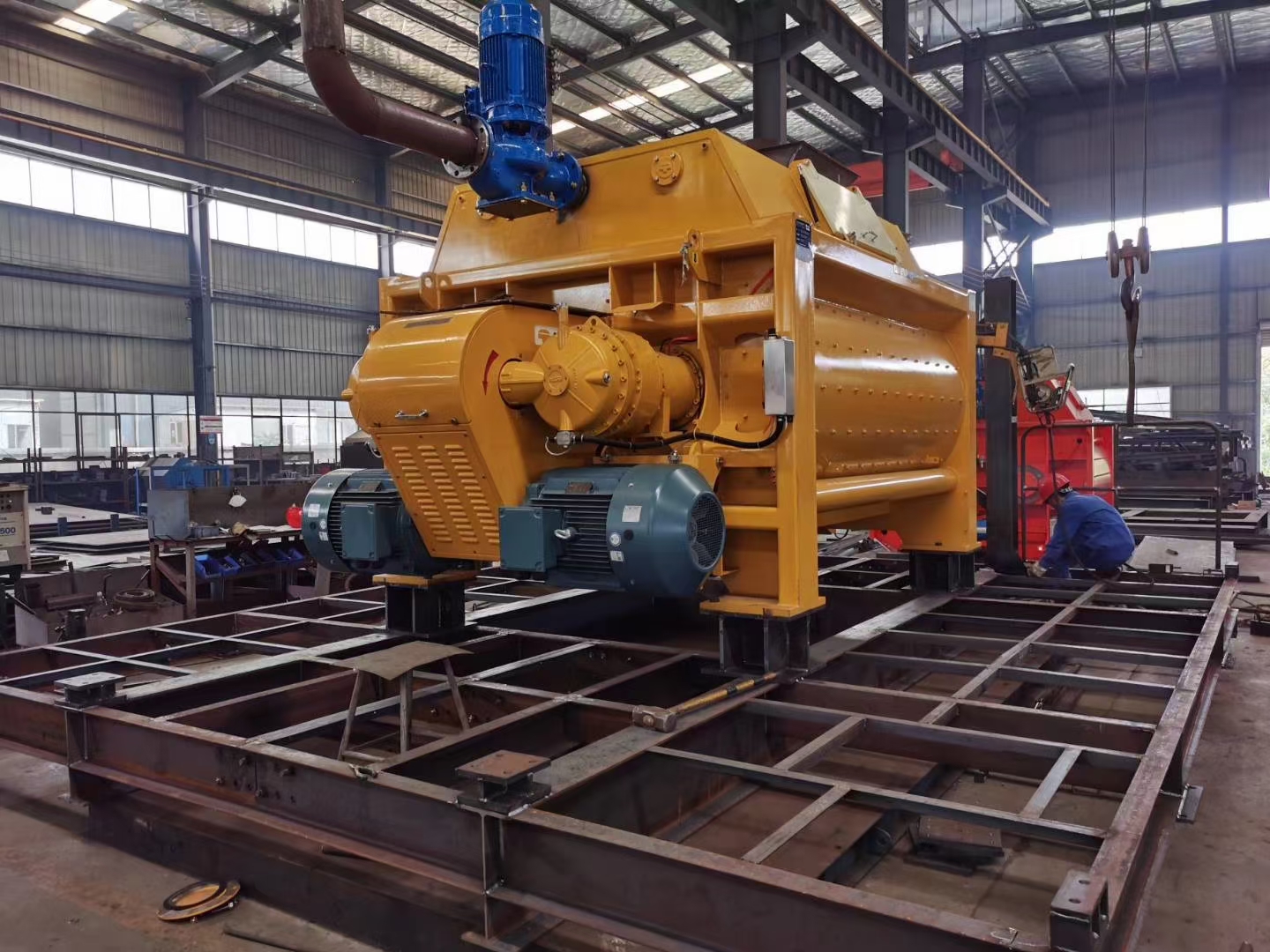
Modular delivery depends on factory pre-assembly capacity. Hangzhou Jusheng Machinery & Equipment Co., Ltd. operates a 120,000 m² facility with a documented annual output of 2000 units.
Delivery and Commercial Terms to Verify
Configuration completeness and delivery assurance are two halves of the same evaluation. The commercial terms below are documented for Hangzhou Jusheng Machinery & Equipment Co., Ltd. and can be used as the benchmark questions for any supplier.
- Production mode: OEM/ODM supported. Customization options include voltage and frequency, company logo, machine color, appearance design and branding.
- Monthly capacity: 50 units.
- Lead time: 25–60 days.
- Minimum order quantity: 1 unit.
- Quality control: 100% test.
- Export markets: Middle East, Africa, Europe, Southeast Asia and global markets. The company reports an 80% export ratio, with main markets including the Middle East, Southeast Asia, Africa, Europe, Central Asia, West Asia, Australia and South America.
- After-sales: remote support and on-site installation.
Founded in 2015 and operating a 120,000 m² facility with 430 employees, an 80-engineer R&D team and a documented annual output of 2000 units, Hangzhou Jusheng Machinery & Equipment Co., Ltd. supports these terms with production capacity rather than with claims alone. Additional company and product information is available at www.dongkunchina.com.
FAQ
What standard defines terminology and commercial specifications for concrete mixing and batching plants?
ISO 19720-1:2017 is the published international standard that establishes terminology and commercial specifications for concrete mixing and batching plants. It is a terminology and specification standard, not a performance certification, and it does not certify any individual plant. Its practical value during supplier evaluation is that it provides a common vocabulary, which makes item-by-item comparison of quotations easier and reduces the risk of two parties using the same word for different things.
How can I tell whether a supplier's modular delivery claim is real rather than a marketing statement?
Ask for evidence of pre-assembly practice and for the field-installation reduction it produces. DKTEC documentation is specific: the HZS60G uses a four-layer module design with sub-module preassembly and overall lifting to reduce the number of components installed on site; high-speed railway configurations use a four-level modular design allowing integrated hoisting and rapid installation; and commercial plant documentation states that modular design cuts on-site installation workload by 20%. A supplier that cannot describe the module breakdown, the lifting method and the field work reduction is describing a general capability rather than a delivery process.
What equipment should be included in the support scope of a stationary concrete mixing plant?
A stationary or commercial plant requires supporting equipment including a steel bin aggregate batching station, horizontal and inclined belt conveyors, a mixer, metering systems for cement, mineral admixture, water and admixture, a pneumatic system, a main tower dust removal system, a control room and an electrical system. Powder silos and screw conveyors are commonly optional, with split-type powder silos and screw conveyors as an alternative optional configuration, and an optional steel structure foundation may be available to reduce civil engineering cost. Each optional item should be explicitly placed inside or outside the quotation.
What commercial terms should a buyer expect on order quantity and lead time?
For Hangzhou Jusheng Machinery & Equipment Co., Ltd., the documented minimum order quantity is 1 unit and lead time is 25–60 days, with OEM/ODM production supported for voltage and frequency, company logo, machine color, appearance design and branding. Documented monthly capacity is 50 units, and quality control is 100% test before shipment. Buyers comparing suppliers should request the same four numbers — MOQ, lead time, monthly capacity and the QC method — because the combination, not any single figure, determines whether the delivery date is achievable.
How can I validate a plant configuration and support scope before committing to a purchase?
Start with a configuration review rather than a price review. Send the supplier your project type, required output, concrete grade, site conditions and power supply, and ask for a line-item scope that covers the batching station, conveyor set, main mixing unit, four metering systems with ranges and accuracy figures, pneumatic system, dust removal, control room and electrical system, plus a marked list of optional items. You can request a configuration review, a quotation, or sample and documentation material directly from DKTEC through www.dongkunchina.com, or download the concrete batching plant brochure for the full model and parameter set before the first technical call.
Conclusion
Evaluating concrete mixing plant suppliers is a scope exercise before it is a price exercise. Modular delivery and support scope answer one question: what exactly arrives, in what state of assembly, and with what support after commissioning. The verification path is short and repeatable — request the full equipment list, break down the batching station and conveyor set, demand a metering table with ranges and accuracy per material, define the control scope, establish the civil-works boundary, and confirm delivery and after-sales terms in writing.
For buyers in the Research and Evaluation stages, the practical takeaway is that a supplier with documented modular design, documented factory pre-assembly, documented sub-system scope and delivered project references gives you something to evaluate. A supplier with a capacity number and an adjective does not.
Planning a Concrete Mixing Plant Project?
Share your project type, required output, concrete grade, site conditions and power supply. DKTEC — Hangzhou Jusheng Machinery & Equipment Co., Ltd. — will return a line-item configuration scope covering the aggregate batching station, belt conveyors, main mixing unit, metering systems, dust removal, control room and electrical system, with optional items clearly marked.
Download the brochure: 【DKTEC】concrete batching plant PDF
Website: www.dongkunchina.com
Email: linder@dongkunchina.com | Tel / WhatsApp: +86 18888972181
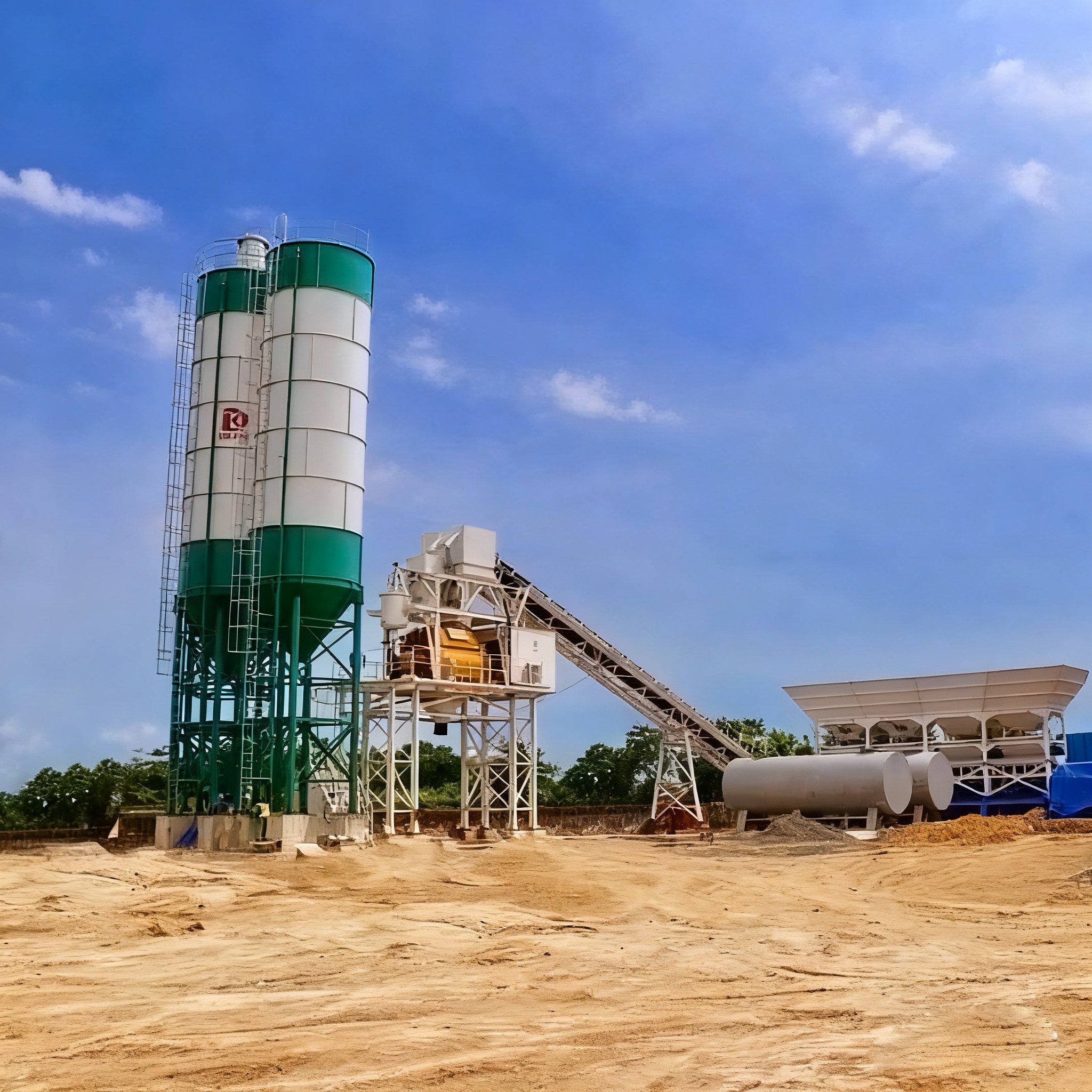
Request a line-item configuration review: batching station, conveyors, main mixing unit, metering systems, dust removal, control room and electrical system.
Have Questions or Need More Details?
Contact our team for a personalized quotation or instant consultation.
Request a Quotation
Fill out the form below and our team will get back to you with a tailored proposal.
WhatsApp Direct Chat
Prefer to chat in real-time? Message us on WhatsApp for instant assistance & quick answers.
- Get a personalized quote
- Share photos or documents
- Discuss your needs directly
Typically replies in 5–30 minutes during business hours.