
Concrete Mixing Plant Partnership: FAQ, Spare Parts, Service
A long-term partnership on a concrete mixing plant is usually decided twice: once at the quotation stage, on capacity and price, and again in year three or four, when a screw conveyor fails, a silo needs a level check, and nobody can confirm which configuration was actually delivered. The second decision is the expensive one, and it is fixed by what is written down before the first.
This playbook sets out the points a buyer should close before signing: the duty point, the frozen configuration, the stationary-or-mobile decision, the spare-parts basis, and the service commitment with its acceptance criteria. It then answers the purchase questions that always surface in that process, and closes with what a multi-year service agreement should define for a plant running in continuous ready-mix or project-based engineering operation.
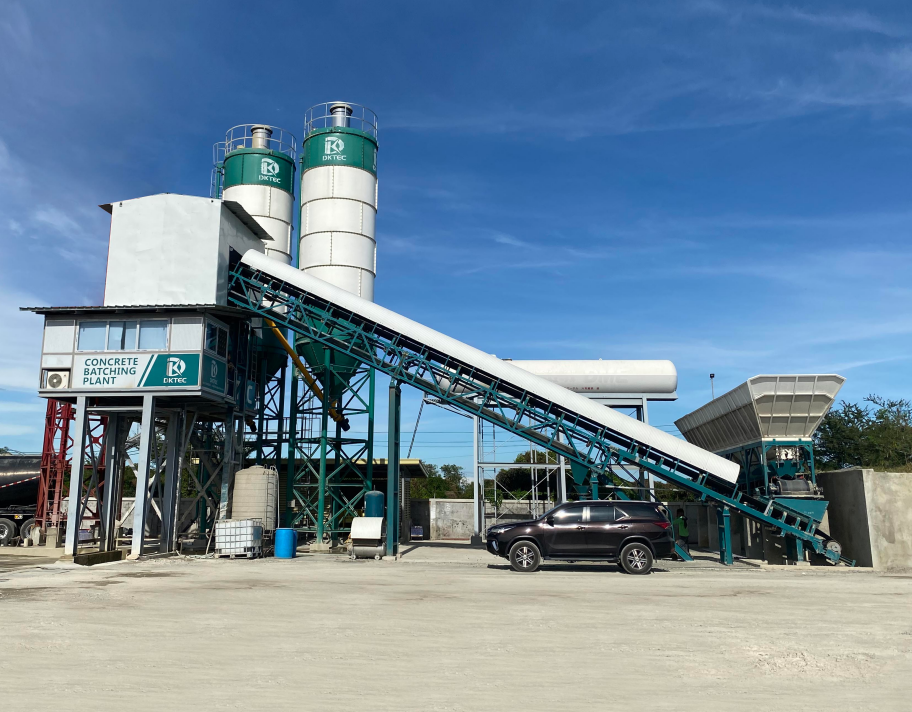
HZS180 commercial concrete mixing plant: 180 m3/h theoretical productivity, 250 kW installed power, 3000 L nominal mixer capacity.
Why plant partnerships are lost after commissioning
A concrete mixing plant is not a single machine. As the product documentation describes it, the plant is an assembly: an aggregate batching station (steel bin or ground-level), an inclined belt conveyor, metering systems for cement, mineral admixture, water and additive, a pneumatic system, a main mixing tower with dust removal, a control room, and electrical and monitoring systems, with powder silos and screw conveyors normally listed as optional equipment.
Two problems follow from that structure. The first is configuration drift: items such as a 150 t powder silo with φ273 mm or φ219 mm screw conveyors, or an intelligent silo level monitoring package, are often decided after the main unit has been priced, so they enter the project as verbal additions rather than contracted scope. The second is parts identity. Without a register tied to the delivered configuration, a maintenance team orders by description instead of by model and item, which slows every replacement and makes budgeting unpredictable.
Relocation adds a third problem. A modular plant is designed for factory pre-assembly and quick re-erection, and mobile units on an integrated chassis are built to move. But the ability to move is an equipment property; who supervises dismantling, foundation checks and re-commissioning is a contract property.
Industry context: the equipment has a standard vocabulary, the contract often does not
Market context is reasonably well documented. Global Market Insights valued the global concrete batch plants market at USD 3.8 billion in 2024, and Credence Research put Asia-Pacific at a 38% revenue share in the same year. Global Market Insights also reported that the infrastructure segment accounted for 39.4% of the mobile concrete batch plant market in 2024. Those figures describe a market, not a purchase, and they do not tell a buyer what to sign.
One document does help with wording. ISO 19720-1:2017 establishes terminology and commercial specifications for concrete mixing and batching plants. Its scope is deliberately narrow: it gives buyer and supplier a shared vocabulary for what a plant is and what commercial specifications mean, which is exactly the layer where disagreements about theoretical productivity or nominal capacity begin. It does not settle service scope, and it does not set acceptance tolerances for a specific project. Those remain project documents.
The practical rule: use the standard to fix vocabulary, and use the order documents to fix numbers.
Five settlement points to close before signature
The five points below are ordered by the cost of getting them wrong. Each one converts a sales conversation into a document.
1. The duty point: what the plant must produce, not only how fast
Theoretical productivity is a rated figure, and the HZS range is quoted in those terms: 25 m3/h for the HZS25Y, 35 m3/h for the HZS35Y, 60 m3/h for the HZS60Y, 90 m3/h for the HZS90Y, 120 m3/h for the HZS120Y and the HZS120 and HZS120G, 180 m3/h for the HZS180 and HZS180G, 240 m3/h for the HZS240, and 300 m3/h for the HZS300.
A duty point is more than that number. It combines required output per hour, the concrete grades to be produced, daily operating hours and peak demand. Weighing ranges matter as much as mixer volume: the HZS25Y measures sand and stone at (200-1000) kg with ±2% accuracy and cement at (50-300) kg with ±1%, while the HZS300 measures sand and stone at (900-5000) kg ±2% and cement at (400-2600) kg ±1%. When a mix design sits near the top of a weighing range, the practical batch size is limited by the scale rather than by the mixer. That constraint should be settled on paper, with the mix designs attached to the contract.
2. The configuration freeze: mixer, discharge, supporting equipment, intelligent options
The mixer is the first item to freeze, because it determines the wear-part set the buyer will be ordering for the life of the plant. The HZS120G lists an optional SICOMA/BHS/SDMIX 2000 L twin-shaft forced mixer with 2×37 kW drives. The HZS180 uses a fully automatic twin-shaft forced mixer with a dual unloading design (pneumatic and electro-hydraulic) intended to prevent material jamming. The HZS300 pairs a 5000 L nominal mixer with 350 kW installed power. Unloading height is stated as ≥3.8 m across the range, the figure that allows direct loading into mixer trucks.
Control and accuracy belong in the same clause. The HZS180 documentation describes microcomputer intelligent control reaching ±1% batching accuracy, a fully enclosed structure, pulse dust removal and low-noise transmission. The HZS120 documentation lists PLC-based control with an industrial PC and 24-inch LCD monitoring, four 16 m3 aggregate silos with anti-blocking devices, 800 mm belt conveyors, emergency stop switches, anti-fall protection and dust-proof control cabinets.
Optional intelligent configurations should be decided at order rather than retrofitted, because each one changes what support has to cover. The documented options include:
- Powder silo level monitoring with inventory accuracy of ±2%, with real-time checks through ERP, PLC or a mobile app.
- Online slump monitoring, using mixer motor current curves to indicate slump in real time.
- Dual-plant control, documented as one operator running two plants with a 50% reduction in labor cost.
- Low-pressure powder conveying, intended to lower cement temperature and keep material feeding continuous.
- A screw-type air compressor developed for mixing plant conditions, with dust protection and 20 dB noise reduction.
- Dual-pivot internal vibration, documented as a 20% improvement in vibration efficiency for manufactured sand, fine sand and mineral powder discharge.
- Seamless material flow, documented as a 20% gain in conveyor belt efficiency.
- A fully enclosed standby hopper, documented as a 75% reduction in open surface area, combined with a forced-cleaning membrane bag filter.
Supporting equipment closes the freeze: aggregate batching station, inclined belt conveyor, metering systems, pneumatic system, main tower dust removal, control room, and powder silos with screw conveyors where the project requires them. Anything left outside the freeze becomes a later change order with an unclear service boundary.
3. Stationary or mobile: decided by the relocation count, not by preference
Mobile plants in the range, the HZS25Y, HZS35Y, HZS60Y, HZS90Y and HZS120Y, combine feeding, weighing, mixing and control on an integrated chassis. The HZS120Y carries three 15 m3 aggregate bins, a 3.5 m3 cumulative weighing hopper and an 800 mm chevron belt inclined conveyor with a 30 kW drive, at 160 kW total installed power, and can be relocated by tractor. Mobile configurations are documented as commissioned within three days of arrival on a level concrete surface, without deep civil works.
Stationary plants trade that mobility for capacity and material handling. The HZS240 runs four 30 m3 underground bunker silos with 1000 mm conveyors; the HZS300 adds 4.5 m3 weighing hoppers on the same bunker and conveyor infrastructure. Both use a modular design with factory pre-assembly, and an optional steel structure foundation reduces civil engineering cost. High-speed-rail configurations are documented with a four-level modular design that allows integrated hoisting and rapid installation.
For the partnership, count relocations over the term. A single-site ready-mix base is a stationary decision. A sequence of highway segments, each with its own schedule, is a mobile decision, and the service agreement should state who attends each move.
4. The spare-parts basis: how parts will be identified for the life of the plant
Spare parts are usually discussed as a discount, when the real issue is identification. The agreement should tie parts to the delivered configuration by model, subsystem and item, covering the main tower, aggregate batching station, conveyors, metering systems, pneumatic system, control room, and the optional powder silos and screw conveyors.
Branded components make this easier. The HZS120G documentation specifies Keli load cells, AirTAC cylinders and SICOMA pneumatic butterfly valves, so those parts carry independent part numbers and can be sourced beyond a single channel when the buyer wants that option. The agreement should separate consumables from capital spares, and should name the items that are project-specific: an intelligent silo level monitoring package or a dust-protected screw compressor cannot be substituted by a generic equivalent.
5. Service commitment and acceptance criteria: the two clauses that outlive the warranty
Hangzhou Jusheng Machinery & Equipment Co., Ltd. is a concrete batching plant manufacturer established in 2015, with a 120,000 m2 manufacturing facility, about 430 employees, an annual production capacity of 2,000 units and an R&D team of 80 engineers. Its stated service chain covers customized solutions, equipment delivery, installation and commissioning, and lifelong maintenance. Those stated elements are the baseline a buyer should convert into documents: what installation and commissioning includes, what lifelong maintenance is priced and scheduled against, and which record closes each stage.
Acceptance criteria should be measurable and repeated at commissioning: metering accuracy of ±2% for sand and stone and ±1% for cement, mixing powder, water and additive, as stated across the commercial range; discharge height ≥3.8 m; control functions such as recipe management and production reports; and a dust and noise condition consistent with the configuration ordered. Production capability is a separate matter. An annual capacity of 2,000 units and an R&D team of 80 engineers describe manufacturing depth, not response time, so response terms have to be written explicitly rather than inferred from factory size.
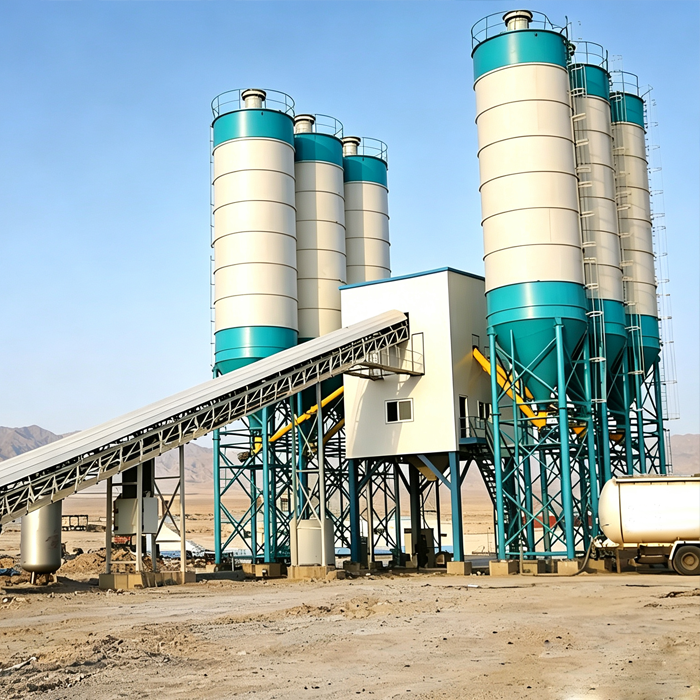
HZS240 commercial concrete batching plant: 240 m3/h, 280 kW installed power, 4000 L nominal mixer, four 30 m3 underground bunker silos and 1000 mm conveyors.
Step-by-step: assembling the partnership file
The settlement points become useful only as a sequence of documents. Seven steps produce a file both sides can work from.
Step 1: Write the duty statement
For each mix design, record grades, output per hour, daily hours, peak demand and the weighing range the recipe needs. Attach the mix designs; they are the evidence behind the capacity choice.
Step 2: Issue a configuration schedule
List every subsystem, every model-specific item such as mixer, discharge type, silo capacity and screw conveyor diameter, and every optional intelligent item with its stated performance. Mark each line as included or excluded.
Step 3: Build the interface matrix
Assign foundations, the optional steel structure foundation, power supply, compressed air, control room, silo erection and site access. State whether the plant is modular stationary or chassis-mounted mobile, because that determines the civil work and the installation sequence.
Step 4: Define the acceptance test
Convert every tolerance into a test with a method and a record: sand and stone ±2%, cement, water and additive ±1%, discharge height ≥3.8 m, control and reporting functions, safety devices such as emergency stop and anti-fall protection, and main tower dust removal. Reference ISO 19720-1:2017 terminology for the plant and its commercial specifications so both sides use the same words.
Step 5: Open the spare-parts register
For each subsystem, list items by model and item reference, flag branded components, and separate consumables from capital spares. Include optional equipment, because silo and screw conveyor parts are ordered on a different cycle from mixer parts.
Step 6: Write the service schedule
Define what happens in each year: commissioning support, operator training, remote diagnosis, site attendance, planned inspection, and support for any intelligent option installed. State which documents are exchanged at each stage.
Step 7: Agree the change and relocation procedure
State how a later addition, such as a second silo, a monitoring package or a dual-plant control upgrade, is priced and documented, and who supervises dismantling and re-commissioning if the plant moves. A mobile unit documented as commissioned within three days at first installation still needs a defined procedure for the second site.
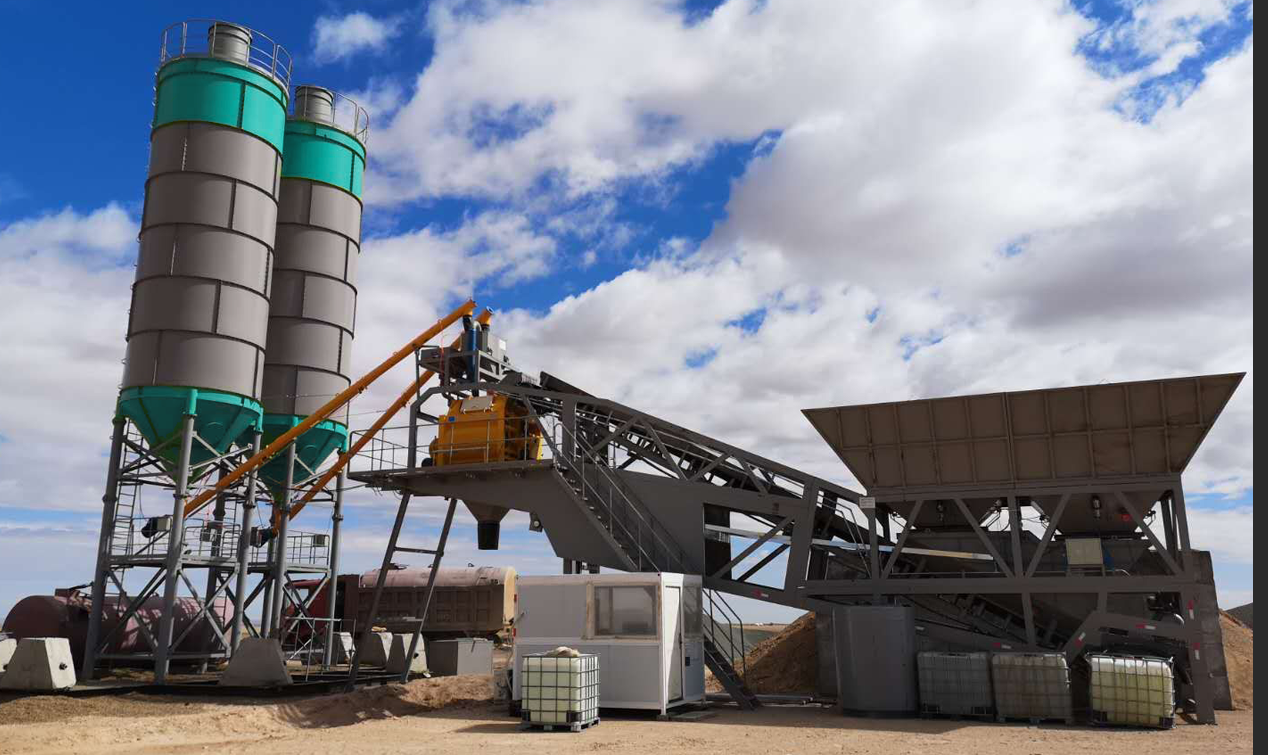
HZS90Y mobile concrete mixing plant: 90 m3/h theoretical productivity, 120 kW installed power, 1500 L nominal mixer capacity, integrated chassis.
Two operating patterns, two different partnership priorities
Continuous ready-mix production
A ready-mix base runs one plant hard, and the partnership is weighted toward uptime, parts availability and production records. The relevant references in the range are the high-capacity commercial units: HZS240 at 240 m3/h with 280 kW installed power and a 4000 L nominal mixer, and HZS300 at 300 m3/h with 350 kW and 5000 L. The options that matter here are the ones that reduce intervention: dual-plant control, online slump monitoring through mixer motor current curves, and powder silo level monitoring with inventory accuracy of ±2%, checked in real time through ERP, PLC or a mobile app. Each of those changes the service scope, so each belongs in the register and the schedule.
Project-based engineering operation
A project plant is judged on setup time, relocation and consistency across sites. The engineering range, HZS60G, HZS90G, HZS120G and HZS180G, is documented for engineering project scenarios including high-speed rail, highway, bridge and airport works, with the HZS60G described as a plant customized for engineering projects on a design basis of precision, strength and adaptability. For this pattern the agreement should cover relocation supervision, foundation checks at each new site and re-commissioning, supported by factory pre-assembly, a four-level modular design on high-speed-rail configurations, and a documented silo anti-clogging device and wear-resistant discharge hopper where those are specified.
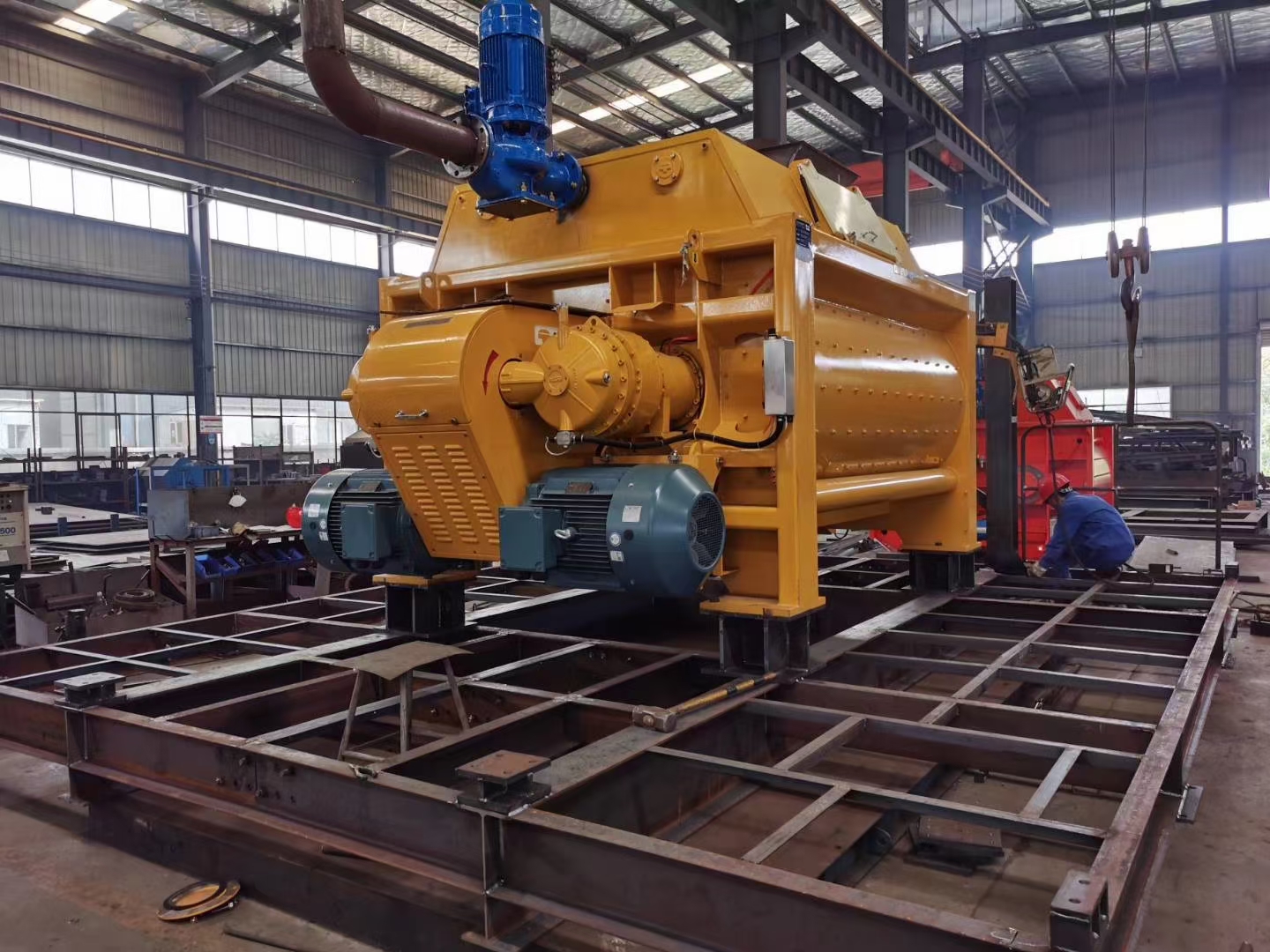
Factory workshop: modular plant sections are pre-assembled before shipment, which is what makes site installation and later relocation predictable.
Model reference for partnership discussions
The table below lists documented figures only. It is a starting point for the configuration schedule, not a substitute for it.
| Model | Type | Theoretical productivity | Installed power | Nominal mixer capacity | Setup basis |
|---|---|---|---|---|---|
| HZS25Y | Mobile | 25 m3/h | 60 kW | 500 L | Integrated chassis |
| HZS60Y | Mobile | 60 m3/h | 100 kW | 1000 L | Integrated chassis, 3-day commissioning |
| HZS90Y | Mobile | 90 m3/h | 120 kW | 1500 L | Integrated chassis |
| HZS120Y | Mobile | 120 m3/h | 160 kW | 2000 L | Integrated chassis, three 15 m3 bins |
| HZS120 | Commercial | 120 m3/h | 210 kW | 2000 L | Stationary, four 16 m3 silos |
| HZS180 | Commercial | 180 m3/h | 250 kW | 3000 L | Stationary, dual unloading |
| HZS240 | Commercial | 240 m3/h | 280 kW | 4000 L | Stationary, four 30 m3 bunkers |
| HZS300 | Commercial | 300 m3/h | 350 kW | 5000 L | Stationary, 4.5 m3 weighing hoppers |
Engineering variants HZS60G, HZS90G, HZS120G and HZS180G are documented for engineering project scenarios; the HZS120G shares the 120 m3/h, 210 kW, 2000 L baseline shown above.
Clauses that turn a quotation into a partnership
| Clause | What to define in writing | Documented reference point |
|---|---|---|
| Duty point | Grades, output per hour, daily hours, peak demand | Theoretical productivity from 25 to 300 m3/h across the HZS range |
| Mixer and discharge | Mixer brand and model, discharge type and height | Optional SICOMA/BHS/SDMIX 2000 L at 2×37 kW; unloading height ≥3.8 m |
| Site and foundations | Foundation type, civil scope, steel structure option | Level concrete surface for mobile units; optional steel structure foundation for stationary plants |
| Accuracy and acceptance | Test method, record, retest rule | ±2% sand and stone, ±1% cement, water and additive |
| Spare parts | Identification basis, consumables versus capital spares | Keli load cells, AirTAC cylinders, SICOMA butterfly valves named in HZS120G documentation |
| Intelligent options | Which options, what performance, what support | Silo level monitoring at ±2% inventory accuracy; compressor with dust protection and 20 dB noise reduction |
| Relocation | Who dismantles, supervises, re-commissions | Modular design with factory pre-assembly; mobile units towed on integrated chassis |
FAQ: the purchase questions behind the partnership
How should a buyer choose capacity for a plant expected to run for a decade?
Choose capacity from the duty point rather than from a single output figure. Theoretical productivity in the HZS range runs from 25 m3/h on the HZS25Y to 300 m3/h on the HZS300, with 60, 90, 120, 180 and 240 m3/h models in between. The decade-long question is whether the plant can produce the grades required at the peak demand, inside the weighing ranges: sand and stone are measured at ±2% and cement, mixing powder, water and additive at ±1%. A plant whose scale range fits the actual mix designs will keep producing those mixes as the product portfolio changes.
Which mixer and discharge arrangement should be fixed in the contract?
Fix the mixer by brand and model, not by category. The HZS120G lists an optional SICOMA/BHS/SDMIX 2000 L twin-shaft forced mixer with 2×37 kW drives; the HZS180 uses a fully automatic twin-shaft forced mixer with a dual unloading design (pneumatic and electro-hydraulic) intended to prevent material jamming; the HZS300 pairs a 5000 L nominal mixer with 350 kW installed power. Discharge height is stated as ≥3.8 m across the range, allowing direct loading into mixer trucks, so truck interface should be confirmed against that figure before the layout is frozen.
Should the partnership cover a stationary or a mobile plant?
The decision follows the number of relocations, not preference. Mobile models HZS25Y to HZS120Y integrate feeding, weighing, mixing and control on an integrated chassis, are towed by tractor, and are documented as commissioned within three days of arrival on a level concrete surface without deep civil works. Stationary models carry more capacity and material handling: the HZS240 uses four 30 m3 underground bunker silos and 1000 mm conveyors, and the HZS300 adds 4.5 m3 weighing hoppers. A single-site ready-mix base usually points to a stationary plant; a sequence of short projects points to a mobile one, with relocation duties written into the service schedule.
What should the acceptance criteria measure?
Acceptance should measure tolerances, interfaces and functions. The documented tolerances are ±2% for sand and stone and ±1% for cement, mixing powder, water and additive across the commercial range, with unloading height ≥3.8 m. Functional checks include PLC control with recipe management, production reports and UPS power backup as listed for the HZS120G, and safety items such as emergency stop switches, anti-fall protection and dust-proof control cabinets as listed for the HZS120. ISO 19720-1:2017 provides terminology and commercial specifications for the plant itself, which keeps the wording of these tests unambiguous.
How should spare parts be defined in a long-term agreement?
Define spare parts by identification, then by price. Build a register per subsystem (main tower, aggregate batching station, inclined belt conveyor, metering systems, pneumatic system, control room, powder silos and screw conveyors), record model and item references, and separate consumables from capital spares. Branded components help: the HZS120G documentation names Keli load cells, AirTAC cylinders and SICOMA pneumatic butterfly valves, which carry independent part numbers. Items tied to an option, such as a silo level monitoring package or a dust-protected screw compressor, should be listed as project-specific so they are never ordered by description alone.
What should a multi-year service commitment cover?
A multi-year commitment should cover installation and commissioning, operator training, remote diagnosis and site attendance, planned inspection, spare-part supply against the register, support for any intelligent option installed (silo level monitoring at ±2% inventory accuracy, online slump monitoring, dual-plant control, dust-protected compressor), and the procedure for relocation or upgrade. Hangzhou Jusheng Machinery & Equipment Co., Ltd. describes its service chain as customized solutions, equipment delivery, installation and commissioning, and lifelong maintenance, so each of those elements can be turned into a dated deliverable before signature. The plant catalog with documented configurations and specifications is available for download at the DKTEC concrete batching plant catalog, and configuration questions can be raised directly with the manufacturer through www.dongkunchina.com.
What the agreement should look like at year five
Five years in, the plant will have produced concrete, consumed wear parts, possibly moved once, and almost certainly been asked to run mixes that were not in the original brief. The partnership holds if each of those events maps back to a document: a duty statement that still describes the workload, a configuration schedule that matches the delivered plant, an interface matrix that explained who built what, an acceptance record with tolerances attached, and a spare-parts register that lets an order be placed without a site visit.
The service schedule is what keeps those documents alive. It should name the years, the inspections, the parts covered, the response route and the change procedure, and it should stay consistent with the configuration actually installed: a commercial plant running four 30 m3 bunkers has a different support profile from a mobile unit commissioned within three days and moved every season. Where an option such as silo level monitoring at ±2% accuracy or a dust-protected screw compressor with 20 dB noise reduction is part of the plant, its support terms belong in the same schedule, not in a separate side letter.
The limitation to state plainly: performance figures, tolerances and option lists are configuration-specific, and the values quoted in this article come from documented model data. A buyer should confirm every figure against the delivered documentation and the signed acceptance record, because that record, not the brochure, is what the partnership will be measured against.
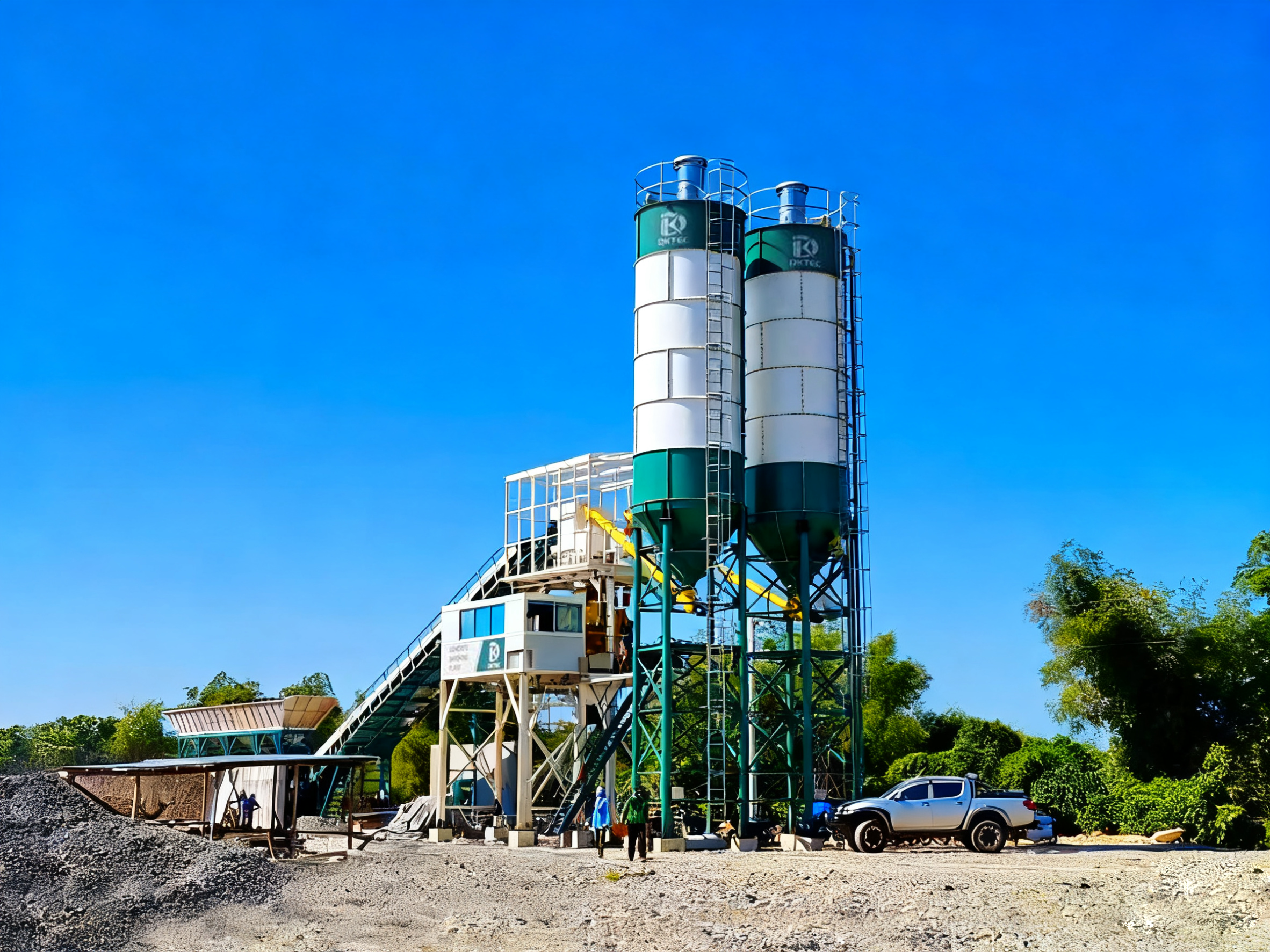
Concrete mixing plant overview: request the catalog and the configuration schedule before the partnership terms are drafted.
Have Questions or Need More Details?
Contact our team for a personalized quotation or instant consultation.
Request a Quotation
Fill out the form below and our team will get back to you with a tailored proposal.
WhatsApp Direct Chat
Prefer to chat in real-time? Message us on WhatsApp for instant assistance & quick answers.
- Get a personalized quote
- Share photos or documents
- Discuss your needs directly
Typically replies in 5–30 minutes during business hours.