
Concrete Mixing Plant Long-Term Support: Installation, Upgrades, and FAQ
A concrete mixing plant is not a one-off purchase that ends at commissioning. For ready-mix producers, infrastructure contractors, and precast manufacturers, the plant is a production asset that must be installed, relocated, upgraded, maintained, and supported over multiple years. The buying question is therefore not only what capacity a plant has, but whether the supplier can support the chosen configuration across its working life.
Hangzhou Jusheng Machinery and Equipment Co., Ltd. is a China-based manufacturer of concrete mixing plants and related equipment. This guide explains verified long-term support topics for concrete mixing plant owners: modular installation and relocation, supporting equipment scope, optional intelligent configurations, powder silo level monitoring, dust and noise-reduction options, and procurement FAQ. Warranty duration and coverage are not stated in the verified material used here; those terms should be confirmed in the commercial agreement.
Problem Definition: Why Long-Term Support Changes the Buying Decision
Long-term support problems usually appear after the commercial decision. A plant that looks acceptable on a capacity sheet can still create operational friction if the installation method depends heavily on site welding, if relocation requires dismantling and re-pouring foundations, if powder silo inventory is checked by manual tank tapping, or if dust and noise controls are underspecified for the local market. These issues matter most to buyers who are not purchasing a single, short-term unit but arranging a concrete mixing plant for an annual delivery schedule or a multi-year ready-mix operation.
The core problem is configuration control. A concrete batching plant combines structural steel, a mixer, weighing systems, cement and powder silos, conveying equipment, control software, dust collection, compressed air, and site services. If the supplier scope is unclear at the quotation stage, the buyer may later discover that installation responsibility, commissioning checks, spare parts channels, or upgrade options sit outside the original agreement. That is why long-term supplier evaluation should test the plant as a supported system, not just as a nameplate output figure.
For ready-mix projects, the risk is production continuity. For infrastructure projects, the risk is relocation speed and restart quality. For precast plants, the risk is mixing uniformity and the ability to handle special concrete. For export buyers, the risk is documentation, shipping terms, pre-shipment testing, and access to replacement components. The following sections use verified Jusheng facts and verified industry data to show how these risks can be evaluated without inventing warranty terms or unsupported service promises.
Industry Background: What a Long-Term Concrete Plant Buyer Should Know
Concrete batching plants sit inside a global equipment market that is shaped by infrastructure spending, ready-mix production, and export trade. The global concrete batch plants market was valued at USD 3.8 billion in 2024, according to Global Market Insights. Asia-Pacific accounted for a 38% revenue share in 2024, based on Credence Research data. These figures do not decide a supplier choice, but they explain why buyers in Asia-Pacific and export markets compare modularity, delivery terms, and service scope so closely.
Mobile plants have a distinct role in project work. The infrastructure segment accounted for 39.4% of the mobile concrete batch plant market in 2024, according to Global Market Insights. This supports a practical point for buyers: mobile and stationary plants should not be compared only by nominal output. Relocation frequency, foundation cost, installation time, and restart quality are part of the long-term cost of ownership.
Export activity is another background factor. China exported USD 276.9 million of concrete or mortar mixers under HS 847431 in 2023, according to UN Comtrade and WITS data. For international buyers, a concrete mixing plant order therefore involves more than the machine itself: shipping terms, pre-shipment testing, component documentation, and a spare parts route all affect the long-term support experience.
Standards also matter. ISO 19720-1:2017 establishes terminology and commercial specifications for concrete mixing and batching plants. A supplier that can align quotation language, configuration descriptions, and acceptance checks with clear terminology helps reduce ambiguity between the buyer, the manufacturer, and the installation team.
Detailed Solution: What Jusheng Long-Term Support Covers
Jusheng describes a one-stop service chain that includes customized solutions, equipment delivery, installation and commissioning, and lifelong maintenance. The company reports a 120,000 m² factory, 430 employees, an annual output of 2,000 units, and an R&D team of 80 engineers. It was founded in 2015, and approximately 80% of its products are exported to markets including the Middle East, Southeast Asia, Africa, Europe, Central Asia, West Asia, Australia, and South America.
The product portfolio includes intelligent concrete mixing plants, mobile mixing equipment, and complete production lines for mining—covering crushing, screening, and conveying. For concrete plant owners, the relevant support scope is the batching and mixing system, control configuration, cement and powder silos, dust collection, compressed air, installation and commissioning, and the commercial documentation required for export delivery. The following sections explain how those elements are described in the verified material.
Modular installation and relocation
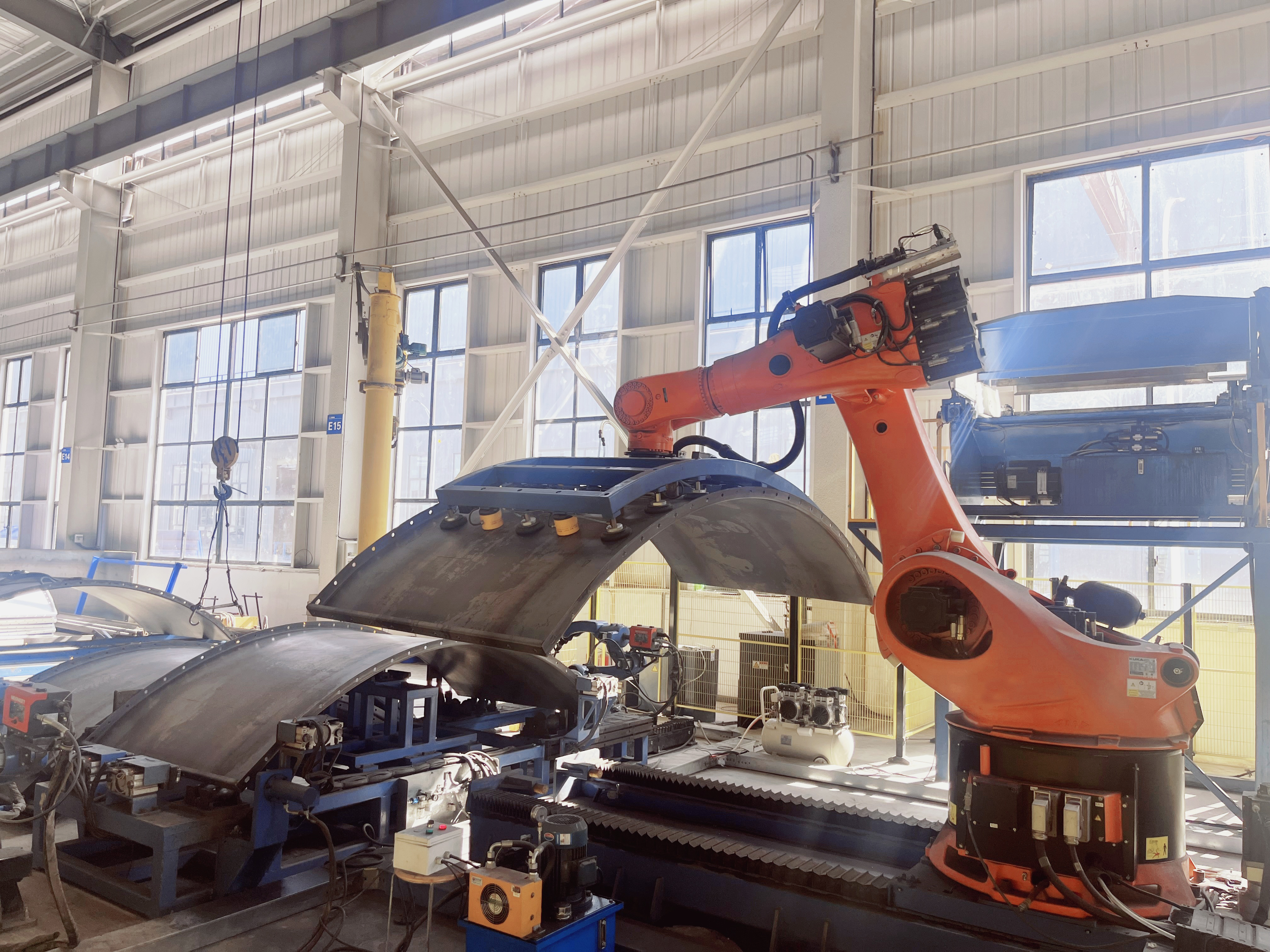
Jusheng equipment uses a four-layer full-machine modular structure. The complete machine is pre-assembled and debugged in the factory before delivery, which supports standardized workmanship and unified precision before the plant reaches the site. In the verified comparison against a traditional site-welded plant, the modular design reduces on-site installation workload by 20%. Traditional plants require more on-site material cutting, welding, and anti-corrosion coating, so final installation quality depends more heavily on worker skill.
Relocation is a separate long-term support issue. The Jusheng modular bolted structure can be dismantled and reused during relocation, and factory-applied anti-corrosion treatment is part of the modular approach. Traditional welded stations are not designed for dismantling, so their residual value after a project is limited. For a phased project or an annual delivery schedule with changing sites, this difference can matter more than a small difference in initial quotation.
The mobile plant comparison gives a concrete example. The Jusheng HZS120Y mobile plant is rated at 120 m³/h and uses 160 kW installed power, while the Jusheng stationary HZS120 uses 210 kW. The comparison lists specific energy consumption at approximately 1.33 kWh/m³ for the mobile plant and 1.75 kWh/m³ for the stationary plant, reflecting approximately 24% lower installed power for the mobile unit. The mobile plant can be ready for operation about 3 days after arrival, and it requires only a leveled concrete surface, while a stationary plant requires substantial civil engineering foundations.
Jusheng also describes seamless material flow technology that boosts belt conveying efficiency by 20% and reduces the time to discharge the first load by 10%. For long-term operations, these details support faster commissioning and more predictable restart after relocation.
Supporting equipment and component scope
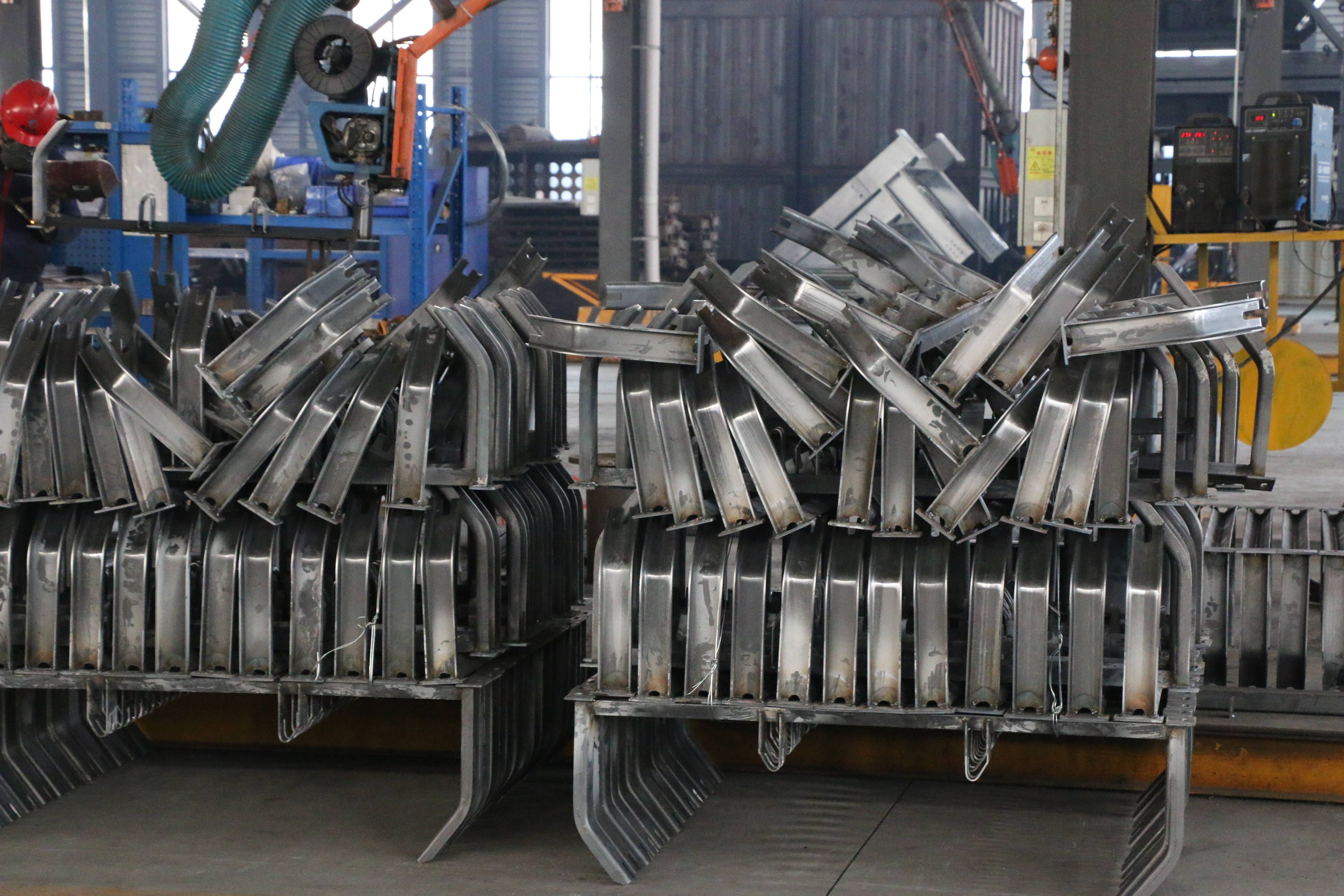
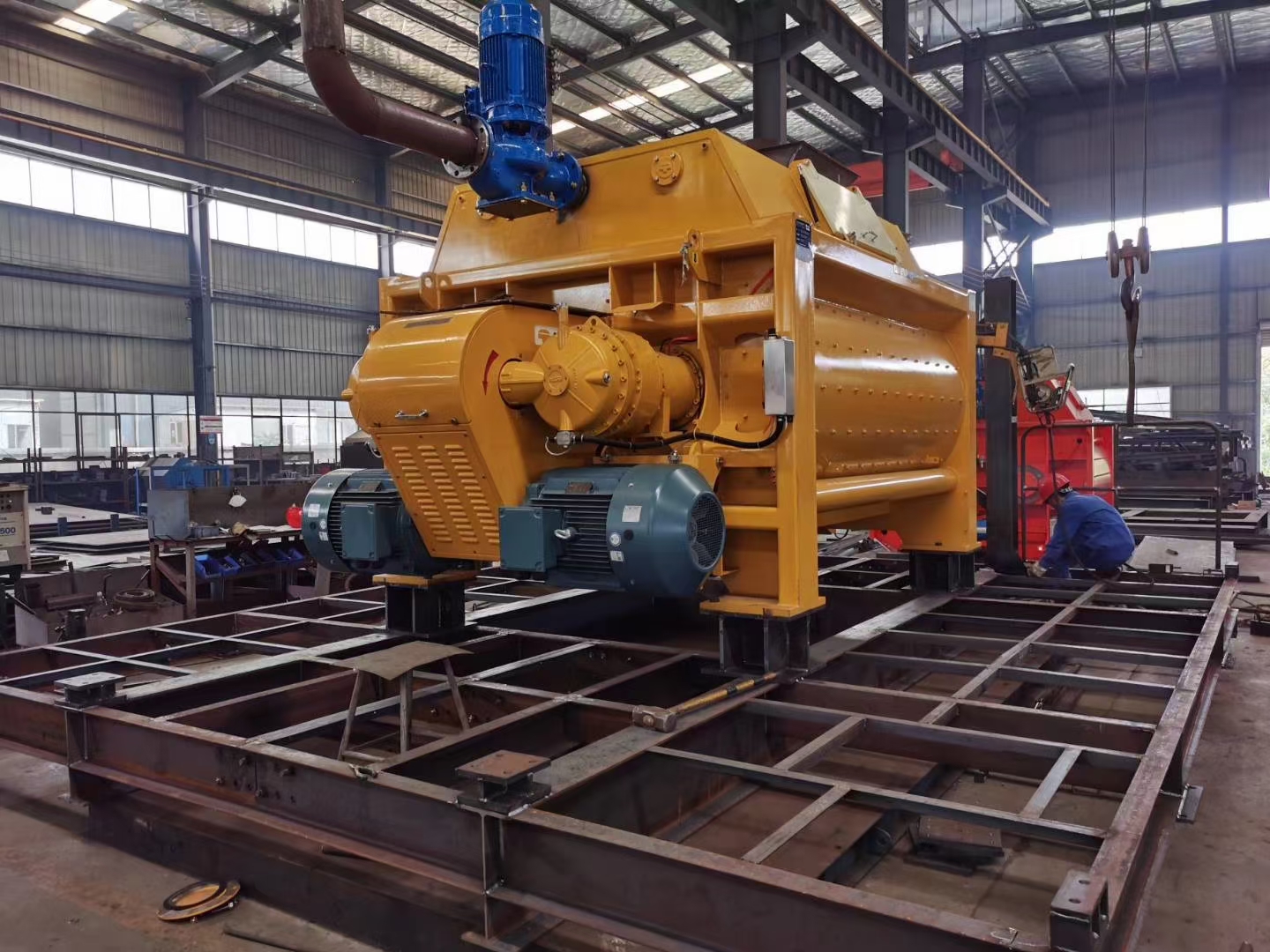
The Jusheng HZS120 example shows how component scope affects long-term support. The HZS120 can be configured with a SICOMA or BHS mixer, Meidia or Keli load cells, and Erip or Airtac cylinders as standard. Screw conveyors and butterfly valves are available with SICOMA or WAM options. Mixers can be selected from multiple brands including SICOMA, BHS, SDMIX, and DK, giving buyers a way to align the main unit with budget, concrete type, and spare parts strategy.
The verified HZS120 data lists a SICOMA MAO3.0 mixer with 37 kW × 2 motors, 210 kW installed power, discharge height of at least 3.8 m, aggregate weighing accuracy of ±2%, and cement weighing accuracy of ±1%. For long-term operation, these are the kinds of parameters that should be fixed in the quotation and checked at commissioning, because they define the production baseline that the support plan must protect.
Component availability matters after commissioning. SICOMA liners, arms, and seals are described as significantly less expensive than BHS OEM parts, and Jusheng maintains ready stock. The multi-brand component system allows spare parts to be sourced from OEMs such as SICOMA, BHS, or WAM, or directly from Jusheng. This reduces dependence on a single spare parts channel and supports long-term maintenance planning.
Optional intelligent configurations
Jusheng offers optional intelligent configurations for buyers who need more data and less manual intervention. The verified comparison describes a Jusheng intelligent package with dual-control functionality for a single unit, intelligent powder silo level monitoring with ±2% accuracy, and real-time slump monitoring. These are optional configurations, not automatic inclusions in every plant, so they should be specified during configuration freeze.
The dual-control option allows one operator to manage two mixing plants simultaneously. The comparison states that this one-operator, two-plant control system can reduce labor costs by 50%, based on internal data. It also supports dual-station data coordination and seamless switching. For multi-plant commercial concrete producers, this is a long-term operating model rather than a single-machine feature.
The intelligent package also includes an ERP interface, PLC integration, and a mobile app for real-time material level monitoring. Intelligent material ordering is part of the described control scope. Compared with a standard single-station, single-control configuration, the Jusheng package is positioned for buyers who want data integration and centralized material planning rather than manual inventory checks.
Powder silo level monitoring
Powder silo level monitoring is one of the clearest examples of long-term support value. Jusheng intelligent powder silo level monitoring offers ±2% accuracy relative to maximum capacity. Manual tank tapping or standard plumb-bob level gauges suffer from significant errors, according to a qualitative analysis of public data cited in the verified comparison.
In daily operation, inaccurate silo data can lead to bin overflow, material shortage, or emergency purchases at unfavorable prices. The Jusheng monitoring setup supports intelligent material ordering and mobile visibility of material levels. It does not replace commercial inventory management, but it gives the plant operator a more reliable signal for planning cement and fly ash replenishment.
Dust and noise-reduction options
Dust and noise control are often treated as environmental add-ons, but for urban ready-mix plants they can affect permit compliance and community acceptance. The Jusheng environmental package includes a forced membrane bag filter, a fully enclosed waiting hopper with open area reduced by 75%, and a counter-current internal circulation air duct. Membrane-coated filter bags provide dust removal efficiency of at least 99.9%, compared with approximately 99% for standard fabric bags.
The verified comparison also lists the WAM SILOTOP series with emissions below 10 mg/Nm³ and B.I.A.-certified filter media, compared with an industry standard of 20–50 mg/Nm³. A rotary screw air compressor reduces noise by 20 dB. These options are best suited to urban ready-mix concrete plants and markets with strict environmental regulations, such as urban projects in the EU, the Middle East, and Southeast Asia. Remote sites with lenient environmental requirements may not need the same package.
Step-by-Step Breakdown: Planning a Long-Term Supported Plant
A long-term concrete mixing plant decision is easier to manage when the buyer separates production requirements, configuration, installation, and lifecycle support into clear steps. The sequence below follows verified Jusheng facts and the procurement terms in the content units.
- Map the annual delivery schedule and peak output. Common concrete batching plant capacities include 25 m³/h, 35 m³/h, 60 m³/h, 90 m³/h, 120 m³/h, 180 m³/h, 240 m³/h, and 270 m³/h. Small construction projects typically use 25–60 m³/h; commercial ready-mix concrete typically uses 60–180 m³/h; large infrastructure projects typically use 120–270+ m³/h. The plant should be selected on actual hourly production requirement and expected utilization rate, not only theoretical capacity.
- Choose stationary or mobile architecture. A stationary plant is designed for long-term operation at a fixed location and is suitable for ready-mix concrete production, commercial concrete, and large infrastructure projects. A mobile plant is designed for faster installation, relocation, and flexible production at different job sites. For a ready-mix project with an annual delivery schedule at one site, a stationary HZS plant is usually the natural starting point. For phased work with frequent moves, the HZS120Y mobile plant is the relevant comparison.
- Freeze the configuration and supporting equipment scope. Confirm the mixer type, control system, silo arrangement, dust and noise package, compressed air, and spare parts strategy. Twin-shaft mixers are widely used for ready-mix concrete and large-scale concrete production because they provide fast and intensive mixing with high throughput. Planetary mixers are particularly suitable for precast concrete, dry concrete, and special concrete requiring excellent mixing uniformity. Jusheng can configure SICOMA, BHS, or other suitable mixer options according to concrete type, output, and project requirements.
- Confirm commercial terms and acceptance criteria. The verified purchasing terms specify a minimum order quantity of 1 unit, FOB or CIF delivery terms, and pre-shipment testing as the acceptance criterion. Payment terms are 30% down payment by T/T, with the full balance paid before delivery. These terms apply to 1-unit minimum order quantity orders and to long-term and repeat orders.
- Prepare the site and plan the installation method. A mobile plant requires only a leveled concrete surface, while a stationary plant requires civil engineering foundations. The Jusheng modular structure is pre-assembled and debugged in the factory, reducing on-site installation workload by 20%. Mobile stations can be operational within approximately 3 days of arrival.
- Commission the plant and train the operating team. The service chain includes installation and commissioning. Commissioning should confirm the agreed configuration, including weighing accuracy for the selected plant model. For the HZS120 example, aggregate weighing accuracy is ±2% and cement weighing accuracy is ±1%. If the optional dual-control package is selected, the operating team should be trained on dual-station coordination and switching.
- Plan upgrades and lifecycle maintenance. Optional intelligent configurations can be added at the specification stage: powder silo level monitoring, real-time slump monitoring, ERP interface, and mobile material level visibility. The environmental package can be specified for dust and noise-sensitive sites. Lifelong maintenance and a multi-brand spare parts route support the long-term operating plan.
Use Cases: Where Long-Term Support Makes a Practical Difference
Ready-mix producer with an annual delivery schedule
A ready-mix producer that needs a predictable annual delivery schedule should prioritize a stationary plant with a stable configuration, accessible spare parts, and an upgrade path. A commercial ready-mix capacity range of 60–180 m³/h matches the common HZS plant classes. If the producer operates more than one plant, the optional one-operator, two-plant control system and intelligent powder silo level monitoring can support centralized material planning. The ERP interface and mobile app are relevant when the producer wants material data to flow into existing management systems.
Highway or railway project with phased relocation
A highway or railway project that moves between sections should compare the mobile HZS120Y with a stationary plant. The HZS120Y is rated at 120 m³/h, uses 160 kW installed power, and can be ready for operation about 3 days after arrival. The mobile plant requires only a leveled concrete surface, while a stationary plant requires substantial foundation work. For projects where relocation cost and restart time are major concerns, the mobile plant’s integrated chassis and towing capability are more relevant than a small difference in nominal capacity.
Precast concrete plant requiring high mixing uniformity
A precast concrete plant may need excellent mixing uniformity for dry concrete, special concrete, or high-grade products. In that case, the mixer selection deserves separate attention. Twin-shaft mixers are widely used for ready-mix and large-volume production, while planetary mixers are particularly suitable for precast, dry, and special concrete. Jusheng can configure SICOMA, BHS, or other suitable mixer options according to the concrete type, output, and project requirements. The long-term support question is whether the selected mixer has a clear spare parts route and whether the plant control system can support the required production data.
Urban ready-mix plant with strict dust and noise limits
An urban ready-mix plant in a market with strict environmental rules should evaluate the environmental package early. The Jusheng package includes a forced membrane bag filter, an enclosed waiting hopper with open area reduced by 75%, and a counter-current internal circulation air duct. The WAM SILOTOP series is listed with emissions below 10 mg/Nm³ and B.I.A.-certified filter media, while the rotary screw air compressor reduces noise by 20 dB. These options are most relevant where dust and noise compliance affect production continuity.
Export distributor or importer with repeat orders
An export distributor or importer placing repeat orders needs a supplier that can handle FOB or CIF delivery, pre-shipment testing, and documentation. Jusheng exports approximately 80% of its products and serves the Middle East, Southeast Asia, Africa, Europe, Central Asia, West Asia, Australia, and South America. The modular structure supports container shipping and factory pre-assembly. For repeat orders, the same commercial terms apply: 1-unit minimum order quantity, 30% T/T down payment, and full payment before delivery. A multi-brand component policy gives the importer more than one spare parts route.
Comparison Table: Support-Related Differences Buyers Can Verify
The tables below use only verified comparison facts. They are intended to show support-related differences, not to rank brands by unverified claims.
| Support dimension | Jusheng modular quick-install plant | Traditional site-welded plant |
|---|---|---|
| Installation mode | Four-layer full-machine modular structure; factory pre-assembled and debugged before delivery. | Relies on on-site material cutting, welding, and anti-corrosion coating. |
| On-site workload | Installation effort reduced by 20%. | Higher on-site workload; quality depends on worker skill. |
| Mobile start-up | Mobile stations can be operational in approximately 3 days after arrival. | Traditional fixed stations often require weeks for on-site welding. |
| Relocation and reuse | Modular bolted structure can be dismantled and reused; retains higher residual value. | Cannot be dismantled; negligible residual value after project completion. |
| Maintenance | Standardized components, factory anti-corrosion treatment, and defined maintenance points. | On-site welds are prone to corrosion; future hot work carries higher risk. |
Source: verified comparison data for Jusheng modular quick-install plant vs traditional site-welded plant.
| Support dimension | Jusheng intelligent package | Standard industry control |
|---|---|---|
| Control mode | Optional dual-control functionality for a single unit; one operator can manage two plants. | Mostly single-station, single-control mode. |
| Labor model | One-operator, two-plant system described with 50% labor cost reduction, based on internal data. | Manual staffing and manual inventory checks. |
| Silo level data | Intelligent powder silo level monitoring with ±2% accuracy. | Manual tank tapping or plumb-bob gauges with significant errors. |
| Slump data | Real-time online slump monitoring based on the mixer motor current curve. | Manual testing after concrete leaves the plant. |
| Data integration | ERP interface, PLC, mobile app, dual-station data coordination, and intelligent material ordering. | Data silos and manual inventory checks. |
Source: verified comparison data for Jusheng intelligent control system vs industry standard control.
FAQ: Long-Term Concrete Mixing Plant Support
What are the purchasing terms and acceptance criteria for a long-term concrete mixing plant order?
The verified purchasing terms specify a minimum order quantity of 1 unit, FOB or CIF delivery terms, and pre-shipment testing as the acceptance criterion. Payment terms are 30% down payment by T/T, with the full balance paid before delivery. These terms apply to 1-unit minimum order quantity orders and to long-term and repeat orders.
Which plant type suits a ready-mix project with an annual delivery schedule?
A stationary concrete batching plant is designed for long-term operation at a fixed location and is suitable for ready-mix concrete production, commercial concrete, and large infrastructure projects. A mobile batching plant is designed for faster installation, relocation, and flexible production at different job sites. Common capacities include 25–270 m³/h; commercial ready-mix typically uses 60–180 m³/h, while large infrastructure typically uses 120–270+ m³/h. Selection should be based on actual hourly production requirement and expected utilization rate, not only theoretical capacity.
How are installation, relocation, and maintenance supported?
Jusheng offers a service chain including customized solutions, equipment delivery, installation and commissioning, and lifelong maintenance. The modular structure is pre-assembled and debugged in the factory and reduces on-site installation workload by 20%. Mobile stations can be operational in approximately 3 days after arrival. The modular bolted structure can be dismantled and reused during relocation. Multilingual technical support is provided in languages such as Chinese, English, and Russian, and spare parts can be sourced from OEMs such as SICOMA, BHS, or WAM, or directly from Jusheng.
Can a plant be upgraded with intelligent powder silo level monitoring and dual-plant control?
Yes. The optional Jusheng intelligent package includes dual-control functionality for a single unit, intelligent powder silo level monitoring with ±2% accuracy, and real-time slump monitoring. The one-operator, two-plant control system allows a single operator to manage two mixing plants simultaneously and is described with a 50% labor cost reduction based on internal data. ERP interface, PLC integration, and a mobile app for real-time material level monitoring are also part of the described control scope. These are optional configurations and should be specified during configuration freeze.
What delivery terms and lead-time factors apply to export orders?
FOB and CIF are the standard incoterms offered for concrete batching plant shipments, and delivery for export orders is arranged through FOB and CIF shipping methods. Pre-shipment testing is the stated acceptance criterion, and payment terms are 30% T/T down payment with full payment before delivery. For mobile plants, start-up can be approximately 3 days after arrival once the site is ready. Actual lead time should be confirmed in the quotation because configuration, shipping schedule, and destination affect delivery planning. To request a quotation or a configuration review for an annual delivery schedule, contact Hangzhou Jusheng Machinery and Equipment Co., Ltd. at linder@dongkunchina.com, +86 18888972181, or visit www.dongkunchina.com.
Conclusion: Long-Term Support Is a Configuration and Delivery Discipline
A concrete mixing plant is easier to own when the supplier treats installation, relocation, intelligent options, environmental controls, and spare parts as part of the same configuration decision. Jusheng’s verified support facts center on a one-stop service chain, modular factory pre-assembly, mobile plant start-up in approximately 3 days, optional dual-plant control, ±2% powder silo level monitoring, and dust and noise-reduction options. These facts are useful because they can be written into a quotation, checked at commissioning, and planned into a long-term maintenance schedule.
For buyers preparing an annual delivery schedule, the practical next step is to define the required output, plant type, mixer configuration, control level, environmental package, and commercial terms before comparing prices. Hangzhou Jusheng Machinery and Equipment Co., Ltd. serves export markets across the Middle East, Southeast Asia, Africa, Europe, Central Asia, West Asia, Australia, and South America. The company reports 80 engineers in R&D and approximately 80% of products exported. Warranty duration and coverage are not asserted in this guide; they should be confirmed in the commercial agreement.
For a quotation, technical discussion, or brochure download, contact Hangzhou Jusheng Machinery and Equipment Co., Ltd. at linder@dongkunchina.com, +86 18888972181, or www.dongkunchina.com. Address: Zhongjiao Fortune Mansion, Gongshu District, Hangzhou, Zhejiang, China. The concrete batching plant brochure is available here: download the concrete batching plant brochure.
Have Questions or Need More Details?
Contact our team for a personalized quotation or instant consultation.
Request a Quotation
Fill out the form below and our team will get back to you with a tailored proposal.
WhatsApp Direct Chat
Prefer to chat in real-time? Message us on WhatsApp for instant assistance & quick answers.
- Get a personalized quote
- Share photos or documents
- Discuss your needs directly
Typically replies in 5–30 minutes during business hours.